“Freddy Krueger and the 1980s Nightmare: A Decade of Fear and Innovation”!
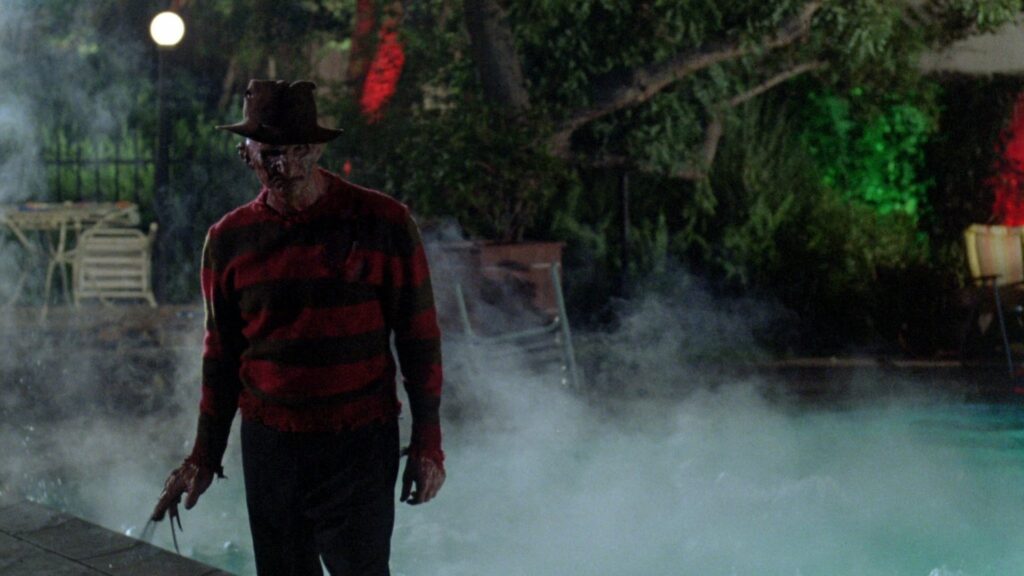
In the annals of horror cinema, the 1980s stand out as a tumultuous decade, marked by the rise of the slasher subgenre and a slew of iconic villains. Among these sinister figures, none is more emblematic of the era’s frightful fascination than Freddy Krueger, the razor-gloved dream stalker who terrorized Elm Street in a series of films that became both legendary and notorious. A closer look at the Nightmare on Elm Street franchise, its evolution, the actors involved, and its place in 1980s horror history reveals not only a horrifying legacy but a testament to the era’s innovative spirit.
The 1980s were a decade when horror cinema experienced a renaissance. Films like “Halloween” (1978) and “Friday the 13th” (1980) had already set the stage, but it was “A Nightmare on Elm Street” (1984) that pushed the genre into new, imaginative territory. Directed by Wes Craven and brought to life by the brilliant Robert Englund as Freddy Krueger, this film gave birth to a horror icon like no other.
Englund’s portrayal of Freddy was a chilling blend of sadistic humor and malevolence. With his disfigured face, striped sweater, and razor-sharp glove, Freddy Krueger instantly became a nightmarish household name. Englund’s performance transformed the character from just another slasher into a complex, multidimensional villain who could haunt not only the dreams of his victims but also the waking minds of moviegoers. The success of the original film hinged largely on Englund’s ability to convey the charismatic menace of Freddy, setting the stage for a franchise that would span nine films, a television series, novels, and countless merchandise items.
As the franchise evolved, so did the character of Freddy Krueger. While the original film focused on his malevolent nature, later entries introduced a more comical and self-aware Freddy, who relished in his murderous antics. This change in tone is evident in “A Nightmare on Elm Street 3: Dream Warriors” (1987), a film that many fans regard as one of the series’ high points. The introduction of a group of young characters with unique dream powers to combat Freddy added depth to the narrative, and the film balanced horror and dark humor expertly. It was also notable for the return of Heather Langenkamp as Nancy Thompson, a character from the original film.
The franchise’s exploration of Freddy’s backstory in “A Nightmare on Elm Street 5: The Dream Child” (1989) and “Freddy’s Dead: The Final Nightmare” (1991) added a layer of psychological depth to the character. These films delved into the roots of Freddy’s evil, revealing his troubled past and the circumstances that turned him into a vengeful dream demon. While some fans appreciated this attempt at character development, others preferred the more mysterious and enigmatic Freddy of the earlier films.
Comparing the box office performance of the Nightmare on Elm Street films, the first installment was undoubtedly the most successful. “A Nightmare on Elm Street” (1984) was a game-changer for the genre, grossing over $25 million on a budget of just $1.8 million. The film’s combination of innovative special effects and engaging storytelling ensured its place in cinematic history. Subsequent entries in the series, while still profitable, could not match the cultural impact of the original.
Interestingly, the franchise found itself in direct competition with another horror juggernaut of the time: “Friday the 13th.” The ’80s saw both Freddy and Jason Voorhees vying for the title of supreme slasher, with each series trying to outdo the other in terms of creativity and sheer body count. This rivalry reached its zenith in the crossover film “Freddy vs. Jason” (2003), though it came well after the 1980s.
The 1980s were a unique time for horror movies. It was a decade marked by innovation in the genre, as filmmakers pushed the boundaries of what could be done with practical effects, makeup, and storytelling. The ’80s saw the emergence of several iconic horror franchises, from “Halloween” and “Friday the 13th” to “Child’s Play” and “Hellraiser.” These films often featured memorable villains, and in the case of Freddy Krueger, a charismatic and unforgettable antagonist.
The 1980s also witnessed the blossoming of teen-centric horror. Characters like Nancy in “A Nightmare on Elm Street” and Laurie Strode in “Halloween” represented the shift from adult protagonists to relatable teenagers facing unimaginable terror. This shift added an extra layer of fear as the audience could better identify with the characters on screen.
The Nightmare on Elm Street films and the legend of Freddy Krueger remain a cornerstone of 1980s horror cinema. The series not only introduced an iconic villain in Freddy Krueger, portrayed brilliantly by Robert Englund, but also evolved over time, exploring new dimensions of horror and psychological terror. These films continue to resonate with fans, reminding us that the 1980s were an era of innovation and creativity in the horror genre. Freddy Krueger may have haunted our dreams, but he also left an indelible mark on the history of horror cinema. The 1980s may have passed, but the nightmares continue, thanks to the enduring legacy of Freddy Krueger.