The Pen Behind the Plasma: Flint Dille and the Pulse of 80s Cartoon Greatness
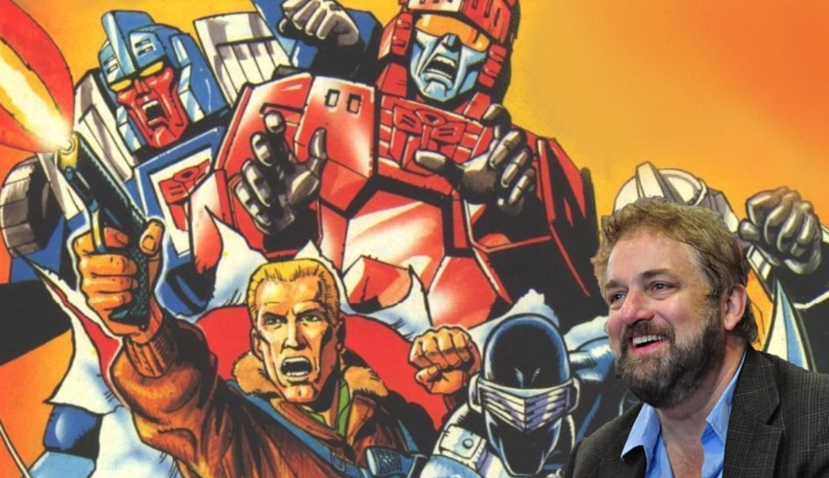
When you think of the golden age of 1980s animation—shows like G.I. Joe and Transformers—one name towers behind the scenes: Flint Dille. A writer, story editor, and creative powerhouse, Dille was one of the key architects of serialized storytelling in weekday afternoon cartoons. His work helped elevate what could’ve been mere toy commercials into must-watch episodic adventures for an entire generation.
Flint Dille wasn’t just some hired pen. He came from a lineage of storytelling royalty—his grandfather was John F. Dille, who helped syndicate Buck Rogers, one of the first sci-fi heroes in American pop culture. It’s no surprise, then, that Flint grew up with a love of genre storytelling, comics, and serialized fiction. After earning degrees in ancient history and film, he quickly found himself in the epicenter of 1980s cartoon revolution—Sunbow Productions.
G.I. Joe: Real American Storytelling
Dille served as a story editor and writer on G.I. Joe: A Real American Hero, helping to craft some of its most memorable and action-packed story arcs. His episodes weren’t just about Cobra attacking and the Joes retaliating—he layered in espionage, personal sacrifice, betrayal, and science fiction tropes.
One of his standout contributions was the writing of “The Traitor,” a two-part episode featuring Dusty seemingly betraying the Joes. The story remains a fan favorite for its mature themes, suspenseful pacing, and emotional payoff.
Another often overlooked gem was Dille’s involvement in refining character dynamics. He helped bring personality to characters like Flint, Lady Jaye, and Cobra Commander, giving them individual arcs and emotional stakes. This kind of attention to character wasn’t common in cartoons at the time, and it’s one of the reasons G.I. Joe still holds up today.
Transformers: Robots, Rage, and Revolution
If G.I. Joe was the proving ground, Transformers was the battlefield. Dille’s work as story editor and writer on The Transformers (Generation 1) cemented his legacy. He co-wrote the screenplay for 1986’s Transformers: The Movie, a film that stunned young viewers by killing off beloved characters like Optimus Prime and Ironhide within the first 20 minutes.
The emotional weight of the film, combined with its groundbreaking animation and unforgettable soundtrack, was no accident. Dille pushed for bold storytelling moves—his belief was that children could handle more complex narratives than adults assumed. The result was a film that has become a cult classic, now recognized for its influence on animated storytelling.
Little-Known Facts About Flint Dille
- He worked closely with comic book legend Jack Kirby in the 1980s while developing animation concepts at Ruby-Spears. Dille later said working with Kirby was like collaborating with a mythological figure.
- He also collaborated with Gary Gygax, co-creator of Dungeons & Dragons, and co-authored Sagard the Barbarian, a choose-your-own-adventure-style book series.
- Dille was one of the first people to bring interactive storytelling to video games, serving as a writer on titles like Chronomaster and The Chronicles of Riddick: Escape from Butcher Bay.
- Flint Dille has won several Writers Guild of America (WGA) awards and has spoken at numerous conventions and universities about the evolution of media storytelling.
Legacy of a Cartoon King
Flint Dille’s storytelling helped define a generation of kids—and shaped the landscape of animated television. He brought depth to characters made of plastic and created worlds that felt real, dangerous, and emotional. His scripts taught kids that good and evil could be complicated, that heroes had doubts, and that even robots could have heart.
He didn’t just write cartoons—he wrote legends.