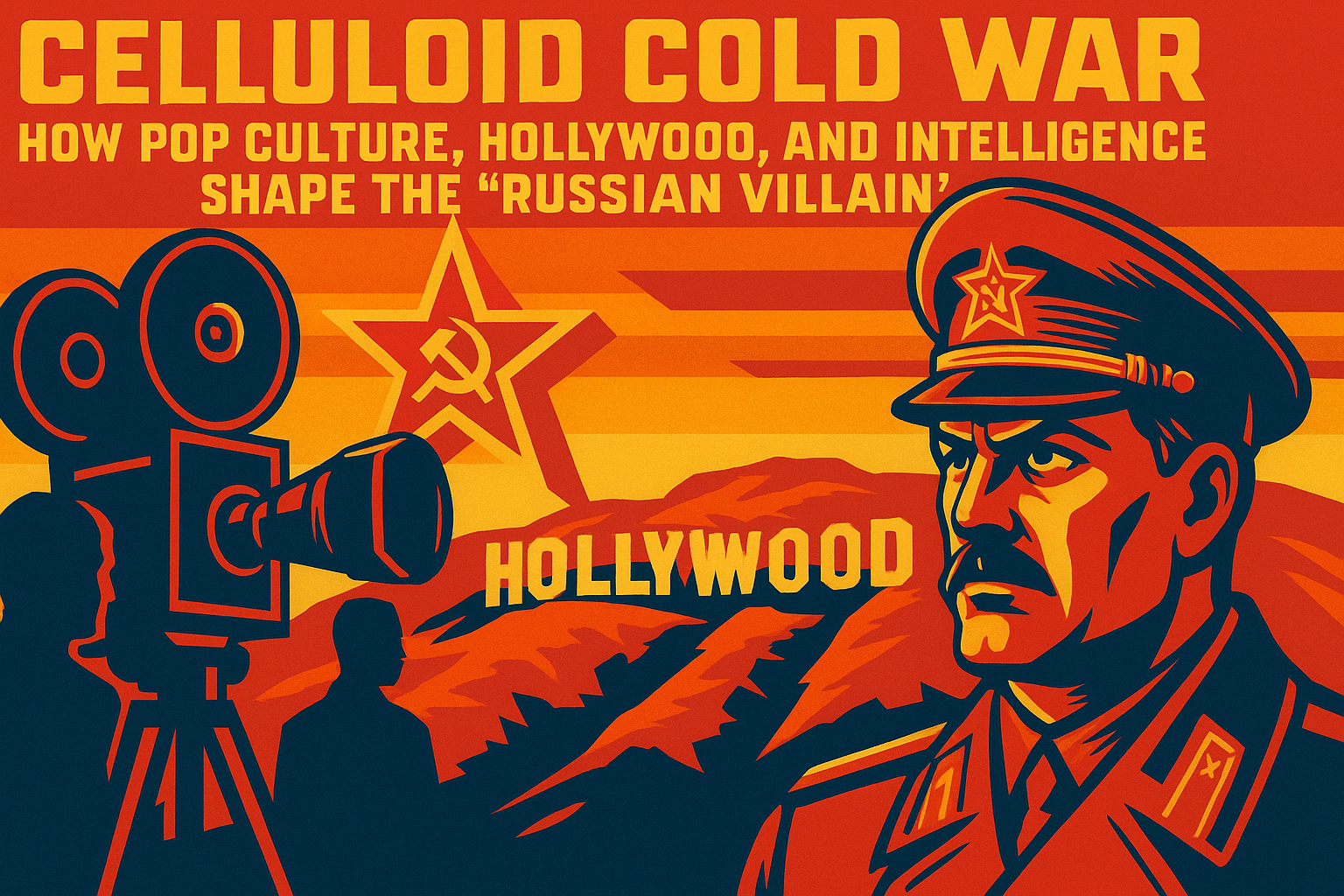
Celluloid Cold War: How Pop Culture, Hollywood, and Intelligence Shape the “Russian Villain”
If American movies had a recurring character, it might be the Russian antagonist. From the blacklist era’s fearmongering to the muscle-bound showdowns of the 1980s and the techno-thrillers of the 2000s, popular entertainment has long framed Russia (and earlier, the Soviet Union) as pop culture’s go-to foil. That didn’t happen in a vacuum. It grew out of a specific history—the Red Scare, congressional pressure on the industry, and later a formalized relationship between Hollywood and U.S. national-security institutions—that helped steer the stories we tell and, by extension, how audiences understand geopolitics.
From HUAC to “us vs. them”
The postwar Red Scare brought political theater right onto studio lots. In 1947, the House Un-American Activities Committee (HUAC) hauled writers and directors into hearings, and the “Hollywood Ten” refused to cooperate, were cited for contempt, and ultimately blacklisted. The episode chilled dissent and narrowed the range of what could be said on screen about communism and the Soviet Union, locking in an “us vs. them” frame that would echo for decades.
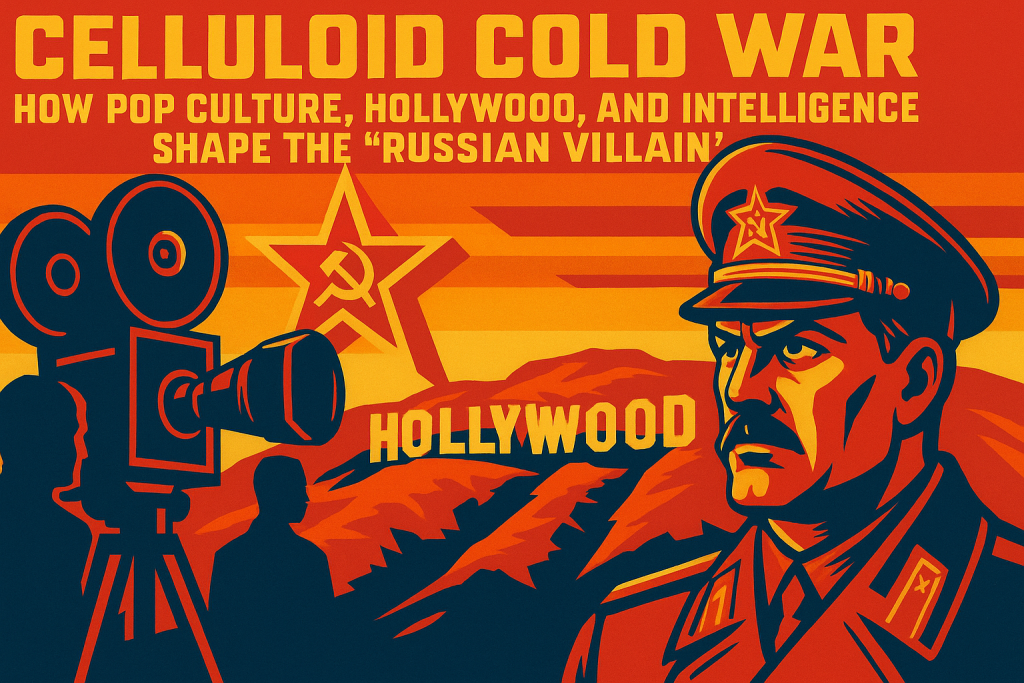
By the time the Cold War matured, that frame had become a pop-culture reflex. Even when films complicated the picture—think defectors and reluctant adversaries—Soviet settings and characters often served as shorthand for threat. The 1980s supercharged those tropes: world-ending standoffs, square-jawed heroes, synth soundtracks, and red-washed poster art made the “Russian villain” both political symbol and marketing asset.
The liaison era: cooperation as a pipeline
What’s changed since the blacklist years is not whether Washington cares about stories, but how it participates in them. Today, agencies do it openly. The CIA’s Office of Public Affairs runs an Entertainment Industry Liaison that answers questions, “debunks myths,” coordinates research visits to Langley, and—on rare occasions—facilitates filming. In the Agency’s own words, the liaison “works with creatives to make their scripts… as authentic as possible.” That cooperation is bounded, the CIA says, by guidelines meant to protect sources and methods.
The Department of Defense, for its part, has run a robust, decades-long Hollywood program. Access to aircraft carriers, fighter jets, bases, and technical advisors often comes in exchange for script review and changes—an arrangement officials describe as ensuring accuracy and responsible portrayal, and critics view as public-relations leverage. The DoD has reiterated this mission repeatedly, including in 2025 explainers and branch-level liaison updates.
Where cooperation meets influence
Does cooperation equal propaganda? Not automatically. Plenty of productions consult with experts—including critics, historians, and NGOs—to get details right. But the structure of these partnerships gives government stakeholders a privileged, early seat in the creative process. The record shows how that can shape narrative emphasis.
Consider the contretemps over Zero Dark Thirty (2012). Freedom-of-information releases documented a year-long collaboration between the filmmakers and the CIA; the Agency later conducted internal reviews of that engagement. Meanwhile, three senior U.S. senators castigated the film for implying torture was effective in locating Osama bin Laden—a claim they argued was contradicted by the Senate’s own findings. The CIA disputed aspects of the Senate report, but the episode clarified something else: access can produce cinematic authority that audiences mistake for historical consensus.
If you zoom out, that’s the core dynamic: when agencies help determine what’s “authentic,” they nudge the boundaries of the imaginable. During the Cold War (and again after 2014 and 2022), that has tended to reinforce depictions of Russia as antagonist—sometimes cartoonish, sometimes chillingly plausible, always legible to domestic audiences primed by decades of narrative rehearsal.
The feedback loop with pop culture
Hollywood rarely acts in lockstep with any single institution; it chases box-office incentives, critical prestige, and audience tastes. But those tastes are partly cultivated by the previous generation’s stories. When “Russians as villains” become a visual language—icy palettes, Cyrillic type, officers in greatcoats—filmmakers can lean on it to make their worlds instantly readable. That aesthetic shorthand pairs neatly with the liaison ecosystem: if a story already aligns with official narratives about adversaries and allies, access is easier, the shoot is cheaper, and the marketing more intuitive.
What nuance looks like
The antidote isn’t to ban cooperation—it’s transparency and plurality. Tell audiences when a film relied on government assistance; widen the pool of advisors; foreground contested histories. Some films and series have tried: they humanize Russian characters, interrogate American institutions, and let competing truths collide. Those works prove the audience can handle complexity; indeed, they reward it.
Why this matters now
We live in a moment of revived great-power rivalry, surging disinformation, and renewed public anxiety about war. In that context, stories aren’t just entertainment; they’re civic weather. The CIA’s liaison office states its aim is authenticity; the Pentagon emphasizes accuracy and safety. Both are legitimate interests. But those interests are not neutral. They intersect with budgets, awards campaigns, and geopolitical crises—and they can subtly steer perception.
Pop culture has always been a site of soft power. The question for creators and viewers is whether we can keep telling big, thrilling stories without reflexively defaulting to a single villain—or outsourcing moral complexity to any office, no matter how well-staffed the screening room.