October Monster Mash: “The Terror Beneath the Earth!” – The Mole People (1956)
Beneath the Surface Lies Horror
In 1956, Universal Pictures dug deep—literally—to unearth one of its strangest and most atmospheric monster films: The Mole People. This black-and-white gem combined pulp adventure, ancient mythology, and science fiction horror to create a story that still fascinates lovers of classic cinema.
The result was a film that felt like Jules Verne meets Lovecraft, wrapped in mid-century paranoia and dusted with the earthy charm of 1950s creature design. The Mole People didn’t just explore the unknown—it took audiences underneath it.
Journey to the Center of Fear
The story begins when a group of archaeologists—led by Dr. Roger Bentley (John Agar) and Dr. Jud Bellamin (Hugh Beaumont, later of Leave It to Beaver fame)—discover a Sumerian artifact high in the mountains. Following clues, they stumble upon a hidden entrance leading deep underground, where they find a long-lost civilization living beneath the Earth’s crust.
This subterranean society, descended from ancient Sumerians, has adapted to a lightless existence. Their pale skin, enormous eyes, and rigid social hierarchy create an unsettling world that feels both alien and eerily human. But beneath these sunless cities dwell something far more monstrous: the Mole People—mutant, subhuman creatures who serve as slaves to their albino masters.
When the archaeologists are captured, their flashlights are mistaken for divine relics, and they are hailed as gods. But as jealousy and fear take root among the high priests, the line between science and superstition begins to crumble.
Monsters of Mud and Shadow
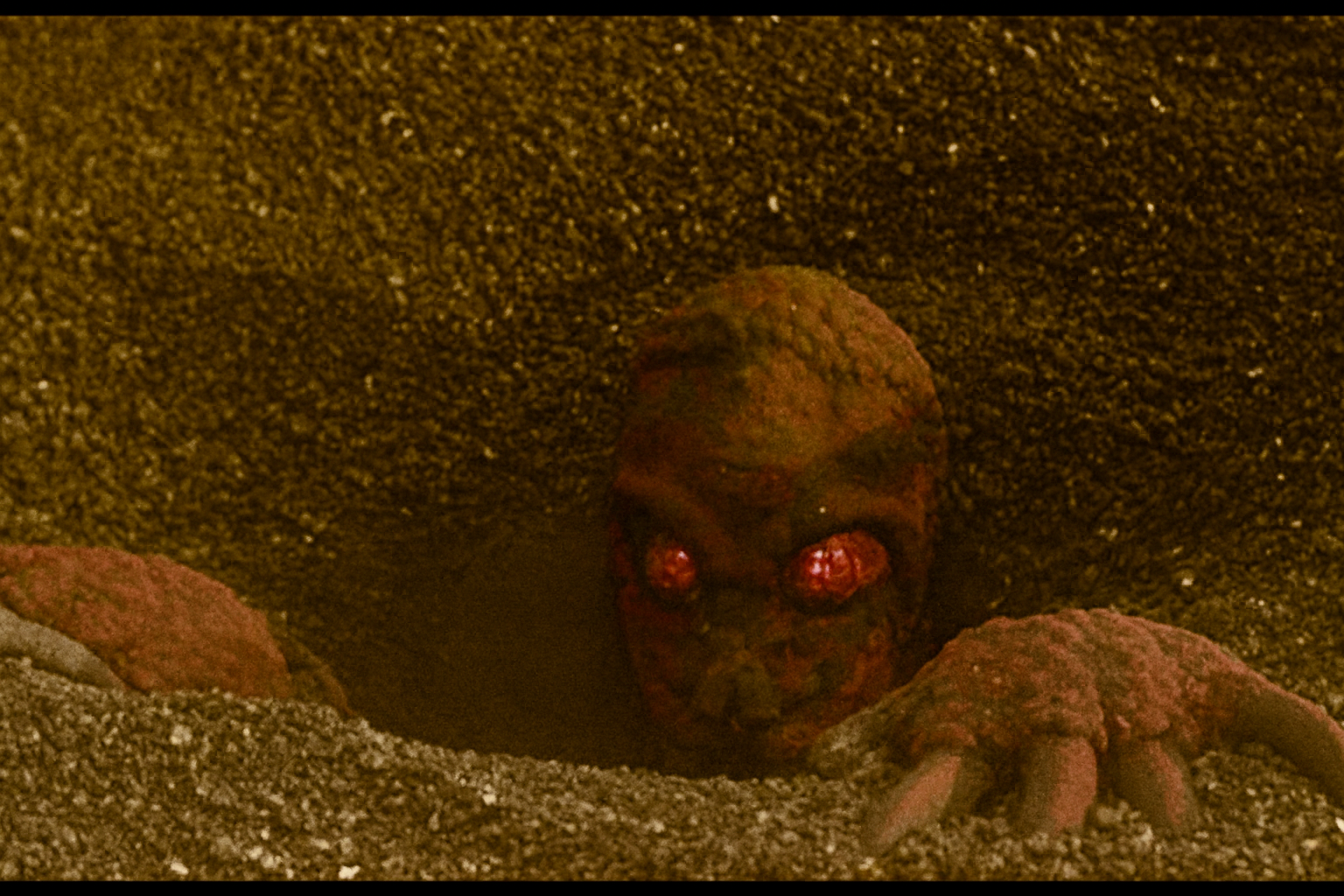
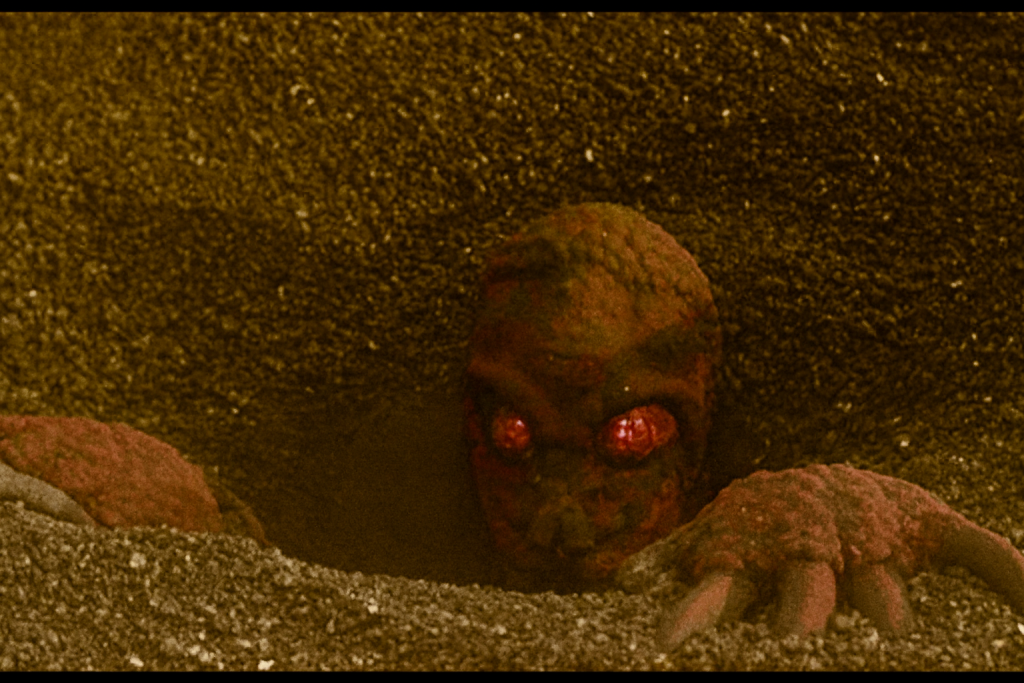
The titular Mole People are among Universal’s most underrated monster designs. With their leathery, wrinkled faces, clawed hands, and glassy eyes, they evoke a feeling of genuine unease. Created by Jack Kevan and Chris Mueller, the suits allowed for surprisingly expressive movement, giving the Mole People a tragic, enslaved quality rather than simple savagery.
They aren’t villains in the traditional sense—they’re victims. Oppressed, beaten, and forced to toil endlessly underground, the Mole People become unlikely symbols of sympathy. In one memorable scene, they rise up against their cruel masters, turning the story from pure monster movie to something closer to a revolution from below.
The eerie subterranean sets—lit with flickering torches and cloaked in fog—create a claustrophobic mood. Director Virgil W. Vogel, who had worked as an editor on This Island Earth, gave the film a distinctive style that combined archaeological adventure with gothic dread.
Science, Symbolism, and 1950s Anxiety
Like many films of its era, The Mole People works on two levels. On the surface, it’s a thrilling B-movie about lost civilizations and underground creatures. But dig a little deeper, and it becomes a parable about class struggle, racism, and fear of the “other.”
The albino overlords, who maintain power through superstition and cruelty, stand in contrast to the oppressed Mole People—an image that echoed contemporary anxieties about inequality and totalitarianism. Even Dr. Bentley, the film’s pragmatic scientist, finds his rational world upended when he’s treated as a god.
In a decade defined by nuclear fear and Cold War tension, The Mole People reminded audiences that monsters weren’t always found in space or laboratories—they could be buried right beneath our feet.
Reception and Legacy
While The Mole People was considered a “B” feature upon release, it has since developed a loyal cult following among monster fans. Its moody atmosphere, inventive premise, and surprisingly emotional undercurrents make it a standout entry in Universal’s 1950s catalog.
The film also marked one of John Agar’s most memorable genre performances—balancing heroism with quiet dread as a man who descends into darkness and confronts the unknown.
Over time, the Mole People themselves have become beloved icons of vintage horror. They’ve appeared on posters, model kits, and even in episodes of Mystery Science Theater 3000, where their tragic charm still resonates beneath the humor.
Conclusion
As part of our October Monster Mash, The Mole People reminds us that the scariest monsters aren’t always evil—they’re sometimes the result of survival in a world that forgot them.
With its eerie caves, enslaved creatures, and haunting allegory, this 1956 classic proves that even deep beneath the Earth’s surface, humanity’s flaws—greed, fear, and cruelty—remain alive and well.
So the next time you walk across the ground this October, remember what might be beneath your feet… waiting, watching, and digging ever closer to the surface.
Beware the Mole People!