Bill Murray vs. Christmas: Spoiler, Christmas Wins
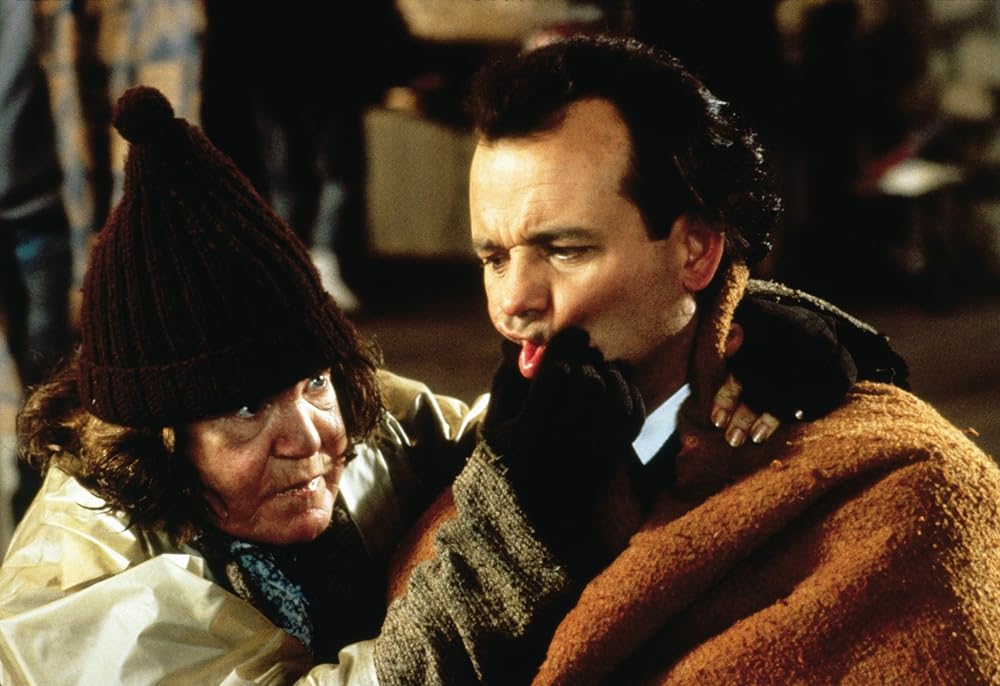
If you were to ask me which A Christmas Carol adaptation feels the most aggressively ’80s, I wouldn’t even hesitate. Scrooged (1988) is pure late-decade chaos—neon lights, cable TV cynicism, corporate greed, and Bill Murray firing sarcasm like it’s a competitive sport. This movie doesn’t ease you into the holiday spirit. It grabs you by the collar, insults you a little, and then—against your will—makes you feel something by the end.
Bill Murray plays Frank Cross, a ruthless TV executive whose soul has been completely replaced by ratings and ego. He’s cruel, dismissive, and painfully confident in his own brilliance. And Murray plays him at full strength. This isn’t the gentle, lovable Murray of later years—this is sharp-edged, manic, no-apologies Bill Murray, and honestly? It works perfectly for the role. Frank Cross isn’t just unlikable; he’s exhausting. Which is exactly what makes his redemption so satisfying.
What makes Scrooged stand out from other Dickens adaptations is how mean it’s willing to be at the start. This movie leans hard into the ugliness of its protagonist and the soullessness of corporate media culture. Everything is transactional. People are disposable. Christmas is just content. Watching it now, it’s almost uncomfortable how well some of it still lands. The satire isn’t gentle—it’s biting. And yet, underneath that cynicism, the movie still believes in the message. It just makes you work for it.
The ghosts are where the movie really goes off the rails—in the best way. David Johansen’s Ghost of Christmas Past is a chainsmoking cab driver who punches Frank in the face and drags him through his memories like it’s a crime scene. Carol Kane’s Ghost of Christmas Present is pure feral energy, gleefully smacking Frank with a toaster and calling it character development. And the Ghost of Christmas Yet to Come? Nightmare fuel. Silent, decaying, and genuinely unsettling, it feels like it wandered in from a horror movie and refused to leave.
And then there’s the emotional core, which sneaks up on you when you least expect it. Frank’s memories of childhood, his broken relationship with his brother, and his lingering connection with Claire—played with warmth by Karen Allen—slowly chip away at his armor. The movie never asks you to forget how awful Frank has been. It just asks you to consider why he got that way. And that distinction matters.
The climax—Frank hijacking his own live TV broadcast to deliver an unhinged, heartfelt Christmas monologue—is pure cinematic madness. It’s awkward. It’s over-the-top. It’s sincere in that “I’m going to scream my feelings into a camera and hope it lands” way. And somehow… it works. Because by that point, you’ve watched this man get beaten down emotionally, spiritually, and occasionally physically. When he finally cracks and lets the joy in, it feels earned.
Rewatching Scrooged now, I appreciate how fearless it is. It doesn’t sand down Bill Murray’s edge. It doesn’t soften its critique of greed or media excess. It trusts that Christmas redemption can coexist with cynicism—and maybe even needs it to be effective. The movie argues that belief isn’t about being naive; it’s about choosing hope in a world that rewards selfishness.
And yes, the tone is all over the place. It’s dark, loud, sentimental, and occasionally unhinged. But that tonal whiplash is part of its identity. Scrooged feels like Christmas filtered through exhaustion, frustration, and eventual release. It’s for people who love the holiday… but also kind of want to scream into a pillow by December 23rd.
So yes—this is Bill Murray vs. Christmas. He fights it. He mocks it. He resists it with everything he’s got. And in the end? Christmas wins. Loudly, awkwardly, and with a tear or two in its eye. And honestly, that might be the most ’80s ending possible.