Barstool Heat: Cheers Served ‘Hot Mess’ with a Twist
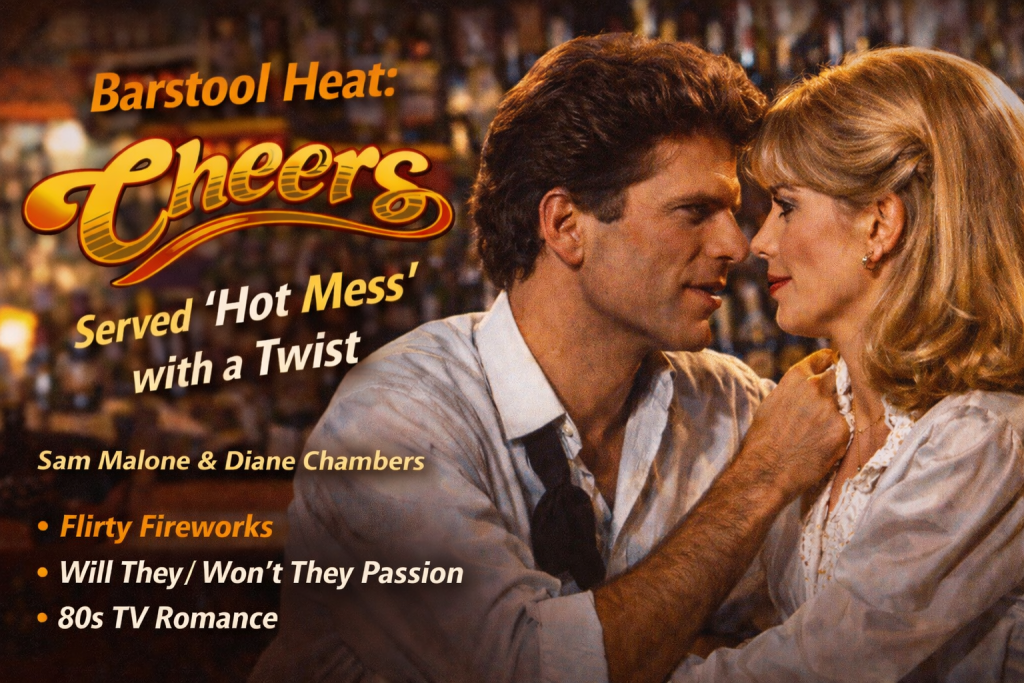
If you watched Cheers in the 80s, you already know the truth: the bar wasn’t the only place where drinks got mixed. The real intoxicant was the way Sam Malone and Diane Chambers could turn a simple conversation into a flirtation duel—equal parts sparks, sarcasm, and “we should absolutely not be doing this… so why can’t we stop?”
Their hook is basically a sitcom love potion. Sam is the cocky ex-athlete bartender with a grin that says he’s never met a mirror he didn’t like. Diane is the brainy, romantic, slightly theatrical intellectual who talks like she’s narrating her own novel. Put them in the same room, and you don’t just get chemistry—you get combustion. The neon sign outside could’ve gone dark and those two still would’ve lit the place up with one argument and a look.
What made Sam and Diane so addictive wasn’t just that they were opposites. It’s that they were opposites who refused to be casual about it. Their relationship didn’t glide along on soft music and sweet declarations. It snapped, crackled, and occasionally exploded. One minute they’re trading insults like it’s a competitive sport, the next minute you can feel the temperature shift because—surprise—under all that sniping is a weirdly real admiration. She’s horrified by his ego but secretly fascinated by his confidence. He pretends she’s too uptight, but he listens to her like she’s the most interesting thing in the room. And in a sitcom universe where a lot of couples were tidy and predictable, Sam and Diane were a beautiful mess with excellent timing.
Here’s the underrated part: their “how they became a couple” story is basically a slow burn disguised as chaos. Diane shows up at the bar at an emotional low point, suddenly untethered from the life she thought she was going to have, and Cheers becomes this strange little safety net—warm, loud, imperfect, and human. Sam, for all his swagger, clocks that vulnerability right away. He jokes. He flirts. He provokes. She pushes back, because Diane isn’t built to swoon on command. But the more they clash, the more they create a rhythm. Like two people who don’t share a language but keep talking anyway because they can’t stand the idea of silence.
And that’s where Cheers quietly rewired sitcom romance: it made “arguing as foreplay” mainstream. Before, TV couples often felt like they were written to be liked. Sam and Diane felt like they were written to be watched—like you were supposed to lean forward and wonder, “Are they about to kiss… or ruin each other’s night?” Their tension had edges. Their feelings didn’t arrive neatly packaged. They made mistakes, doubled down, got jealous, got petty, got poetic, got ridiculous. And somehow it still felt romantic because you could tell it mattered to them, even when they pretended it didn’t.
Pop culture-wise, that’s a huge shift. The 80s loved big archetypes—hero guys, sweethearts, clean happy endings. But Sam and Diane helped normalize the idea that love could be complicated and still worth rooting for. They weren’t the “perfect couple.” They were a tug-of-war. And audiences ate it up because it felt closer to real life than the usual sitcom bow-on-top relationships. People started cheering (no pun intended… okay, a little) for couples who didn’t fit perfectly, because the friction was the point. The struggle was the story.
Sam and Diane also paved the way for the modern “will they/won’t they” playbook: smart girl + charming chaos guy, witty conflict, emotional whiplash, and a fanbase that argues just as much as the couple does. You can draw a straight line from their dynamic to the way later TV romances were built—where the chase isn’t just romantic, it’s comedic, and the tension becomes its own engine for the entire show.
So yeah, the bar on Cheers was a cozy little hangout where everybody knew your name. But Sam and Diane turned it into something else too: a front-row seat to the kind of romance that’s messy, loud, and absolutely impossible to ignore.