
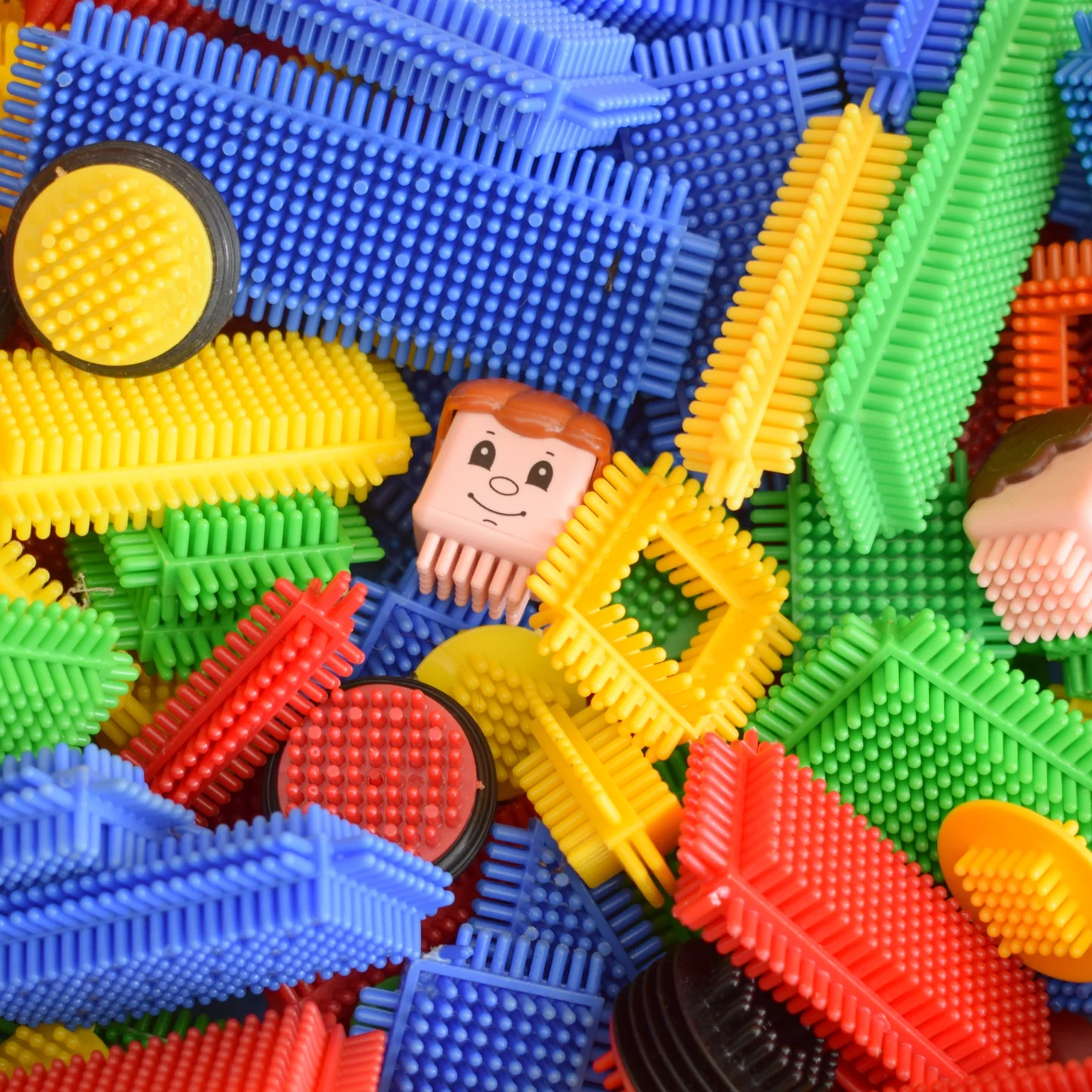
Bristle Blocks Were the Real MVP of the 1980s Playground (Fight Me)
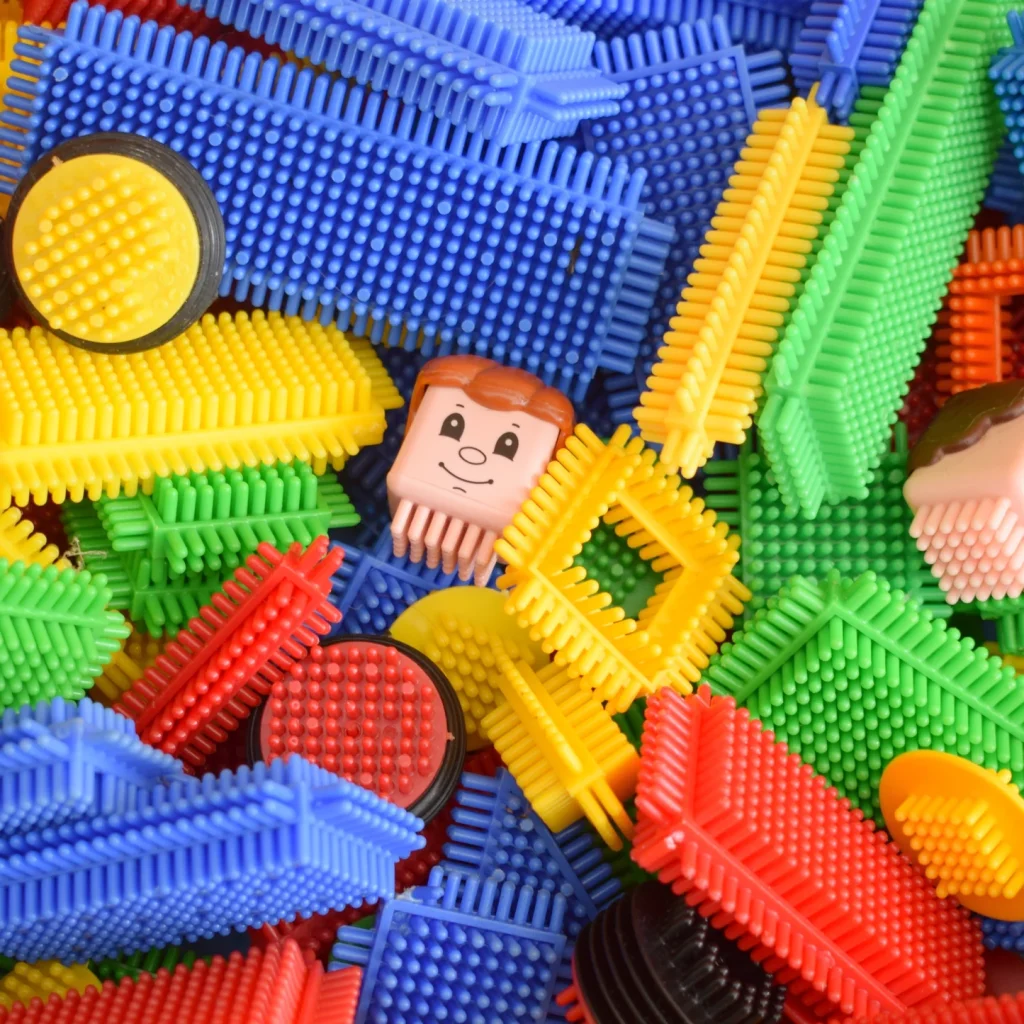
If you were a kid in the 1980s, there’s a very specific sound and feeling you probably still remember: two bright plastic pieces pressing together, then that satisfying little shhk as thousands of tiny bristles grabbed and held. Bristle Blocks weren’t just another building toy—they were the building toy for a whole generation of little kids who wanted maximum creativity with minimum fuss. No perfect alignment. No delicate pieces. Just pure “stick it together and see what happens” joy.
What made Bristle Blocks so instantly lovable was how forgiving they were. Unlike smaller, more precision-based bricks, these could connect at almost any angle. You could build a lopsided robot, a spiky dinosaur, a helmet-crown hybrid, or a “car” with wheels on the side and it still worked. That mattered—especially for younger kids—because the toy rewarded you fast. You didn’t need to be an expert builder to feel like an inventor. Bristle Blocks were basically confidence in neon plastic.
The idea behind bristle-style construction toys didn’t appear out of thin air, either. A key ancestor in the bristle-building family is Stickle Bricks, invented in 1969 by Denys Fisher in the UK. Over time, the broader “bristle connection” concept showed up under different brand names and variations across markets, which is why people remember them as this shared childhood staple even if the exact box art or piece shapes were a little different depending on where you grew up.
In the United States, Bristle Blocks became especially embedded in early childhood spaces thanks to Playskool, which sold them widely and made them a familiar sight in preschools, daycares, and kindergarten classrooms. That’s a huge part of why they feel so universal to 80s kids: even if you didn’t have a set at home, you probably had access to a giant classroom bin of them somewhere—right next to the wooden train tracks and the dress-up corner.
And once something hits both homes and classrooms, it spreads like wildfire. Bristle Blocks weren’t just a toy; they were a mini cultural moment. Commercials pushed the “build anything” vibe hard, showing kids snapping pieces together into animals, vehicles, and goofy creations that looked like they were designed by a sugar-rush imagination. Even fast-food promotions got in on the action—because nothing screams “peak fad” like your toy showing up in a kids’ meal campaign.
One detail that really underlines how widespread they were: in 1981, the U.S. Consumer Product Safety Commission posted a notice urging customers to discard and replace specific Bristle Block components as part of a safety program. You don’t get a nationwide consumer notice unless a toy is truly out in the world—living in playrooms, classrooms, and toy chests everywhere.
So why were Bristle Blocks huge for 1980s kids? Because they nailed the holy trinity: bright colors, durability, and instant success. They also encouraged social play in the best way. One kid starts a tower. Another kid adds wheels. Someone else slaps on a “face.” Suddenly you’ve got a whole group collaborating on a spiky plastic masterpiece that makes no sense and is somehow perfect. That’s the heart of 80s childhood right there—imagination-first, rules optional, and always ending with at least one piece hiding under the couch waiting to attack an unsuspecting bare foot later.

My friends and I were obsessed with these.
https://youtu.be/z494AGJY9Ls?si=ffhOjM-oyFgzYhHj