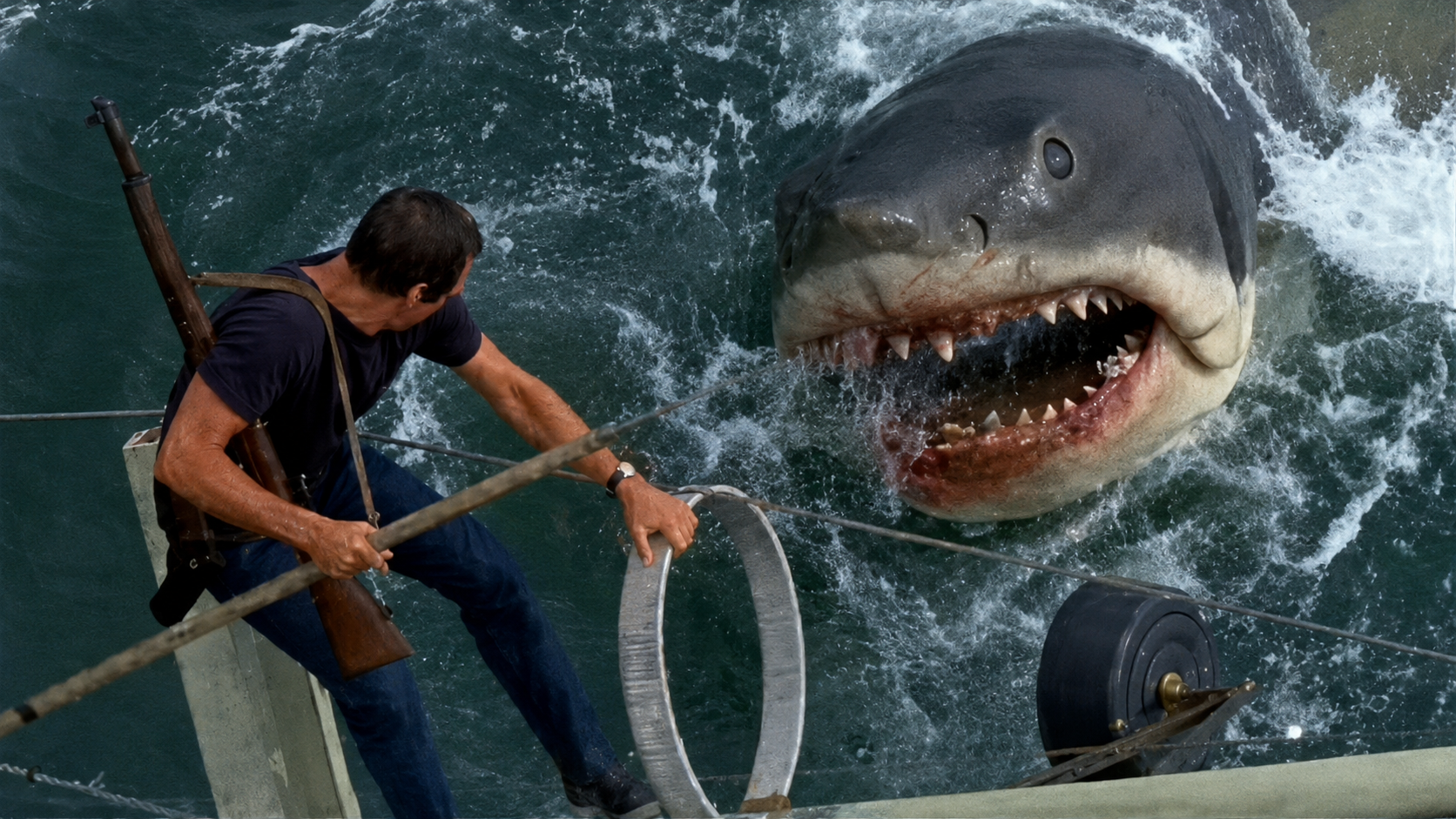
You’re Gonna Need a Bigger Summer: How Jaws Changed Movies Forever
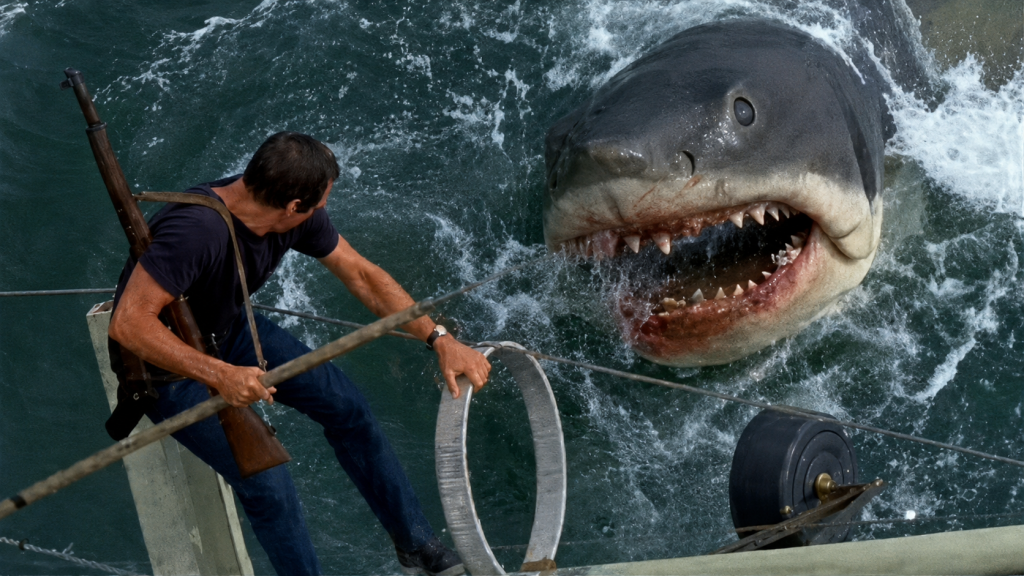
Before Jaws swam into theaters in 1975, summer was not considered the prime season for major movie releases. Studios often saved their prestige pictures for the fall and winter. Then Steven Spielberg unleashed a great white shark on Amity Island, and Hollywood learned a very important lesson: summer audiences were ready to line up around the block for thrills, chills, and unforgettable movie moments.
Jaws did not just become a hit. It changed the way movies were released, marketed, and remembered. Based on Peter Benchley’s novel, the film told a simple but terrifying story: a small beach town is threatened by a killer shark, and three very different men must go out to sea to stop it. Police Chief Brody, marine biologist Hooper, and the salty shark hunter Quint became instant movie icons, each bringing a different energy to the story. Roy Scheider, Richard Dreyfuss, and Robert Shaw gave the film a grounded, human quality that made the terror feel real.
One of the biggest reasons Jaws worked so well was what audiences did not see. The mechanical shark famously caused problems during filming, but that actually helped the movie. Spielberg was forced to suggest the shark’s presence rather than constantly show it. A fin cutting through the water, a sudden tug on a fishing line, a yellow barrel disappearing beneath the waves — these little details built suspense better than any nonstop monster reveal could have.
And then there was John Williams.
His legendary two-note theme is one of the most recognizable pieces of music in movie history. It is simple, primal, and terrifying. Those repeating notes feel like something unstoppable moving closer and closer. Williams did not just provide background music; he gave the shark a voice. Even when the creature was offscreen, the music told audiences it was near. That score became a huge part of why Jaws lodged itself into pop culture forever.
The marketing also helped turn Jaws into a phenomenon. The poster image of the massive shark rising toward the swimmer became instantly iconic. The tagline, the beach setting, the sense that this could happen in any seaside town — it all worked. People were scared, but they could not stay away. In fact, many viewers left the theater afraid to go back in the water. That is when you know a movie has truly taken hold of the public imagination.
Jaws helped create the modern summer blockbuster. It showed studios the power of wide releases, heavy promotion, memorable music, and event-style filmmaking. Without Jaws, the road to movies like Star Wars, Jurassic Park, and countless summer spectacles might have looked very different.
Nearly 50 years later, Jaws still holds up because it is more than a shark movie. It is suspense, character, music, fear, adventure, and perfect summer movie magic all rolled into one. It made audiences scream, quote lines, buy tickets again, and think twice before swimming too far from shore.
Not bad for a fish story.