Droopy & Butch: The Deadpan Dog and the Bulldog Who Could Never Escape Him
There is something almost supernatural about Droopy.
He doesn’t run. He doesn’t scream. He rarely even raises his voice. Yet no matter how fast his opponent drives, how far he sails, or how desperately he tries to escape, Droopy is already standing there waiting for him.
“Hello, all you happy people.”
And somewhere nearby, Butch realizes his day is about to get considerably worse.
The Droopy cartoons produced by MGM during Hollywood animation’s golden age remain some of the funniest demonstrations of comic timing ever put on film. Behind their beautifully controlled insanity was one of animation’s greatest innovators: Tex Avery.
Avery had already helped redefine cartoons during his years at Warner Bros., contributing enormously to the irreverent style associated with characters like Daffy Duck and Bugs Bunny. But after arriving at MGM in 1941, Avery was given an opportunity to push cartoon logic even further.
Then came Droopy.
Droopy debuted in Avery’s “Dumb-Hounded” (1943). Originally known simply as the little hound, he was essentially the opposite of what audiences expected a cartoon star to be. While other characters bounced, shouted and stretched across the screen, Droopy barely moved.
That was the joke.
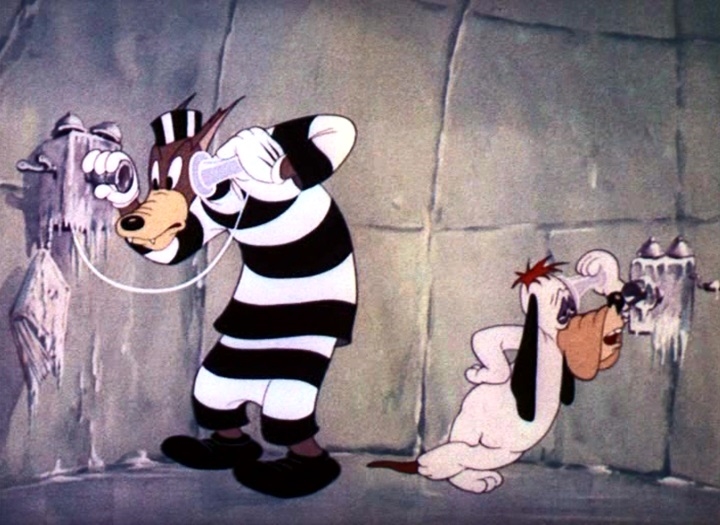
In “Dumb-Hounded,” Droopy pursues an escaped convict known as the Wolf. The Wolf races across enormous distances trying to lose him, only to discover Droopy inexplicably waiting at every destination.
Avery had turned inevitability into a punchline.
The voice was equally important. Droopy’s original voice was supplied by Bill Thompson, who reportedly based the character’s famously slow delivery on the voice of Wallace Wimple from the radio program Fibber McGee and Molly.
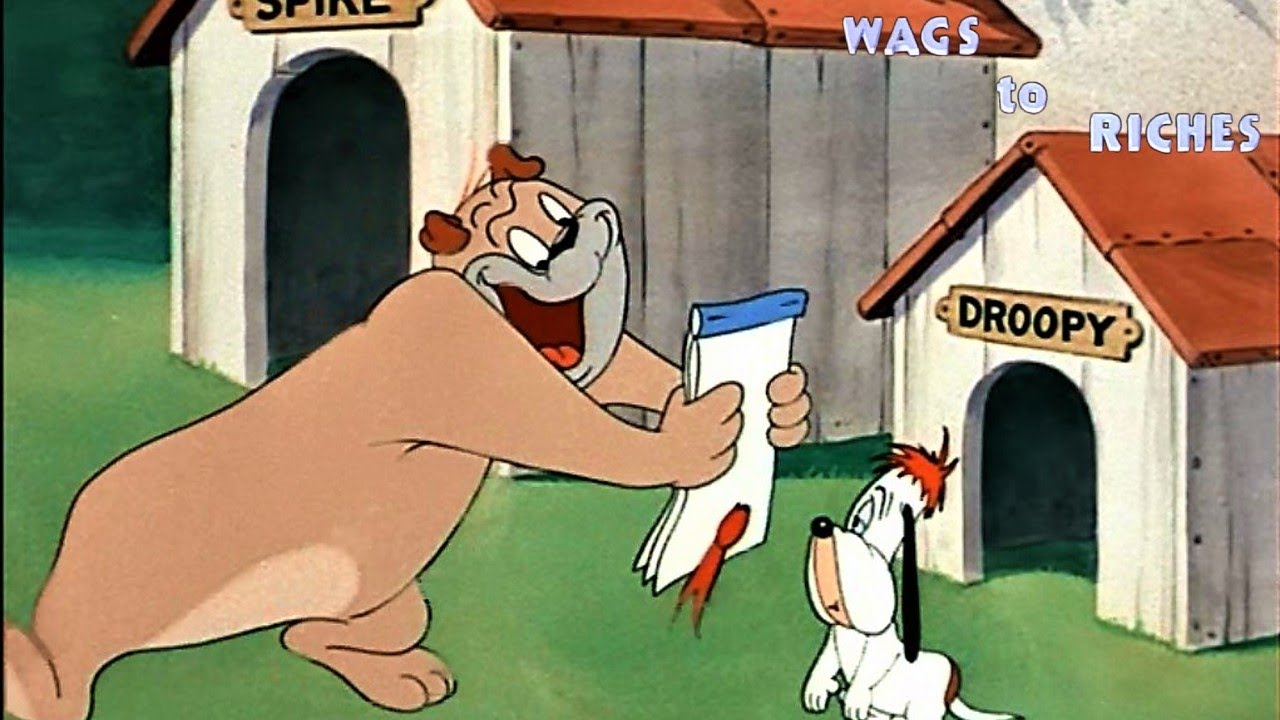
Droopy soon became a star, and one of his most memorable adversaries became Butch, the enormous bulldog who represented everything Droopy seemingly wasn’t—big, aggressive, loud and confident.
Their personalities made them perfect together.
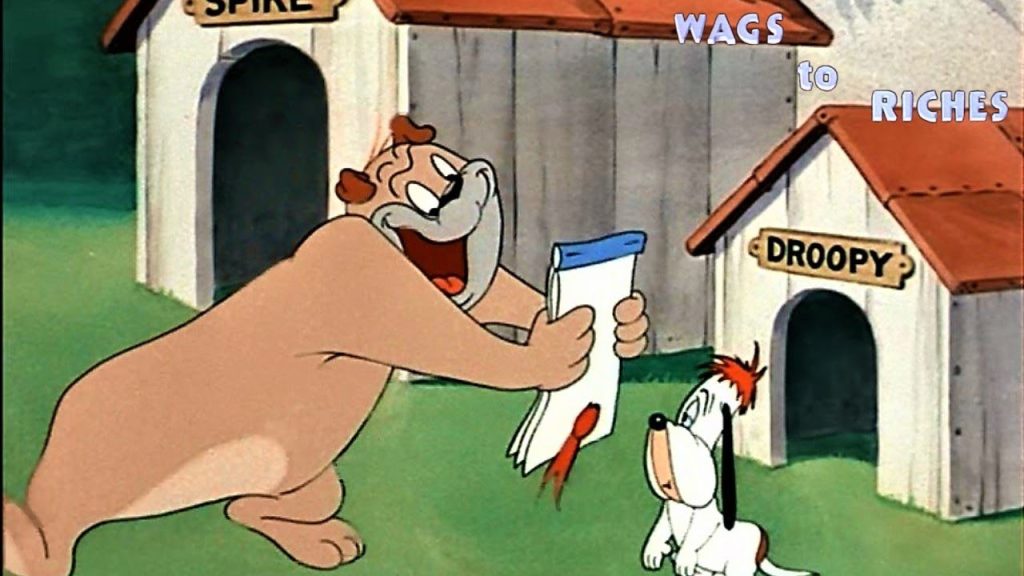
One of their greatest battles arrived with “Wags to Riches” (1949). Droopy stands to inherit a fortune, while Butch discovers that he is next in line should something unfortunate happen to the little dog.
Naturally, Butch begins plotting.
Naturally, everything goes catastrophically wrong.
The premise proved so effective that it was later revisited in “Millionaire Droopy” (1956), a CinemaScope remake assembled from the earlier cartoon.
Another classic, “Out-Foxed” (1949), sends Droopy into the world of fox hunting, where Avery gleefully demolishes the conventions of both the hunt and cartoon storytelling itself.
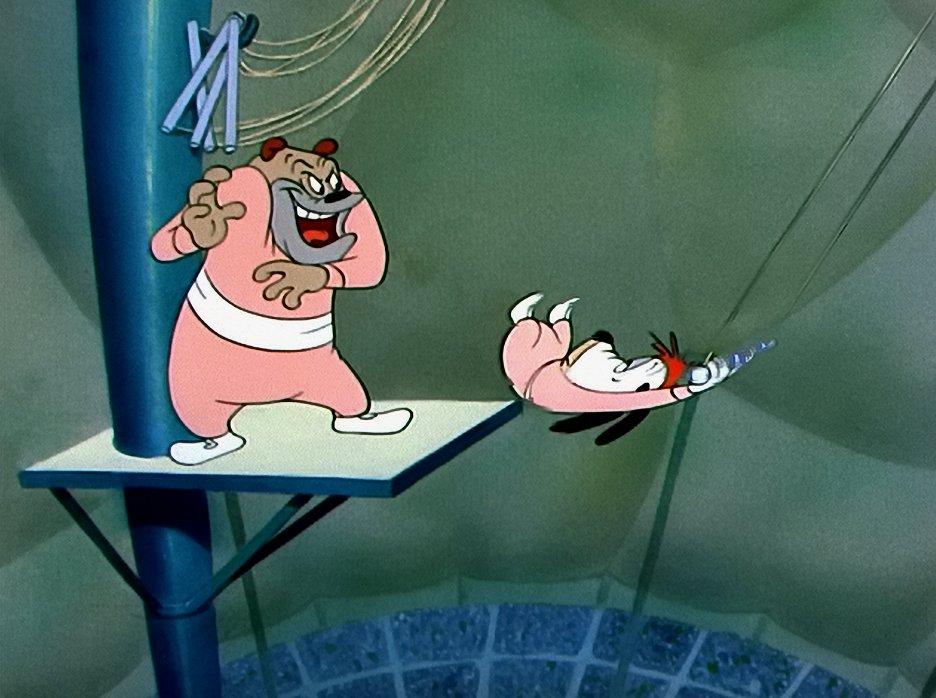
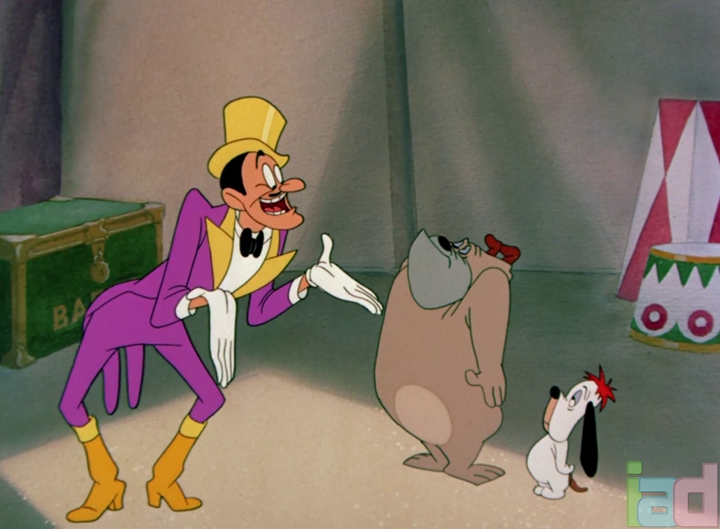
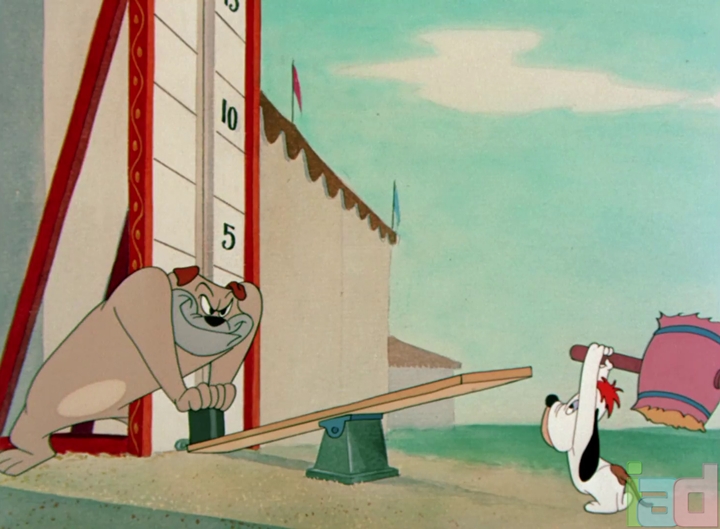
Then there is “Daredevil Droopy” (1951), in which Droopy and Spike compete for employment in a circus by performing increasingly ridiculous stunts. The quiet little dog and the hulking bulldog transform what should be a simple job interview into escalating animated warfare.
Interestingly, fans sometimes refer to Droopy’s bulldog opponent broadly as Butch, although the character’s identity could vary between shorts and credits, with similar bulldogs appearing as Spike or Butch. Golden-age cartoons were often far less concerned with rigid character continuity than modern franchises are.
Droopy himself also changed hands. Avery temporarily left MGM in the early 1950s, and animator Dick Lundy directed several Droopy shorts. Avery eventually returned before leaving MGM permanently, while directors William Hanna and Joseph Barbera also became involved with later Droopy productions before MGM closed its theatrical animation studio in 1957.
Yet Droopy survived.
He appeared in later television productions, comics and crossover projects, introducing new generations to one of animation’s strangest heroes.
What makes Droopy and Butch timeless isn’t merely slapstick.
It is the contrast.
Butch can explode with rage, devise elaborate schemes and subject himself to unimaginable punishment. Droopy simply watches.
And waits.
Because somewhere deep inside, Butch already knows what generations of cartoon fans know.
You cannot outrun Droopy.
You cannot outsmart Droopy.
And just when you think you’ve finally escaped him, a tiny dog will probably be standing behind you.
“You know what?”
Droopy pauses.
“I’m the hero.”
And somehow, he always was.