31 Days of Halloween: Mind-Blowing Horror in David Cronenberg’s Scanners (1981)
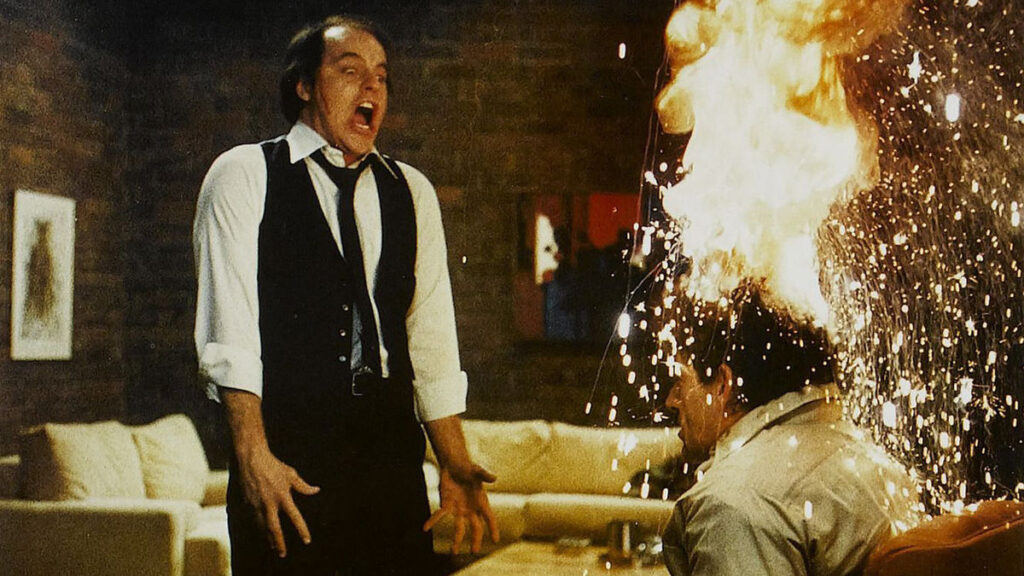
Welcome back to our 31 Days of Halloween horror movie retrospective! Today, we’re diving into one of the most unique and mind-bending films of the early 80s: David Cronenberg’s Scanners. Released in 1981, this psychological sci-fi horror film didn’t just leave an impact with its shocking visuals—it also explored themes of power, control, and the dangers of weaponized human abilities. If you’re unfamiliar with this cult classic, get ready for an explosive journey into the world of psychic warfare, espionage, and, of course, unforgettable head explosions.
Plot Overview: The War of the Minds
At the heart of Scanners is the conflict between those who possess powerful psychic abilities—called “scanners”—and a shadowy organization that seeks to control and weaponize them. Cameron Vale (played by Stephen Lack) is a homeless man who discovers that he is a scanner, a person with telepathic and telekinetic powers capable of reading minds, controlling others, and, as the film famously demonstrates, causing physical destruction with just a thought. Vale is taken in by Dr. Paul Ruth (played by Patrick McGoohan), who works for a company called ConSec that seeks to weaponize scanners for military use.
The plot thickens when ConSec’s own rogue scanner, Darryl Revok (played by Michael Ironside), begins a violent uprising to lead the scanners in overthrowing society. Revok, who possesses far greater control over his abilities, wants to establish a new world order where scanners reign supreme. Vale is tasked with infiltrating Revok’s group and stopping him before it’s too late.
What follows is a tense and eerie battle of minds, as Vale and Revok inch closer to an inevitable, explosive showdown. Cronenberg’s depiction of psychic powers and telepathic duels is what truly sets this film apart, with practical effects that have become legendary in the world of horror cinema.
The Iconic Head Explosion Scene: A Moment in Movie History
It’s impossible to talk about Scanners without mentioning the scene that made it an instant cult favorite: the infamous head explosion. Early in the film, during a demonstration of a scanner’s abilities, one of the characters is subjected to psychic assault, causing their head to burst in a gory spectacle. This scene, a triumph of practical special effects, remains one of the most memorable and shocking moments in horror movie history. It not only became a visual shorthand for the film but also encapsulated the raw power of the scanners in a visceral, unforgettable way.
Themes and Impact
Beyond its shocking visuals, Scanners explores the dangers of unchecked power and control. Cronenberg masterfully combines horror and science fiction to reflect on the tension between individuality and the collective will. The scanners, hunted and controlled by corporations like ConSec, represent marginalized groups wielding incredible power in a world that wants to suppress them. Themes of paranoia, surveillance, and government manipulation run throughout the film, making it more than just a story of psychic combat.
Scanners was also a major turning point in Cronenberg’s career, helping to solidify his place as a master of “body horror.” The film’s influence can still be felt in modern sci-fi and horror, with its exploration of telepathy and psychic powers echoed in everything from The Matrix to Stranger Things.
Final Thoughts
While Scanners may not have the fast-paced, action-packed thrills of more mainstream horror movies, it remains a deeply unsettling and intelligent film that horror fans continue to appreciate decades later. Its legacy is not just tied to its practical effects but also to the way it digs into the psychology of power and control, making it a timeless entry in the sci-fi horror genre. If you’re looking for something truly cerebral (pun intended) to watch this Halloween, Scanners is a must-see.