The Story Behind Hungry Hungry Hippos: From Toy Concept to 1980s Icon
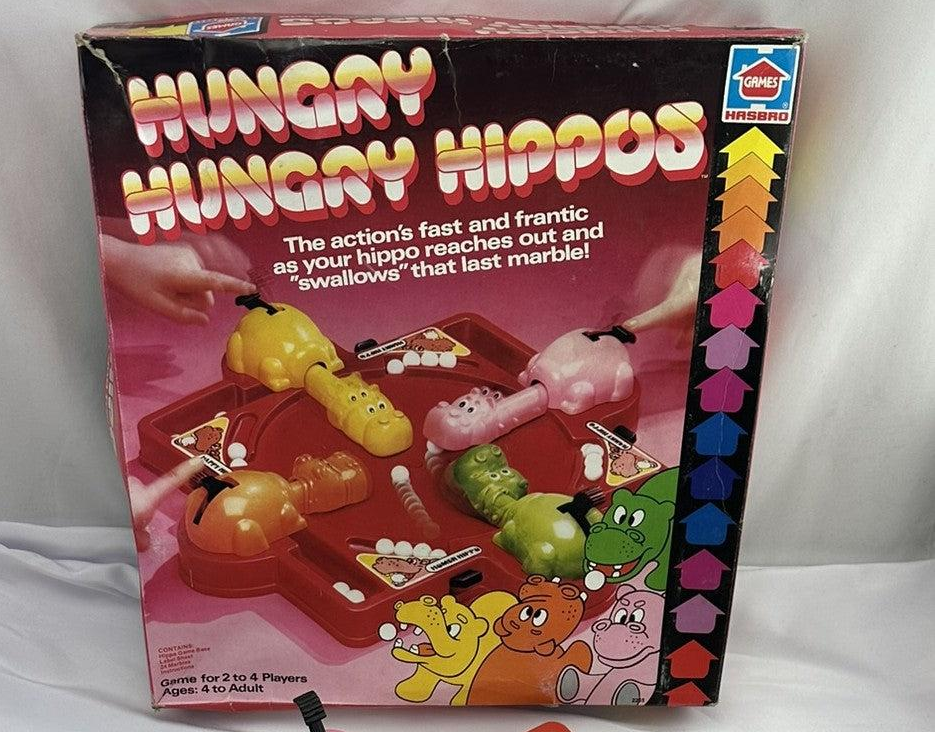
Few tabletop games capture the chaotic joy of childhood quite like Hungry Hungry Hippos. First released in 1978 by the Milton Bradley Company (later part of Hasbro), the game quickly became a household staple and a defining symbol of 1980s playtime. But its story begins more than a decade earlier with a creative spark from toy inventor Fred Kroll.
Back in 1967, Kroll conceived the idea for a fast-paced, mechanical game centered around competition and motion. His concept would take years to refine, as toy designers worked to transform the idea into something durable, affordable, and wildly fun. Fred Kroll, already known for his contributions to games like Trouble, played a key role in securing and developing the concept after discovering similar mechanics abroad and licensing the rights for a global audience.
The development phase required clever engineering. Designers at Milton Bradley Company created the now-iconic plastic hippos—each mounted on a lever system that allowed them to lunge forward and “gobble” marbles. The simplicity of the gameplay—press fast, eat more marbles than your opponents—was intentional. It eliminated complex rules and focused purely on action, making it accessible to younger players while still competitive enough for families.
When Hungry Hungry Hippos hit store shelves in 1978, it arrived at the perfect moment. The toy market was increasingly crowded with electronic games, but this analog, high-energy experience stood out. Early demand was so strong that stores struggled to keep it in stock during the holiday season. The game’s bright colors, quirky hippo characters—like Henry, Homer, and Harry—and its noisy, frantic gameplay made it instantly memorable.
By the early 1980s, the game had cemented itself as a pop culture phenomenon. Television commercials featured catchy jingles and energetic kids shouting as they mashed the levers, creating a marketing formula that stuck in the minds of an entire generation. The phrase “Hungry Hungry Hippos” became synonymous with fast-paced fun, and the game frequently appeared in media references, later popping up in films, TV shows, and even arcade adaptations.
Part of what made the game such an enduring icon was its universal appeal. It required no reading, no strategy guides—just pure reflex and excitement. In a decade defined by bold colors, loud toys, and shared living room experiences, Hungry Hungry Hippos fit perfectly. It became more than just a game; it became a symbol of 1980s childhood, alongside other classics from Hasbro’s expanding lineup.
Today, decades later, the game remains remarkably unchanged. Its core design—four hippos, a pile of marbles, and a race to devour them—has stood the test of time. That longevity speaks to the brilliance of Fred Kroll and the development team who turned a simple idea into a timeless classic.