From Andy Griffith to Al Bundy – What Happened to America’s Moral Compass?
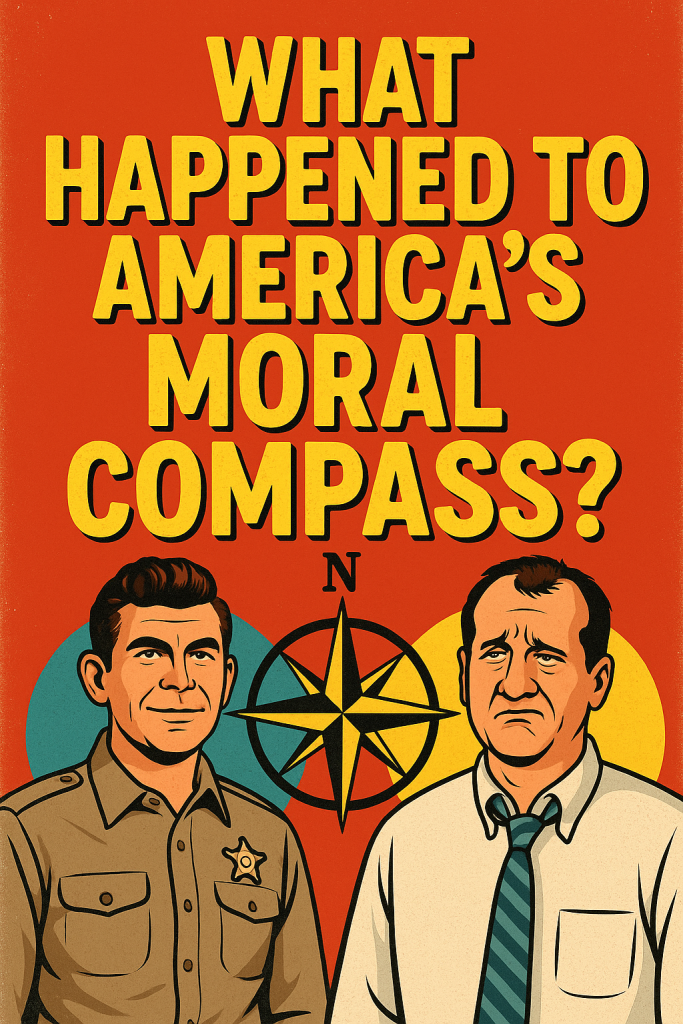
In the early days of American television, figures like Andy Griffith stood tall as symbols of morality, wisdom, and fatherly guidance. Sheriff Andy Taylor of The Andy Griffith Show wasn’t just a character—he was a cultural compass. Calm, patient, and principled, he embodied values rooted in responsibility, respect, and integrity. His parenting style emphasized teaching by example, discipline balanced with love, and an unwavering sense of right and wrong. For many, he represented not only the archetype of a good father but also the moral foundation of a nation still centered around family and community.
But as decades passed, the archetype of the TV father figure radically shifted. By the late 1980s and early 1990s, Al Bundy from Married… with Children became the polar opposite of Andy Griffith. Al was portrayed as bitter, lazy, emasculated, and perpetually defeated by life. The household dynamic flipped—children insulted their parents, wives nagged and mocked their husbands, and fathers became little more than punchlines. The transformation wasn’t just comedic; it reflected—and helped reinforce—a cultural shift away from traditional family values toward a more cynical, humanistic worldview.
The Role of Pop Culture in Rewriting Morality
Television and media don’t merely entertain—they shape perceptions, normalize behaviors, and redefine standards. In the 1960s, programs like The Andy Griffith Show or Leave It to Beaver upheld the ideal of a strong family led by a wise father figure. Fathers were respected, mothers nurtured, and children were expected to show discipline and honor authority. These weren’t just “TV values”—they echoed the wider cultural consensus of the time.
By the late 20th century, however, entertainment began reflecting a new narrative. Sitcoms like Married… with Children, The Simpsons, and later Family Guy recast fathers as incompetent buffoons. Authority figures, once respected, became objects of ridicule. Children were no longer taught respect; instead, they mocked and disobeyed without consequence. Wives were increasingly portrayed as domineering, manipulative, or selfish, often dismissing husbands as useless or burdensome. What was once an institution built on unity became a battlefield of sarcasm and disrespect.
This wasn’t accidental. The shift in media mirrored broader cultural currents—feminism’s rise, countercultural movements of the 1960s, and a growing skepticism of authority in the 1970s and beyond. Pop culture became both a mirror and a megaphone, amplifying the rejection of traditional values and presenting dysfunction as the new normal.
The Consequences of Redefining Family
When fathers are consistently portrayed as bumbling fools, the implication is clear: men are irrelevant, their guidance unnecessary, and their authority obsolete. When children see disrespect rewarded with laughs, they internalize rebellion as virtue. And when wives are framed as selfish or domineering, the image of family unity crumbles further.
The larger consequence has been a cultural acceptance of fractured homes, absent fathers, and a generation raised with media-driven values rather than moral anchors. Where Andy Griffith symbolized wisdom, patience, and moral grounding, Al Bundy symbolized defeat, dysfunction, and self-pity. That transition speaks volumes about America’s moral compass—and where it has led us.
Can We Reclaim It?
While we cannot return to Mayberry, we can recognize what was lost when pop culture decided to mock instead of model. Media has power—it always has. It can lift up the virtues of respect, love, and family unity just as easily as it can tear them down. The question for America now is: which values will we choose to amplify for the generations to come?