Larry Hama: The Vietnam Veteran Behind G.I. Joe
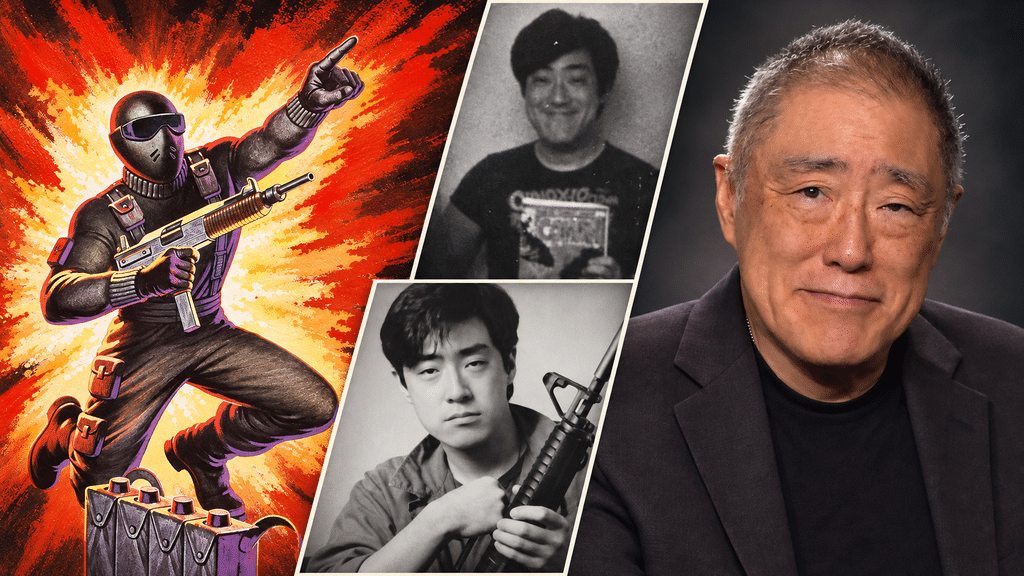
SERPENTORSLAIR.COM EXCLUSIVE • VETERANS DAY 2026
The Real American Hero Behind G.I. Joe: Larry Hama’s Journey From Vietnam to Marvel Comics
Before he gave Snake Eyes a tragic past, created unforgettable G.I. Joe characters, and helped define a generation’s childhood, Larry Hama served in Vietnam. His experiences would shape one of the most beloved comic-book universes in American history.
By Adam Jared – Serpentorslair.com Founder
November 11, 2026 | Veterans Day Special Feature

For millions of children who grew up in the 1980s, G.I. Joe was more than a collection of action figures. It was an entire world of heroes, villains, secret missions, military specialties, extraordinary friendships, and unforgettable battles against Cobra.
We knew Snake Eyes as the mysterious masked commando. We admired Duke’s leadership, Scarlett’s determination, Stalker’s battlefield experience, and the complicated loyalties that connected Storm Shadow to his greatest rival.
But behind many of the personalities that made these fictional soldiers feel like real people stood a man whose knowledge of the military was earned long before he received his first G.I. Joe writing assignment.
His name is Larry Hama.
And although collectors know him as the legendary writer of Marvel’s G.I. Joe: A Real American Hero, fewer may know the complete story of his service during the Vietnam War, the personal memories that entered his writing, or the surprisingly unconventional career that brought him to Marvel Comics.
On Veterans Day, SerpentorsLair.com looks beyond the colorful covers, collectible action figures, and childhood nostalgia to recognize the veteran whose experiences helped give G.I. Joe its humanity.
Before G.I. Joe, There Was a Young Artist From New York
Born June 7, 1949, Larry Hama grew up in New York City as a third-generation Japanese American. His interests initially pointed toward the arts rather than a career writing military adventures.
He attended Manhattan’s High School of Art and Design, where one of his teachers was Bernard Krigstein, an influential artist associated with the groundbreaking EC Comics of the 1950s.
Hama demonstrated artistic ability early. At only sixteen, he sold work to the fantasy and horror publication Castle of Frankenstein. He also produced illustrations for commercial catalogs, an early job that required precision and discipline.
In a 1986 interview with Dwight Jon Zimmerman and Jim Salicrup, Hama remembered that he was working on illustrations for Sears catalogs when he was drafted into the Army.
It was an extraordinary transition: from commercial artwork and New York’s creative community to military service during one of America’s most controversial wars.
His future characters would eventually inhabit a fictional world of futuristic weapons and elaborate secret bases. Hama’s military education, however, came from the realities of Vietnam.
Vietnam, 1969–1971: The Experience Behind the Writer
According to the United States Department of Veterans Affairs, Larry Hama served in the U.S. Army during the Vietnam War from 1969 to 1971.
He was assigned to the 18th Engineer Brigade and worked with firearms and explosive ordnance. The VA also identifies Hama as having served as a tunnel rat, an unofficial specialty associated with soldiers who entered dangerous enemy tunnel systems.
For many readers, this is one of the most remarkable facts about the man who helped create the modern G.I. Joe universe.
Long before Hasbro introduced a character named Tunnel Rat, Hama had personal experience with the dangerous work represented by that name.
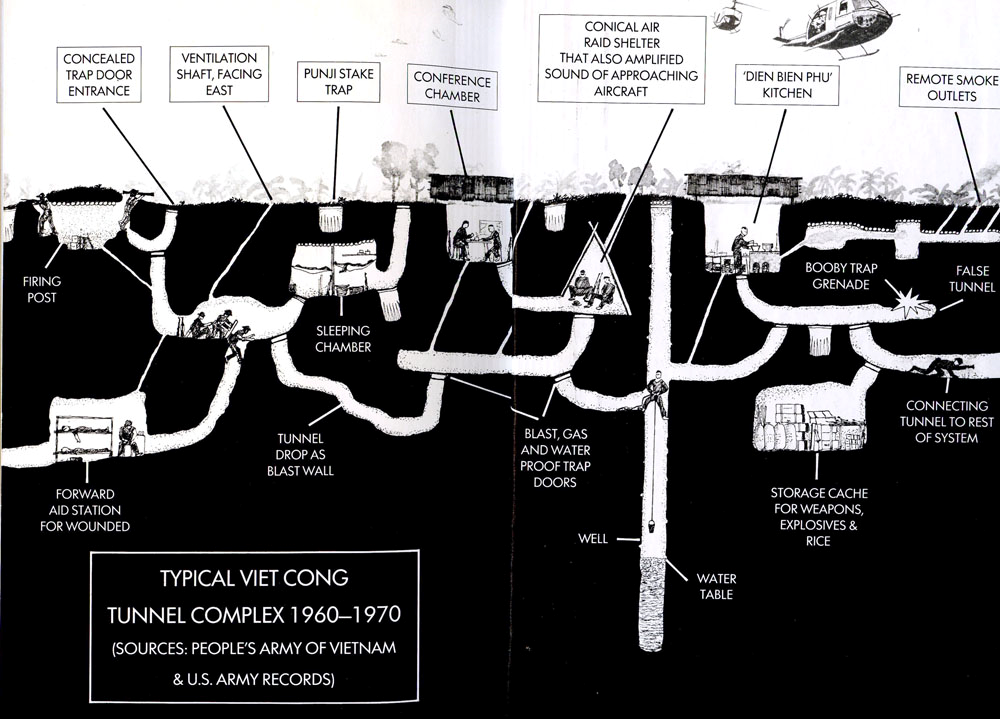
What Did a Vietnam-Era Tunnel Rat Actually Do?
The National Museum of the United States Army explains that tunnel systems used by Viet Cong forces could contain concealed entrances, weapons storage areas, medical facilities, living quarters, and command locations.
Some passages were extraordinarily narrow. Entering them meant abandoning much of the equipment that soldiers normally relied upon for protection.
A tunnel rat might carry only a flashlight, pistol, and a few essential tools while attempting to identify traps, locate enemy soldiers, collect intelligence, or determine how a tunnel system was organized.
These assignments required unusual composure. The soldier could face explosive devices, hidden passages, poisonous animals, or an armed opponent only a few feet away.
The experience demanded more than physical courage. It required patience, careful observation, an understanding of equipment, and the ability to make decisions while under enormous pressure.

Hama has generally been more interested in discussing the people and attitudes he encountered in military life than turning his wartime experiences into sensational stories.
In an interview with Cinema Daily US, he explained that what endured in his memory were the relationships between soldiers and the ways they behaved toward one another.
That observation provides an important key to understanding his later work.
G.I. Joe would contain plenty of explosions, helicopters, tanks, and remarkable military technology. But the relationships between its soldiers would become the emotional center of the series.
The Fallen Soldiers Who Lived On Through G.I. Joe
One of the most moving details of Hama’s story comes from the Department of Veterans Affairs.
In its October 18, 2018, Veteran of the Day tribute, the VA reported that Hama used his opportunity working on G.I. Joe to help preserve the memories of comrades who died during the Vietnam War.
Some character names and identities drew from people he had known, including fallen fellow soldiers.
For a generation of young fans, those names became associated with colorful action figures and heroic imaginary missions.
For their creator, however, personal memories could exist behind the fiction.
That is an extraordinary dimension of the franchise’s history. Characters who lived on bedroom floors, comic-book pages, and television screens could also carry echoes of men who had lived and served in the real world.
It is important not to turn that fact into mythology. There is no verified public list establishing that every Joe was named after a fallen servicemember. Hama has also explained that his characters were modeled on a mixture of personal friends, acquaintances, and other individuals.
But the documented connection to his fallen comrades makes his contribution especially meaningful on Veterans Day.
G.I. Joe was entertainment. It could also become a way of remembering.
The Assignment Nobody Else Wanted
One of the great ironies of the G.I. Joe franchise is that Larry Hama did not initially set out to become its defining creative voice.
After his military service, Hama returned to New York and built a career involving artwork, writing, editing, and other creative pursuits.
He worked with legendary comic-book artist Wally Wood and later at Neal Adams’ Continuity Associates studio. His experience eventually led him through DC Comics and into Marvel.
By the early 1980s, Hasbro wanted to reinvent G.I. Joe for a generation accustomed to the smaller action figures popularized by Star Wars.
The new line needed more than figures and accessories. Hasbro wanted a fully realized world, complete with personalities and stories that would connect the characters.
Marvel was brought into the process.
But the job of writing a comic book tied directly to a toy line was hardly considered prestigious within the company.
Hama has repeatedly recalled that he received the assignment only after other writers passed on it. In a 2021 interview with Looper, he explained that he had been searching for additional writing assignments for years.
He was even willing to write about Barbie or other completely different characters if that meant obtaining steady writing work.
Instead, he accepted G.I. Joe and approached it with the same seriousness he would have brought to any other creative assignment.
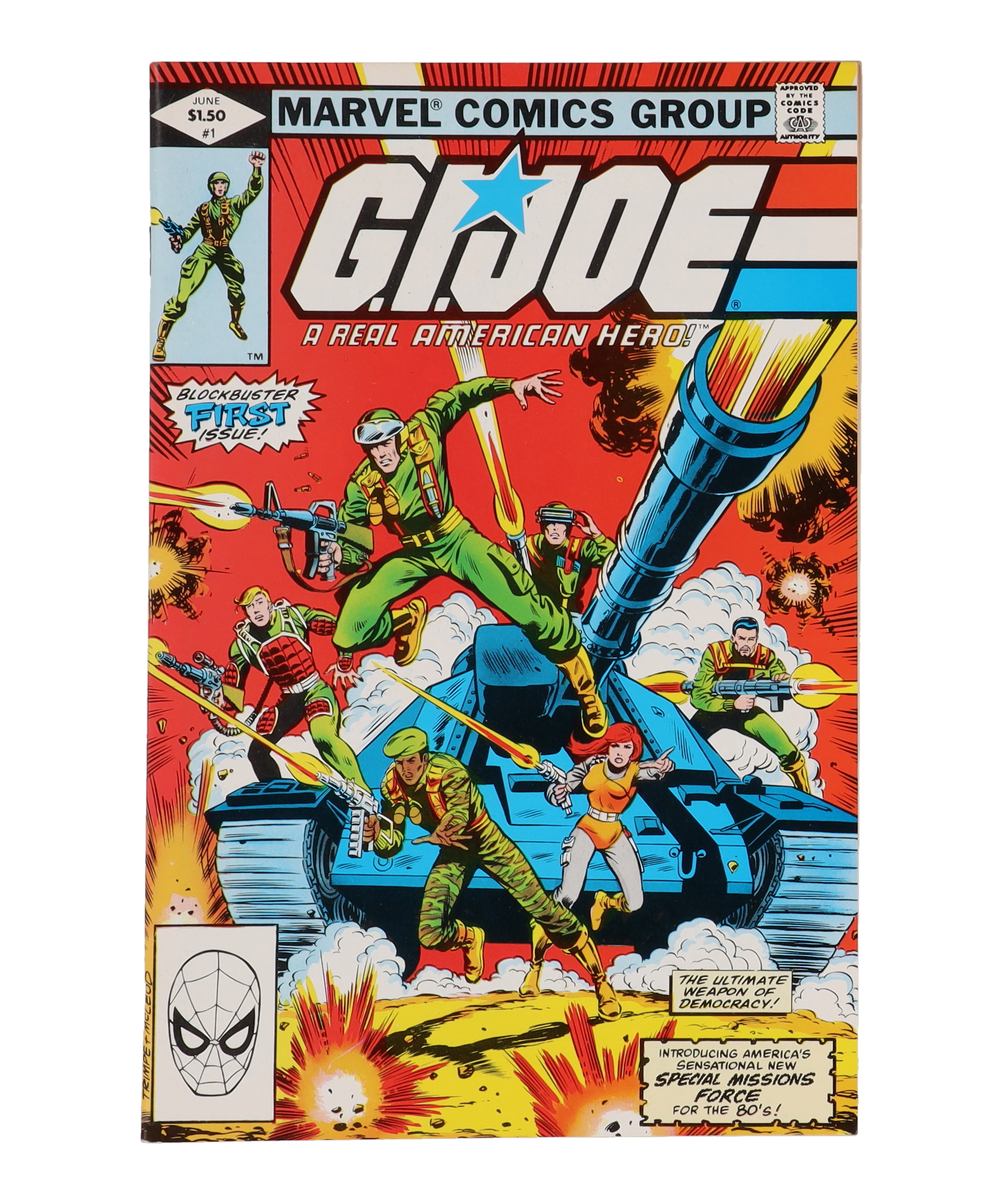
His approach helped transform what could have been a disposable promotional comic into a continuing adventure filled with evolving relationships, surprising betrayals, complicated enemies, and memorable characters.
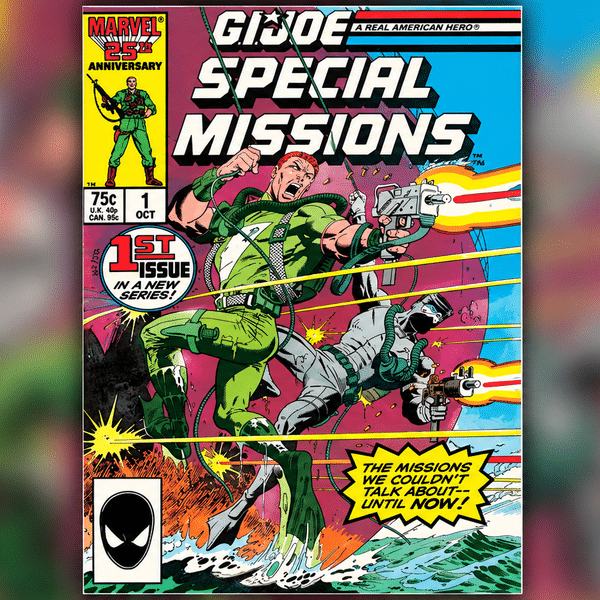
The original Marvel series began in 1982 and continued through 155 issues, concluding in 1994.
Its reputation would outlast the original toy-line boom.
The Secret Character Files That Fans Never Got to Read
Every vintage G.I. Joe collector remembers the file cards.
They were printed on the backs of action-figure packages and contained information about a character’s name, military specialty, personal background, training, personality, and sometimes an unexpectedly revealing observation about their behavior.
Many children carefully cut them from the packaging and saved them alongside their figures.
But the cards that appeared in stores were only part of what Hama originally created.

During a 1998 interview with Adrian Faulkner, Hama revealed that the original dossiers he prepared for Hasbro included considerably more detail than the cards eventually printed on the packages.
For the original group of ten figures, he developed extended psychological profiles designed to help establish the personalities of the characters.
Those longer psychological assessments were not included on the final retail file cards.
Imagine that for a moment.
Behind the short paragraph that introduced a character such as Scarlett, Stalker, or Snake Eyes was a larger creative framework concerning how that individual thought, behaved, and reacted to other people.
In practical terms, Hama was constructing an internal guide to the personalities of an expanding fictional military team.
He also relied upon recognizable real-world personalities as models, which helped him maintain consistency when writing characters across years of stories.
That explains why longtime readers can often predict how a particular Joe will respond to danger, disappointment, betrayal, or a friend’s sacrifice.
The characters possess distinct emotional identities, not simply different weapons.
Cobra Wasn’t Even Part of the Original Plan
Another surprising discovery involves the creation of G.I. Joe’s greatest enemies.
During his 1986 interview in Comics Interview, Hama explained that Hasbro’s early development work centered on the American soldiers themselves.
The initial concepts identified different military specialties, including infantry, communications, and other combat roles.
According to Hama’s account, the toy company had not yet developed the enemy organization that would give the heroes a lasting adversary.
The creative team recognized the problem immediately.
A group of highly trained soldiers could not spend every adventure performing exercises without an opposing force.
Hama recalled that editor and writer Archie Goodwin suggested the name Cobra during the development discussions.
From that starting point, the fictional enemy organization began taking shape.
Consider how different the franchise might have become without this decision.
No Cobra Commander leading an army of masked soldiers. No recognizable Cobra emblem on enemy vehicles. No endless conflict between two organizations that would come to symbolize an entire decade of action figures.
One of the most identifiable villain organizations in toy history emerged from a practical storytelling problem.
Why Snake Eyes Was More Than a Silent Ninja
For many fans, Snake Eyes represents the emotional heart of Larry Hama’s comic-book universe.
His appearance was immediately unforgettable: a mysterious soldier concealed beneath a mask, dressed in dark military clothing, capable of extraordinary acts of courage.
But his popularity cannot be explained by his appearance alone.
Hama developed a character who communicated through decisions, loyalty, sacrifice, and action rather than spoken words.
In a 1986 interview, the writer explained that Snake Eyes’ concealed identity allowed readers to imagine themselves in the character’s place.
Yet Snake Eyes was not emotionally empty. His behavior demonstrated unmistakable personal values.
His relationships with Scarlett, Stalker, and Storm Shadow would gradually reveal the enormous weight of his past.
Hama’s own experiences as a veteran helped inform his understanding of loyalty, loss, and the complicated experiences soldiers carry beyond their service.
The Extraordinary Secret About Snake Eyes’ Name
In his 1998 interview, Hama revealed something that still surprises some readers.
He had deliberately avoided creating a definitive civilian name for Snake Eyes.
Keeping that detail unresolved preserved the mystery surrounding the character and prevented readers from reducing him to a conventional identity.
The decision fits with the way Hama constructed Snake Eyes’ personality: readers learned who he was through what he did, whom he protected, and the people who mattered to him.
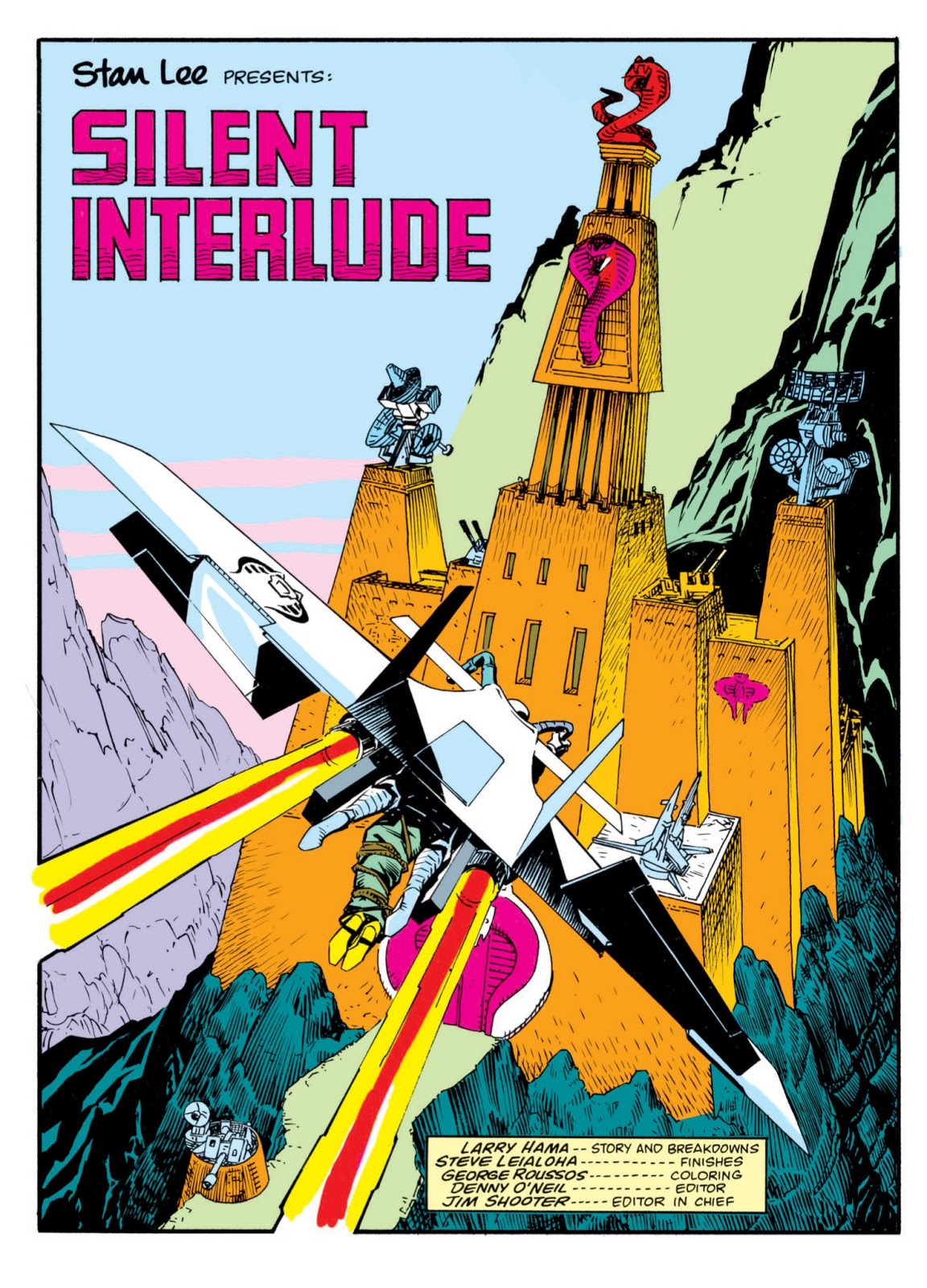
The Comic That Told an Entire Story Without Words
In 1984, Hama produced one of the most celebrated issues in G.I. Joe history.
G.I. Joe: A Real American Hero #21, titled Silent Interlude, told a complete action story without conventional dialogue, captions, or sound effects.
The issue showcased Snake Eyes, Scarlett, and Storm Shadow while demonstrating how carefully staged visual storytelling could communicate movement, suspense, and complicated relationships.
Hama explained in his 1986 interview that he wanted to test whether a complete narrative could be communicated without words.
Although stories have circulated about deadline pressures contributing to the unusual format, Hama’s own explanation emphasizes the creative experiment itself.
The result has become one of the defining achievements of his career.
In October 2025, Hama revisited the silent-storytelling concept in G.I. Joe #321, exactly 300 issue numbers after the original.
The Little-Known Real-Life Inspiration Behind the Pit
Hama’s military experience also influenced details that most readers would never recognize as coming from an actual conversation.
During a later question-and-answer session published by Skybound, Hama discussed the inspiration for locating the original G.I. Joe headquarters, known as the Pit, near Fort Wadsworth on Staten Island.
He remembered a chaplain’s assistant he had known while serving in a headquarters company.
That soldier had spoken favorably about being assigned to Fort Wadsworth, and the location remained in Hama’s memory.
Years later, that seemingly ordinary recollection helped influence the location of G.I. Joe’s secret headquarters.
It is a wonderful example of how Hama’s fictional universe incorporated small, authentic details from his experiences.
Not every memorable detail came from dramatic combat experiences. Sometimes it came from something a fellow soldier said during an ordinary conversation.
1987: Hasbro Turned Larry Hama Into an Action Figure
Perhaps the most direct connection between Larry Hama’s military service and the toys that made him famous arrived in 1987.
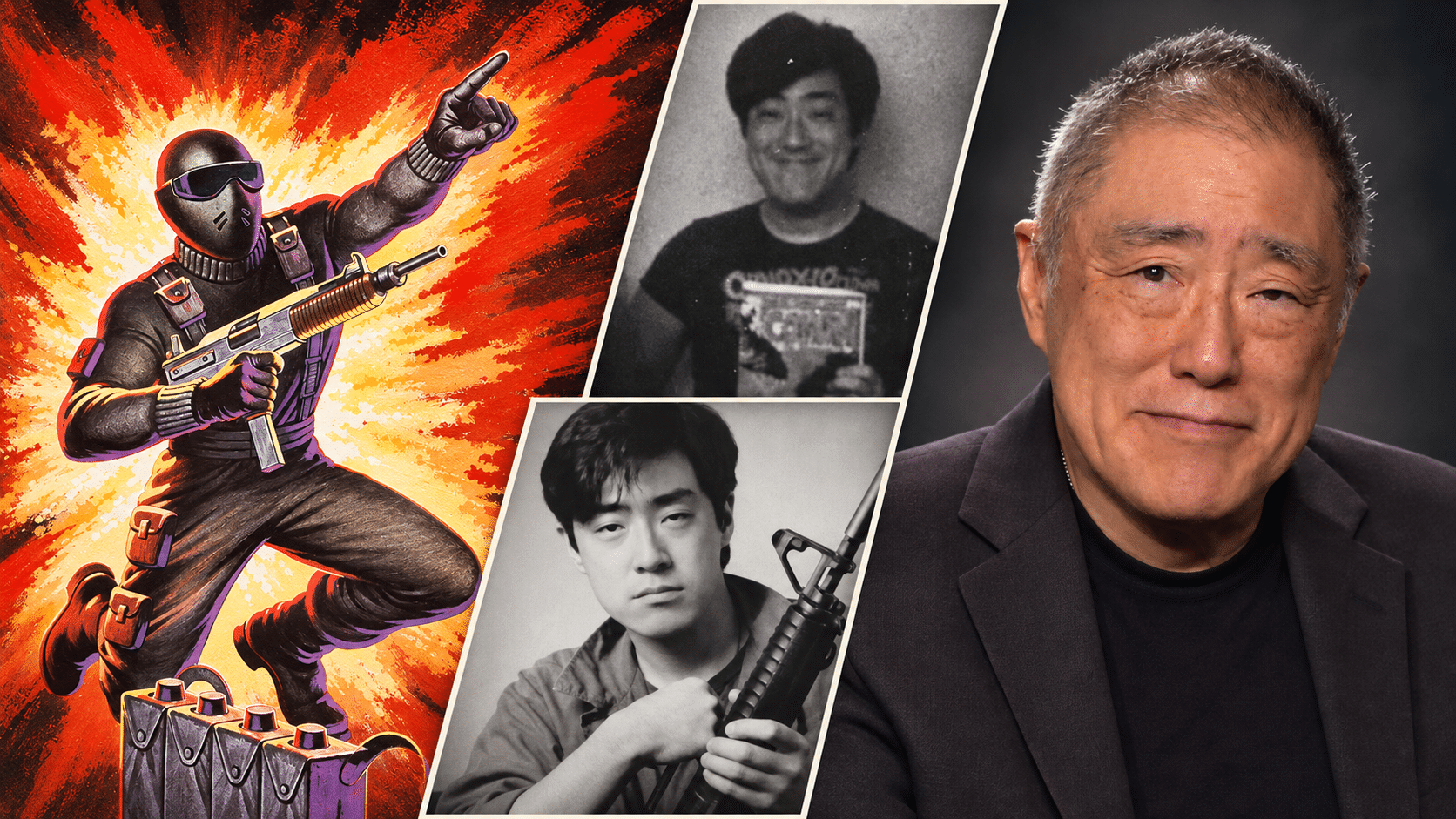
That year, Hasbro introduced Tunnel Rat, an explosive ordnance disposal specialist whose appearance was modeled after Hama.
For collectors who grew up with the original A Real American Hero figures, this means that a character they may have played with for decades was based on the man who helped give their favorite toys their personalities.
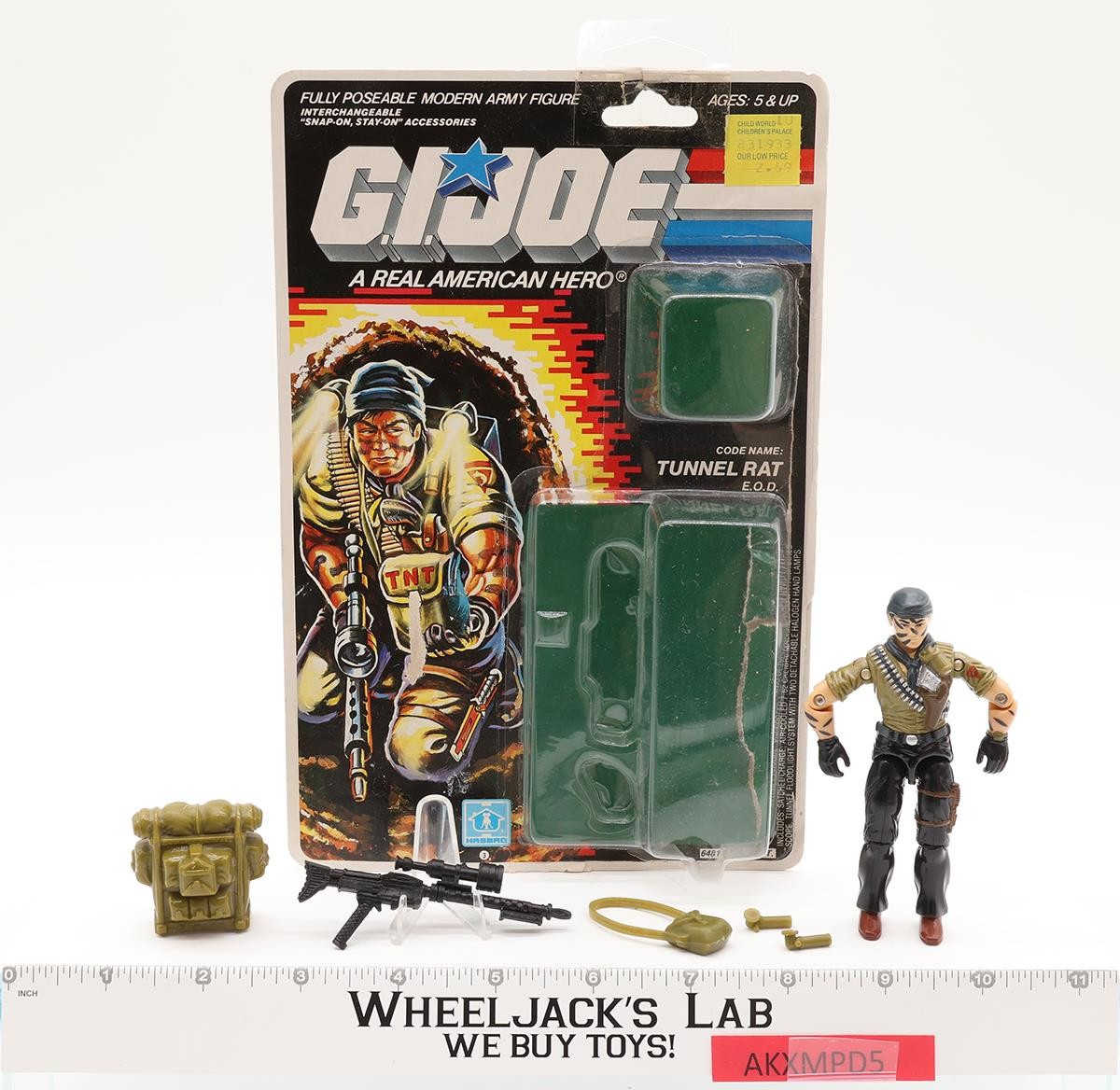
Tunnel Rat’s real name was Nicky Lee, and his file card identified him as an expert in explosive ordnance disposal and combat engineering.
His background described a tough Brooklyn upbringing, Ranger training, and specialized knowledge of weapons and explosives.
These fictional details were not intended as a literal reproduction of Hama’s personal biography.
Instead, the character represented a tribute through his physical likeness and professional specialty.

There is something particularly fitting about that tribute.
Hama did not simply receive an action figure with his face on it. He became associated with a fictional military specialist whose skills and responsibilities reflected a part of his own history.
For collectors, Tunnel Rat stands as one of the clearest connections between the real-world history of G.I. Joe and the fictional characters that appeared in the toy aisle.
Why His Soldiers Felt Different From Ordinary Cartoon Heroes
Hama understood that a convincing military character needed more than a convincing uniform.
In interviews, he described the importance of how soldiers behave under pressure, how they communicate, and how they respond to mistakes.
He was particularly sensitive to fictional soldiers behaving in ways that would seem foolish to people with actual military experience.
But his approach was not limited to technical accuracy.
He wanted G.I. Joe’s heroes to possess distinct personalities.
Scarlett, Lady Jaye, and other women in his fictional team were meant to function as capable participants rather than ornamental characters. He also worked to create individuals from different cultural backgrounds whose personalities were more substantial than simple stereotypes.
For example, Hama has explained that aspects of Quick Kick’s background grew from his familiarity with Asian American families and neighborhood businesses, including relatives who operated grocery stores.
These were not details invented solely from research. They came from communities and experiences he knew.
His military background likewise encouraged him to portray personal loyalties, shared responsibility, and teamwork as important aspects of the characters’ identities.
That is part of why the Marvel series could explore serious emotional subjects while remaining an adventure for young readers.
The Other Vietnam Comic Larry Hama Helped Create
Four years after the debut of G.I. Joe, Marvel introduced another military comic that was very different from the battle between America’s fictional special missions force and Cobra.
In 1986, the publisher launched The ‘Nam.
This series followed American soldiers through the Vietnam War, focusing on their everyday lives, experiences, relationships, and the difficult circumstances surrounding the conflict.

Hama’s role was primarily editorial and developmental rather than that of the series’ regular writer.
Working with fellow veteran Doug Murray, who wrote the early issues, Hama helped shape a comic that emphasized the perspectives of ordinary soldiers rather than invulnerable action heroes.
One particularly innovative feature was its treatment of time.
Hama described establishing a structure in which the passing of months in the comic corresponded to the passing of months in the historical timeline.
That approach allowed the fictional characters’ experiences to unfold alongside the larger history of the conflict.
For readers familiar only with his G.I. Joe work, The ‘Nam offers another important insight into Hama’s creative priorities.
His interest in soldiers extended beyond the excitement of fictional combat. He was interested in the human experiences of people who served.
A Creative Career That Went Far Beyond G.I. Joe
Although G.I. Joe became his most recognizable professional achievement, Hama’s career included a remarkable range of creative accomplishments.
He worked as an illustrator, editor, writer, actor, and musician.
During the 1970s, he appeared in television productions and performed on Broadway, including the original production of Stephen Sondheim’s Pacific Overtures.
He also created Bucky O’Hare, a science-fiction adventure property that later developed into a comic series, animated television program, video games, and its own action-figure line.
His work on Marvel’s Wolverine became another major chapter in his comic-book career.
All these accomplishments underscore a detail sometimes forgotten in discussions of G.I. Joe: Hama was never simply a military consultant who happened to write comics.
He was a broadly experienced storyteller who combined artistic training, firsthand experiences, and an understanding of characterization.

The Stories Continued Long After the 1980s
Even after Marvel’s original G.I. Joe series ended in 1994, Hama’s association with the characters continued.
The original comic continuity eventually returned, with Hama again writing new chapters in the adventures of the team he helped define.
Across changing publishers, shifting toy markets, and several generations of fans, his interpretation of G.I. Joe remained enormously influential.
In a 2024 question-and-answer feature published by Skybound, Hama continued to emphasize the importance of understanding characters rather than constructing elaborate plots first.
For him, compelling personalities and their relationships made the action meaningful.

That philosophy explains why longtime readers can continue following characters they first encountered more than forty years ago.
We do not simply remember a specific battle between Snake Eyes and Storm Shadow. We remember their history.
We remember friendships, betrayals, sacrifices, reconciliations, and consequences.
Those elements transformed a commercially licensed comic into a story with an unusually enduring emotional impact.
What Larry Hama Believes G.I. Joe Is Really About
During a revealing interview with Nichi Bei News in 2010, Hama discussed his beliefs about military-themed storytelling.
He made an important distinction between supporting the people who serve and glorifying war itself.
Hama identified loyalty, honor, and the futility of revenge as major themes within his fictional universe.
That distinction deserves special attention on Veterans Day.
The G.I. Joe adventures he wrote were never realistic military documentaries. Their world included advanced technology, spectacular battles, elaborate villains, and an expanding mythology involving ninjas and secret organizations.
But beneath those fantastical elements were recognizable human concerns.
Characters struggled with consequences. They made decisions based on friendships and personal obligations. They carried memories of people they had lost.
And their most meaningful achievements often involved protecting others rather than merely defeating an enemy.
For a creator whose life included service during the Vietnam War, those themes carried a significance far beyond entertainment.
Veterans Day 2026: Honoring the Man Behind the Heroes
For generations of collectors, Larry Hama’s name will forever be connected to Marvel’s G.I. Joe: A Real American Hero.
His stories helped turn relatively simple plastic figures into individuals who seemed to possess entire lives beyond their packaging.
He gave Snake Eyes mystery and emotional depth.
He gave Scarlett, Stalker, Storm Shadow, and countless other characters recognizable personalities and meaningful relationships.
He helped build the world in which those characters could continue growing long after their first appearances.
And some of that remarkable work was informed by his own experiences as an American soldier.
His time in Vietnam came years before the emergence of Cobra Commander, the Arashikage clan, and the extraordinary adventures of Marvel’s G.I. Joe team.
But those experiences helped shape the writer who would eventually create those stories.
That is why the story of Larry Hama deserves to be remembered not simply as part of the history of an action-figure franchise, but as part of the larger history of American veterans who carried their experiences into creative lives after military service.
On this Veterans Day, we recognize Larry Hama for both his military service and his extraordinary contribution to popular culture.
To Larry Hama, and to every veteran who served: thank you.
And to the generation of fans who grew up reading his adventures, perhaps the greatest tribute is to recognize something the original comics taught us decades ago:
A real American hero is defined by courage, character, loyalty, and the willingness to stand beside others.
Join the Conversation
G.I. Joe fans, we want to hear from you!
Did you know Larry Hama was a Vietnam veteran and that the original 1987 Tunnel Rat action figure was modeled after him?
Which character or story from Hama’s legendary G.I. Joe comics has stayed with you the longest?
Share your memories in the comments and help us recognize the man who gave so many of our childhood heroes their humanity.
FOLLOW SERPENTORSLAIR.COM FOR G.I. JOE HISTORY, VINTAGE TOYS, EXCLUSIVE INTERVIEWS, AND 1980s NOSTALGIA.
Historical Sources and Further Reading
U.S. Department of Veterans Affairs — Veteran of the Day: Larry Hama (2018)
National Museum of the United States Army — Tunnel Rats of the Vietnam War
New York University — Larry Hama Comic Book Collection and Biographical History
Comics Interview #37 and #38 (1986) — Larry Hama interview, archived by JoeGuide
Adrian Faulkner — Original Larry Hama Interview (1998)
Looper — Larry Hama Reveals Why He Wrote G.I. Joe
Skybound — Larry Hama G.I. Joe AMA Highlights
Cinema Daily US — Exclusive Interview With Larry Hama
Nichi Bei News — Larry Hama and the Making of a Real American Hero
Grand Comics Database — Marvel’s G.I. Joe Original Series
About the Author
Adam Jared is the founder of SerpentorsLair.com, a community dedicated to G.I. Joe, Transformers, vintage toys, entertainment, and popular culture. He holds a Master of Science in Social Media Management and is pursuing a PhD in Strategic Communication. Through Serpentor’s Lair, he explores the history, creators, and cultural legacy of the entertainment that defined generations of fans.