Spider-Noir Does Whatever A Spider Can
By: R.A. Rayne
“Someone once asked me what universe this was. Strange question that’s stuck with me all these years later …” -Spider-Man Noir
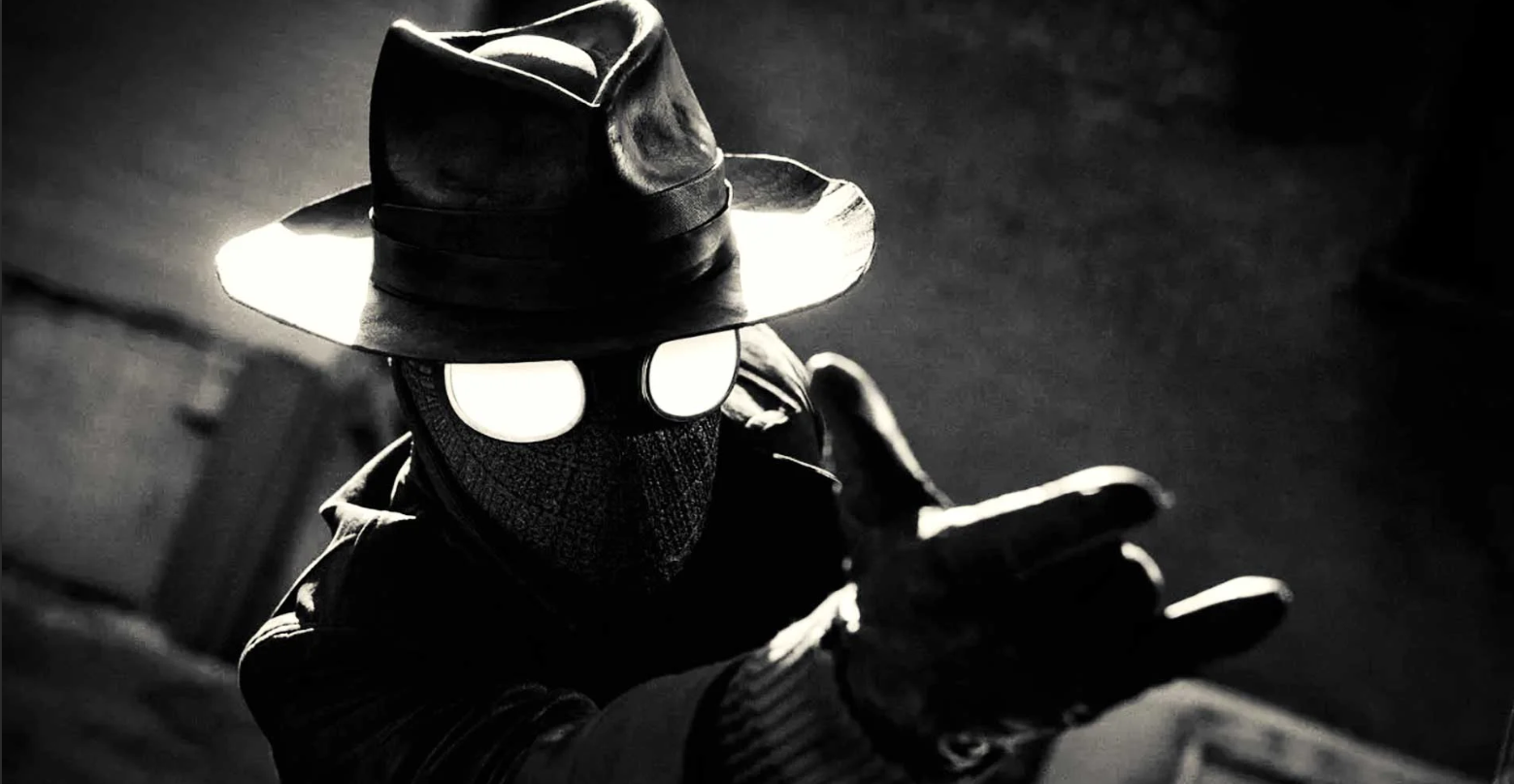
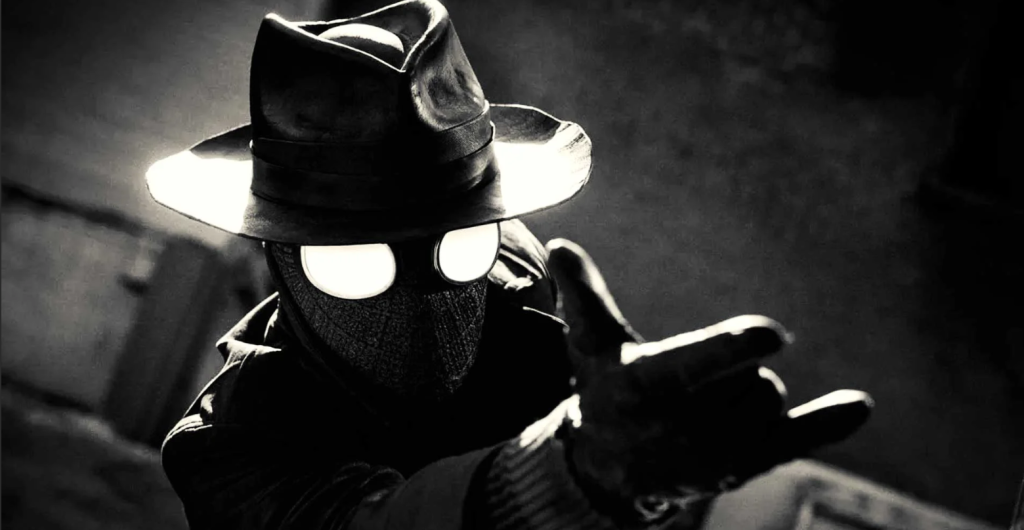
In its simplicity, the opening line of Spider-Noir is just a line to introduce the audience to the show, but there’s more to it than that. It not only sets up the show and introduces us to its main character, but it also lets the audience know that the show is not part of the MCU or the Sony Spider-verse, and that the “Spider” knows of the multiverse and may even have had dealings within it.
Spider-Noir is set in an alternate universe in 1933 New York City during the Great Depression. While this is the same year Spider-Man Noir says he is from in Spider-Man: Into the Spider-Verse, there seems to be no connection between the two appearances, or is there?
Nicolas Cage is reprising his role as Spider-Man Noir. Nick Cage first voiced the character in Sony’s animated film Spider-Man: Into the Spider-Verse. In the 2018 film, Spider-Man Noir joins forces with Miles Morales, Gwen Stacy, Spider-Ham, and Peter B. Parker (from Earth-616 B) to stop the Kingpin (Wilson Fisk), who has built a super collider to access parallel universes.
The character first appeared in the comic series Spider-Man Noir, published on December 17, 2008. The story, like the Amazon Prime show, is set in a gritty, alternate-reality New York City in 1933. In the comic book series, as well as in Into the Spider-Verse, Spider-Man Noir is Peter Parker, but the live-action Prime Video series has adapted an older, retired version of the character named Ben Reilly, a name many Spider-Man fans will remember from the Spider-Man Clone Saga comics (1994–1996). The Clone Saga is one of Marvel Comics’ most despised and controversial storylines. It features Peter Parker battling a clone of himself. After a much-too-long storyline in which neither Peter nor his clone knew who the real Peter Parker was, the clone finally changed his name to “Ben Reilly” and became the hero Scarlet Spider.
While this may seem arbitrary in the context of the Amazon Prime series, there is a subtle hint that the character is changing his name, dropped in Episode Seven (Nobody’s Hero). Sometime after returning from his World War I tour, during which he saved a battalion of soldiers from a German POW camp where they were being experimented on, the Spider began going by the name “Ben Reilly,” a strong indication that his original identity was Peter Parker. This name change may also indicate that this incarnation of the character is indeed the same Spider-Man Noir from Sony’s animated Spider-Verse. Since both projects are produced by Sony and Amy Pascal, the live-action series could be a prequel to Spider-Man Noir’s appearance in the animated film.
Of course, this is speculation and may simply be a cool Easter egg as a nod to the original comic book and film; it’s not the only one in the series. Spider-Man Noir is packed with Easter eggs, homages, and references to both the Spider-Man universe and the Noir Crime genre that preceded it. Nicolas Cage has said he based Ben Riley on the roles of James Cagney and Edward G. Robinson in their 1930s detective films. Cage said his interpretation is “more Sam Spade than the Peter Parker/Spider-Man we’ve come to know.” Cage added that the “Spider”/Ben Riley is 70% Humphrey Bogart (particularly his performance in The Big Sleep) and 30% Bugs Bunny.
Spider-Noir gives viewers the option to watch the series in “Authentic Black and White” or “True-Hue” Full Color. The “Authentic Black and White” format is intended to replicate the gritty detective films of the 1930s-1950s, with deep contrasts, shadows, and silhouettes. It captures the “grimness” of the Depression. The “True-Hue” Full Color is intended for a broader, younger audience who prefers a traditional color format. It’s a saturated version with a vintage feel, similar to “Technicolor or Edward Hopper paintings.”
Even though the “Authentic Black and White” version gives you the feel of classic Crime Noir films, the “True-Hue” format has a lot to offer as well. For instance, Costume Designer Trayce Gigi Field and her team designed 1930s-inspired vintage couture for characters like Cat Hardy (Li Jun Li), Robbie Robertson (Lamorne Morris), and Janet (Karen Rodriguez), based on their comic book outfits in both color and tone. Not only does the “True-Hue” allow you to see the depth and detail of the costumes, but it also highlights the set design, action sequences, and subtle details throughout the series. As someone who has watched the series in both formats, I strongly encourage you to do the same.
Spider-Noir is “amazing,” not only for its sets, costumes, and Easter eggs, but also for being incredibly well-written and charming. Nicolas Cage’s portrayal of an aging superhero who has lost everything he loved and believes that “with no power comes no responsibility” helps the audience understand the burden that comes with having superpowers.
The villains in the series are dark, dramatic 1930s versions of classic Spider-Man enemies. Many of the series’ villains are making their first leap from the pages of comic books into a live-action world.
Silvermane (Silvio Manfredi) made his first appearance in The Amazing Spider-Man #73 (June 1969). The crime boss has appeared in several forms of media beyond comics, including animated series and video games, but Spider-Noir gives us our first live-action look at Silvermane (Brendan Gleeson). Silvermane is an organized crime boss who runs the illegal alcohol trade across New York during Prohibition and has everyone, even the Chief of Police, under his control.
Later this summer, Tombstone will make his big-screen live-action debut in the film Spider-Man: Brand New Day, with Marvin Jones III (who previously voiced the character in Into the Spider-Verse) in the role. Spider-Noir gives us our first look at a live-action version of the character, played by Abraham Popoola. Tombstone/ Lonnie Lincoln is a down-on-his-luck Army vet who is left with no choice but to become a dangerous, gritty mob enforcer for Silvermane.
Although Felicia Jones (Felicity Jones) made a brief appearance in the 2014 film The Amazing Spider-Man 2 as an assistant to Harry Osborn at Oscorp, she contributed little to the overall story. In Spider-Noir, Felicia Hardy, known as Cat Hardy (Li Jun Li), never becomes the Black Cat we know from the comic books, but Cat Hardy is as conniving and cunning as her comic book counterpart. Hardy works as a lounge singer in one of Silvermane’s clubs. Silvermane treats her more as a pet than an associate. She despises the position, but it provides her with opportunities she can exploit.
Another character making their live-action debut is Megawatt/ Dirk Leyden (Andrew Lewis Caldwell). This 1930s version is an out-of-work actor/ subway driver who can manipulate electricity and uses it to commit crimes, which leads him to become one of Silvermane’s henchmen.
With most of Spider-Noir’s villains making their live-action debut, there is one character we have seen before. Sandman / Flint Marko has appeared in Sony’s Spider-Man 3 (2007) and in Marvel Studios’ Spider-Man: No Way Home (2021), with both appearances played by Thomas Haden Church. Spider-Noir’s 1930s version of Sandman / Flint Marko (Jack Huston) is a grounded, granite-tough enforcer whose powers are slowly consuming him. Despite his rough, tough exterior, Flint Marko, much like the movie adaptation, is caring and would rather be with the ones he loves than have the power that is destroying him.
Spider-Noir delivers all the web-slinging fun we’ve come to expect from Spider-Man. This series is action-packed and evokes the nostalgia of 1930s crime noir films from Hollywood’s golden age. Nicolas Cage’s portrayal of the Spider/Ben Riley is clever, witty, and the classic Nick Cage we fell in love with in films like Red Rock West (1993), Face/Off (1997), and Moonstruck (1987).
So listen up, “You dirty, yellow-bellied rats!” Spider-Noir is “The Cat’s Meow,” see. The only way you’d be missing this show is if you’re dodging coppers or buried in a Chicago overcoat.