Why Mr. Rogers Was the Real Superhero of the 1980s
The 1980s gave us no shortage of heroes.
We had muscle-bound warriors swinging swords, transforming robots fighting across the galaxy, commandos blowing up enemy bases, karate kids learning balance, ghost hunters saving New York, and time travelers trying to fix the future before it disappeared.
It was a decade of big heroes, big action, big toys, big music, and big imagination.
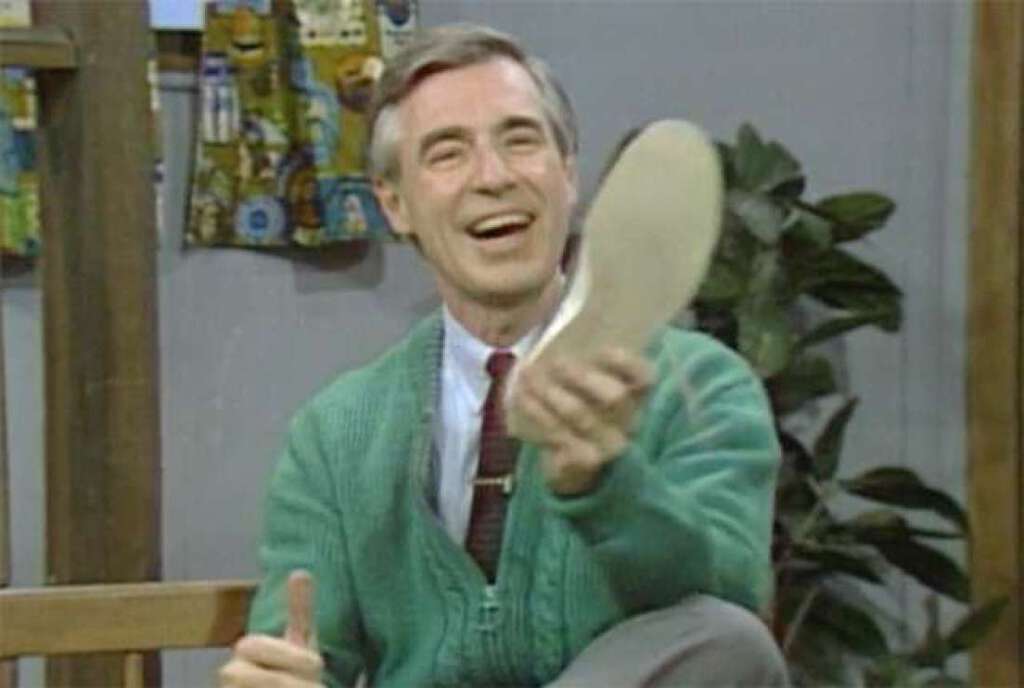
But somewhere in the middle of all that noise, wearing a cardigan instead of armor, sneakers instead of combat boots, and speaking in a calm voice instead of shouting battle cries, Fred Rogers quietly became one of the greatest heroes a generation ever had.
Mr. Rogers did not need a sword.
He did not need a laser cannon.
He did not need a black van, a proton pack, or a secret identity.
His superpower was kindness.
For kids growing up in the 1980s, Mister Rogers’ Neighborhood was different from almost everything else on television. It did not rush. It did not scream for your attention. It did not try to sell you the loudest version of childhood. Instead, Mr. Rogers looked through the television screen and spoke to children like they mattered.
That was powerful.
He told kids it was okay to feel scared. It was okay to feel angry. It was okay to be sad, confused, lonely, curious, or different. In a decade where so many heroes solved problems with fists, gadgets, or explosions, Mr. Rogers reminded children that feelings were not enemies to defeat. They were part of being human.
And he made that feel safe.
Every episode felt like opening the door to a place where gentleness still existed. The ritual was simple but unforgettable. The song. The sweater. The shoes. The calm welcome into the Neighborhood. It was predictable in the best possible way, like a trusted friend showing up exactly when you needed them.
That consistency mattered to kids.
Not every child had a quiet home. Not every child had someone who listened. Not every child had an adult who slowed down long enough to explain the world without making it scarier. Mr. Rogers became that voice for millions of children. He did not talk down to them. He did not dismiss their fears. He honored their inner lives.
That is what made him heroic.
He understood something many adults forget: childhood is not small to the person living it. A lost toy can feel like a tragedy. A new school can feel like a mountain. A fight with a friend can feel like the end of the world. Mr. Rogers treated those little heartbreaks with dignity.
In doing so, he taught kindness by practicing it.
He showed that being gentle did not mean being weak. In fact, it may have been the strongest thing about him. It takes courage to be soft in a hard world. It takes strength to remain patient when everything around you is loud. It takes wisdom to tell a child, “You are special,” and mean it without turning it into something shallow.
Mr. Rogers made children feel seen.
That is why his message still lands decades later. The kids who watched him in the 1980s are adults now. Many of them have lived through stress, disappointment, loss, fear, and a world that often feels colder than it should. But somewhere in the back of their memories is that soft voice reminding them that kindness is not childish.
Kindness is necessary.
The world still needs people who can sit beside someone who is hurting and not immediately try to fix them. It needs people who can listen. It needs people who can speak gently without being fake, forgive without being foolish, and care without needing applause.
That was the legacy of Mr. Rogers.
While other 1980s heroes taught us to fight evil, Mr. Rogers taught us how to fight despair. He fought loneliness by making children feel welcome. He fought fear by explaining the world honestly. He fought cruelty by modeling compassion. He fought shame by telling kids they were worthy of love exactly as they were.
That is not flashy.
But it is heroic.
Maybe that is why Mr. Rogers still feels so important now. We live in a world that rewards outrage, speed, sarcasm, and noise. Everyone is trying to be louder than everyone else. But Fred Rogers’ life and work remind us that one calm, sincere voice can cut through all of it.
He was not the kind of hero who kicked down doors.
He was the kind who opened one.
And for a lot of 80s kids, that made all the difference.
Because when Mr. Rogers asked, “Won’t you be my neighbor?” he was not just singing a theme song.
He was inviting us into a better way to live.