Carrie Turns 50: The Night Prom Became a Nightmare — The Untold Stories Behind the 1976 Horror Classic
SERPENTORSLAIR.COM | 1976–2026
50TH ANNIVERSARY HORROR RETROSPECTIVE
CARRIE TURNS 50: THE NIGHT PROM BECAME A NIGHTMARE
The Untold Stories Behind Brian De Palma’s Terrifying 1976 Masterpiece
November 3, 2026 | By Adam Jared

She was the girl nobody wanted to notice. The one everyone laughed at. And on one unforgettable night in 1976, an entire generation learned what could happen when the cruelty finally went too far.
Fifty years ago today, on November 3, 1976, the original Carrie began its theatrical release. Directed by Brian De Palma and adapted from Stephen King’s debut novel, the film didn’t merely frighten audiences. It forever changed how Hollywood portrayed teenage cruelty, isolation, and the terrifying consequences of humiliation.
For those of us who grew up during the 1970s and 1980s, Carrie became more than a movie. It was the disturbing VHS cover that caught our attention in the horror section of the neighborhood video store. It was the movie older kids whispered about at school. And once we finally watched it, it was the ending that made us afraid to turn off the television.
But behind the blood-soaked prom dress and unforgettable telekinetic destruction was a fascinating production filled with future Hollywood stars, unexpected accidents, astonishing performances, and creative decisions that still influence horror filmmakers today.
As Carrie celebrates its 50th anniversary, we’re opening the doors to Bates High School one more time.
1974: Stephen King’s First Nightmare Almost Never Happened
Before there was The Shining, It, Misery, or Pet Sematary, there was Carrie.
Published in 1974, Stephen King’s debut novel introduced a lonely teenage girl whose emerging supernatural abilities were tangled with the terror of adolescence and an abusive home life.
Remarkably, King initially abandoned the manuscript. Struggling with the story, he threw away its early pages.
His wife, Tabitha King, rescued them from the trash and encouraged him to continue writing. Her support helped transform a discarded idea into the novel that launched one of the most successful literary careers of the modern era.
Just two years after the book appeared, Hollywood delivered the first screen adaptation of King’s work.
Brian De Palma, already developing a reputation for visually inventive thrillers, recognized the story’s potential. Screenwriter Lawrence D. Cohen adapted the novel, while De Palma set out to make audiences sympathize with a protagonist who would eventually become the most frightening person in the room.
What made Carrie so unusual was that its central horror wasn’t initially supernatural.
It was the terrible reality of what other people could do to someone who desperately wanted to belong.
Sissy Spacek: The Actress Who Became Carrie White
Today, it’s almost impossible to imagine anyone other than Sissy Spacek portraying Carrie White.
But getting the role required an extraordinary commitment.
Spacek was already in her mid-20s when she auditioned to portray the awkward teenage outcast. Rather than arriving at the screen test looking glamorous, she deliberately made herself appear younger, plainer, and more socially uncomfortable.
In later interviews, Spacek recalled wearing an old sailor-style dress that her mother had made. She also described using Vaseline in her hair to create a particularly unkempt appearance.
She understood Carrie before the cameras started rolling.
That understanding became the emotional foundation of the entire film.
Spacek didn’t portray Carrie as a monster waiting to attack her classmates. She portrayed a vulnerable young woman who had never experienced the acceptance, affection, or freedom other teenagers took for granted.
The audience could see her embarrassment, her longing to belong, and her brief moments of hope. Consequently, when the unimaginable finally happens, our reaction isn’t simply fear.
It’s heartbreak.
The performance earned Spacek an Academy Award nomination for Best Actress, a remarkable achievement for a horror film in an era when the genre rarely received such recognition.
Piper Laurie: The Mother Who Was More Frightening Than the Monster

Although Carrie possesses terrifying supernatural abilities, the movie’s most disturbing character may be her mother.
Portrayed by the extraordinary Piper Laurie, Margaret White is a religious fanatic whose obsessive beliefs turn her daughter’s home into a prison.
She views Carrie’s natural development with fear, shame, and suspicion. Every effort Carrie makes to become an independent young woman provokes another outburst.
And Laurie is absolutely mesmerizing.
Her performance moves between tenderness, hysteria, manipulation, and outright menace. Even ordinary conversations become frightening because audiences never know when Margaret will explode.
One of the film’s most memorable moments occurs when Carrie prepares for prom in her homemade dress.
Although the dress is pale pink, Margaret interprets it as an ominous symbol of sin.
According to Laurie, the script originally called for a red dress, but costume designers selected pink because it suited Spacek. Rather than alter Margaret’s dialogue, Laurie argued that the mother should still see red, reflecting her disturbed worldview.
It’s a small decision, but one that makes the character even more unsettling.
Laurie received an Oscar nomination for Best Supporting Actress. Her portrayal remains one of the great performances in supernatural horror.
Piper Laurie died in 2023 at age 91, leaving behind a remarkable career that included The Hustler, Twin Peaks, and Carrie. Fifty years later, her Margaret White is still capable of sending chills down our spines.
Before Saturday Night Fever, John Travolta Was One of Carrie’s Tormentors

One of the great pleasures of revisiting Carrie is spotting the young actors who went on to become household names.
Long before Saturday Night Fever and Grease cemented his status as a superstar, John Travolta played Billy Nolan, the reckless boyfriend of vicious school bully Chris Hargensen.
Chris, played by Nancy Allen, is the driving force behind the cruel prom-night prank that changes everything.
Unlike Margaret White, who believes she’s acting out of religious conviction, Chris knows exactly what she’s doing. She wants to humiliate Carrie, and she doesn’t care how much damage she causes.
Allen brought such intensity to the role that the bullying sequences remain difficult to watch. The opening locker-room confrontation establishes how quickly group cruelty can spiral out of control.
Travolta, meanwhile, displays the charisma and screen presence that would soon make him one of America’s biggest movie stars.
Watching Carrie today offers a fascinating glimpse of a young actor on the edge of superstardom.
The Supporting Cast: Future Stars Everywhere

The supporting cast of Carrie reads like a time capsule of late-1970s and early-1980s entertainment.
William Katt portrayed Tommy Ross, the popular student who accompanies Carrie to the prom. Years later, Katt would become a television favorite as Ralph Hinkley in The Greatest American Hero.
Amy Irving played Sue Snell, a student whose guilt over Carrie’s mistreatment inspires her to attempt an act of kindness.
Betty Buckley portrayed Miss Collins, the sympathetic physical education teacher who recognizes Carrie’s suffering. Television viewers would soon recognize Buckley as Abby Bradford on Eight Is Enough.
P.J. Soles played Norma, one of the students participating in the cruelty directed at Carrie. She would become a recognizable figure in horror cinema through Halloween (1978) and later appear in the teen comedy Rock ‘n’ Roll High School.
For fans of classic television, these connections make revisiting Carrie particularly enjoyable.

The Most Terrifying Prom in Movie History
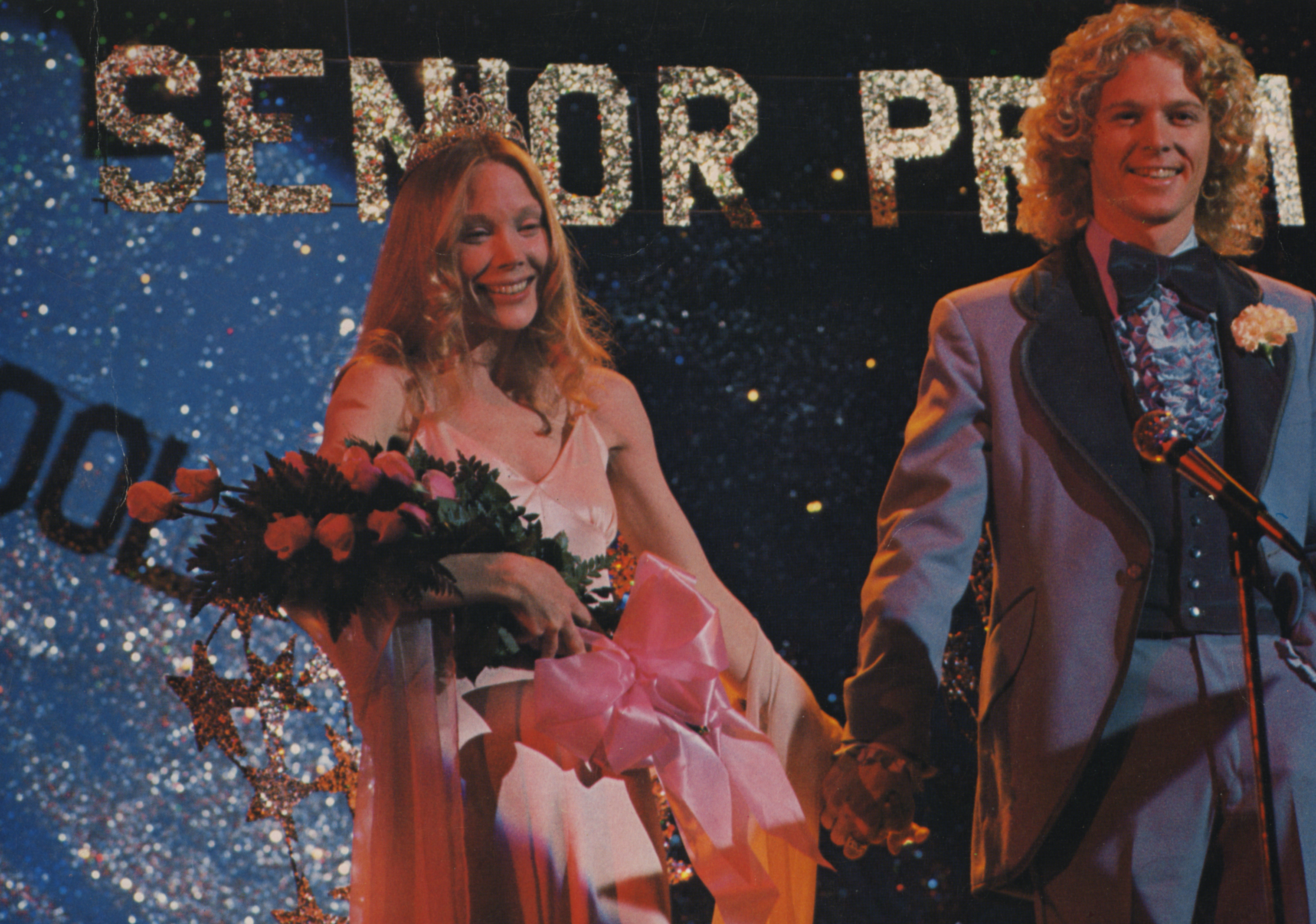
Few sequences in horror cinema are as recognizable as Carrie’s senior prom.
What makes it so extraordinary is how De Palma builds the scene around genuine happiness.
For perhaps the first time in her life, Carrie feels beautiful. She has a date, she is welcomed onto the dance floor, and she begins to experience the normal teenage excitement that has always been denied to her.
Then she and Tommy are crowned prom king and queen.
For one brief, magical moment, it appears that Carrie White might finally get a happy ending.
Of course, viewers know that something terrible is waiting above the stage.
De Palma stretches the suspense through slow-motion photography, elaborate camera movement, and carefully orchestrated editing. Every smile becomes painful because we know what’s coming.
The Bucket, the Blood, and the Nightmare

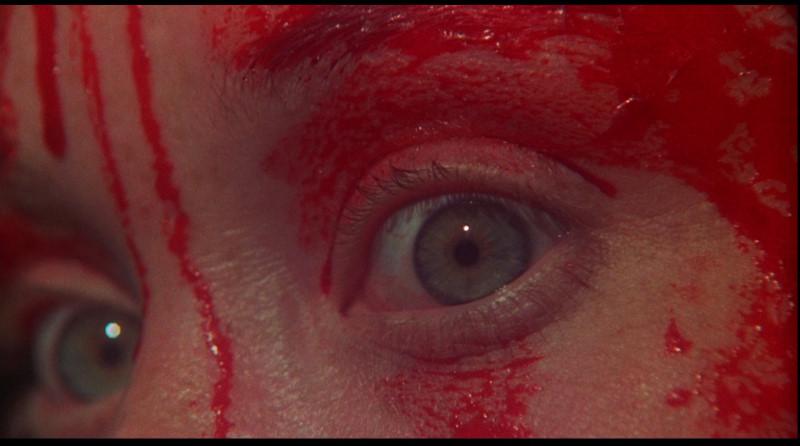
The image of Sissy Spacek standing in her prom dress, drenched in blood and staring into the crowd, became one of the most famous images in movie history.
But shooting the sequence was anything but glamorous.
The fake blood was made from a mixture of Karo syrup and food coloring. Under the hot studio lights, the syrup became incredibly sticky, making costume changes and repeated takes an uncomfortable experience.
Spacek later recalled that getting out of the dress could require a shower because the material stuck to her skin.
And the challenges didn’t end there.
The destruction of the gymnasium required complicated special effects, carefully controlled fire, and innovative editing.
De Palma used split-screen imagery to show Carrie unleashing her powers while the terrible consequences unfolded around her. The technique gave the sequence a fractured, almost hallucinatory quality.

One particularly unfortunate incident occurred when actress P.J. Soles was struck by a powerful stream of water during her character’s death scene.
In later interviews, Soles revealed that the water pressure injured her eardrum, leaving her in considerable pain.
It’s a reminder that practical special effects in the 1970s could be physically demanding and occasionally dangerous.
The resulting sequence remains astonishing, even in an era of sophisticated digital effects.
There’s something about real flames, real sets, and physical filmmaking techniques that gives Carrie’s nightmare a disturbing authenticity.
Behind the Camera: Brian De Palma’s Hitchcock Obsession

Anyone familiar with Brian De Palma’s work knows the director has a deep appreciation for Alfred Hitchcock.
Carrie contains one particularly obvious tribute: the high school is named Bates High, a reference to the Bates Motel from Hitchcock’s Psycho.
The film also draws on the master’s techniques of suspense, carefully directing the audience’s attention while creating an atmosphere in which disaster feels inevitable.
But De Palma added his own distinctive visual style.
The floating camera movement, elaborate compositions, slow-motion photography, and sudden shifts in perspective helped transform a relatively modestly budgeted horror production into something that looked and felt extraordinary.
The late Pino Donaggio’s music also played an essential role, moving between romantic tenderness and ominous supernatural dread.
The music helps us understand Carrie as a tragic character rather than a conventional horror villain.
Three Fascinating Secrets from the Original Production
1. Carrie’s House Was Built More Than Once
The eerie White family home required several different constructions: a real location house, a full-scale interior, and a half-scale exterior model.
That smaller model was used for the memorable sequence in which the house appears to collapse into the ground.
According to the American Film Institute’s production history, filmmakers originally planned to accompany the sinking house with a biblical rain of rocks. Mechanical problems prevented the sequence from working as intended, and the idea was abandoned.
2. Sue Snell’s Dream Used a Clever Camera Trick
During the film’s haunting final sequence, Amy Irving’s character appears to move through an unnatural, dreamlike world.
One of the tricks involved filming Irving walking backward and then reversing the footage.
The effect creates an almost imperceptible sense that something is wrong before the movie delivers its final shock.
3. Carrie’s Pink Prom Dress Was a Brilliant Accident
Although the script originally suggested a red dress, the production ultimately chose pale pink.
The softer color emphasized Carrie’s innocence and created a powerful visual contrast when the fake blood poured over her.
That simple pink dress became one of horror cinema’s most recognizable costumes, influencing later adaptations and countless Halloween outfits.
The Final Scare That Traumatized a Generation

Ask someone who first watched Carrie on late-night television during the 1970s or 1980s what they remember most, and there’s a good chance they’ll mention the ending.
The film appears to have reached a quiet conclusion.
The violence is over. The surviving characters are attempting to process what happened. The atmosphere becomes peaceful, almost reassuring.
And then…
One final moment changes everything.
Rather than explaining the shock and ruining it for someone discovering the movie for the first time, we’ll simply say this: it remains one of the most effective jump scares ever filmed.
The ending helped turn Carrie into the perfect late-night horror movie, especially during the era when viewers experienced movies on television with no pause button and no warning of what was coming.
For a generation of horror fans, that final scene is burned permanently into memory.
1976: The Year Horror Found a New Voice
Looking back, 1976 was an extraordinary period for cinema.
Audiences were beginning to embrace a darker, more psychologically challenging style of filmmaking. Two years earlier, The Texas Chain Saw Massacre had shocked moviegoers, while Jaws had turned summer vacations into nightmares in 1975.
Carrie arrived with something different.
Rather than placing its audience in danger from a masked killer, supernatural creature, or shark, the movie asked a profoundly uncomfortable question.
What if the monster was someone we helped create?
That question made Carrie’s story resonate with audiences who had experienced bullying, isolation, humiliation, or the desperate need to fit in.
It also helped establish Stephen King’s fiction as an exciting new source for Hollywood horror.
Commercially, the film was a major success, earning approximately $34 million worldwide according to Box Office Mojo.
The success of Carrie opened a door that countless other Stephen King adaptations would eventually walk through.
Fifty Years Later: Carrie Returns for a New Generation
In a particularly fitting coincidence, 2026 has brought another major interpretation of Stephen King’s original story.
Mike Flanagan’s new Carrie television series premiered on Prime Video on October 7, 2026, just weeks before the original film’s 50th anniversary.
The eight-episode production stars Summer H. Howell as Carrie White and Samantha Sloyan as Margaret White, with Stephen King involved as an executive producer.
Flanagan’s interpretation brings the story into a contemporary environment, where social media, online humiliation, and modern teenage pressures create new opportunities to explore the novel’s enduring themes.
Yet the 1976 film remains a remarkable artistic achievement on its own terms.
No matter how many times the story is revisited, Sissy Spacek’s haunted expression, Piper Laurie’s terrifying performance, and De Palma’s operatic prom sequence retain a power that cannot easily be duplicated.
The original has even inspired special 50th-anniversary screenings. The Academy Museum of Motion Pictures has scheduled a November 19, 2026 screening featuring Sissy Spacek in person.
Why Carrie Still Matters in 2026
Some horror movies depend entirely on surprises. Once you know the twist, the experience loses much of its power.
Carrie is different.
We know the bucket is waiting above the stage. We know the happy prom can’t last. We know that Carrie White’s evening will end in tragedy.
And yet, we still find ourselves hoping that things might turn out differently.
That is the genius of the original movie.
It transforms what could have been a straightforward supernatural revenge story into a heartbreaking portrait of a young woman whose life might have been very different had she encountered more compassion and less cruelty.
For people who discovered Carrie while browsing VHS shelves, sneaking late-night horror movies, or gathering around a television with friends, those emotions remain closely connected to the memories of growing up.
Fifty years have passed, but we still remember the girl in the pink dress.
And we still remember what happened when the laughter stopped.
THE SERPENTOR’S LAIR 50TH ANNIVERSARY FAN POLL
What terrified you MOST about the original Carrie?
🩸 The bloody prom-night massacre
🕯️ Piper Laurie as Margaret White
🏚️ The destruction of Carrie’s house
😱 That unforgettable final jump scare
📼 Watching it as a kid on VHS!
Tell us in the comments where you first watched Carrie and which scene haunted your childhood!
Happy 50th Anniversary, Carrie!
From Stephen King’s discarded manuscript pages to an Oscar-nominated horror masterpiece, Carrie remains one of the defining genre films of the 1970s.
We salute Brian De Palma, Sissy Spacek, the late Piper Laurie, and the entire cast and crew who created a movie that continues to frighten and fascinate audiences half a century later.
And to everyone who remembers discovering Carrie on VHS, cable television, or a late-night horror broadcast: what an unforgettable ride it has been.
Fifty years later, Carrie White still has the power.
Research and Further Reading
- Stephen King’s Official Website — Carrie (1976)
- American Film Institute — Carrie 50th Anniversary Retrospective
- AFI Catalog — Carrie Production History
- ABC News — Behind-the-Scenes Stories and Interviews
- American Cinematographer — The Filmmaking of Carrie
- Academy Museum — 50th Anniversary Screening
- Stephen King — Carrie (2026) Television Series
About the Author — Adam Jared
Adam Jared is the founder of SerpentorsLair.com, an online community dedicated to G.I. Joe, classic action figures, comic books, film, television, and the pop culture that defined generations of fans. He holds a Master of Science in Social Media Management and is currently pursuing a Ph.D. in Strategic Communication. Through original articles, nostalgic retrospectives, exclusive interviews, and entertainment features, Adam celebrates the movies, toys, television shows, and stories that continue to shape our shared cultural memories.
© 2026 SerpentorsLair.com. Original editorial text. Film stills, publicity images, and poster artwork remain subject to applicable third-party rights.