Sir Patrick Stewart Dies at 86: Star Trek Secrets, Professor X & an Extraordinary Life
OH CAPTAIN, MY CAPTAIN
Farewell to Sir Patrick Stewart (1940–2026)
The Extraordinary Life, Untold Star Trek Stories, Behind-the-Scenes Secrets of Professor X, and the Legacy of a Hollywood Legend
By Adam Jared

Some actors portray heroes. Sir Patrick Stewart made us believe that heroes could actually exist.
For nearly four decades, millions of television viewers knew the commanding voice, the unmistakable silhouette, and the quiet dignity of the man who sat in the center chair of the USS Enterprise. He was Captain Jean-Luc Picard, the thoughtful and principled commander who believed that humanity’s greatest achievements would not be measured by weapons or technological superiority, but by knowledge, diplomacy, compassion, and an unwavering commitment to doing what was right.
To another generation, he was Professor Charles Xavier, the wheelchair-bound telepath who welcomed frightened young mutants into his school and taught them that being different was not a curse. Behind those two extraordinary fictional characters stood an equally remarkable human being: a working-class Englishman whose childhood was marked by hardship, whose love of Shakespeare changed his life, and whose career would span more than six decades.
On Wednesday, October 28, 2026, Sir Patrick Stewart died at his Los Angeles home at the age of 86. His longtime spokesperson, Kelly Bush Novak, confirmed that he had experienced a period of illness involving Alzheimer’s disease and Lewy body dementia. His wife, singer-songwriter Sunny Ozell, was with him.
The announcement described his final days as a time surrounded by family, friends, music, prayer, laughter and love.
For those of us who grew up watching Star Trek: The Next Generation, the news feels unusually personal. It is difficult to separate Patrick Stewart from the lessons Captain Picard taught us. Yet the real man behind the uniform was frequently far more mischievous, funny, emotional, and vulnerable than the character who made him famous.
Today, we remember the complete Patrick Stewart: his early life, his remarkable theatrical achievements, the wonderful stories that occurred when the Star Trek cameras stopped rolling, his enduring friendship with Sir Ian McKellen, his unforgettable years portraying Professor X, and the surprising behind-the-scenes moments that reveal who he truly was.
He made us believe the future could be wiser, kinder, and braver than the present.
FROM A YORKSHIRE CHILDHOOD TO THE STARS
Patrick Stewart was born on July 13, 1940, in Mirfield, West Yorkshire, England. His upbringing was far removed from the luxury and glamour of Hollywood. His family lived modestly, and life was often difficult.
His father, Alfred Stewart, was a military veteran whose experiences during wartime left lasting psychological scars. Stewart later spoke publicly about witnessing his father physically abuse his mother, Gladys. The fear and uncertainty of those years shaped his understanding of suffering, courage, and injustice.
He would eventually become an outspoken advocate for survivors of domestic abuse, supporting organizations that provided protection and assistance to vulnerable families. For Stewart, this was not a fashionable celebrity cause. It was personal.
The escape from his difficult childhood came through acting.
A teacher introduced him to Shakespeare and encouraged his growing interest in performance. Stewart discovered that stepping into another character’s life gave him a sense of freedom that he had rarely experienced at home.
After an early period working in journalism, he pursued acting professionally, eventually studying at the Bristol Old Vic Theatre School. What followed was a demanding theatrical apprenticeship through repertory companies and some of Britain’s most respected stages.
His long association with the Royal Shakespeare Company made him a distinguished classical actor. He performed in numerous Shakespearean productions and became known for his powerful voice, disciplined preparation, and extraordinary command of language.
By the early 1980s, Stewart had also appeared in film and television productions including Excalibur, I, Claudius, Tinker Tailor Soldier Spy, and David Lynch’s Dune.
He was an accomplished actor long before Jean-Luc Picard existed. But his greatest international success was still waiting for him.
THE CAPTAIN WHO ALMOST NEVER WAS
When Paramount began developing Star Trek: The Next Generation in the mid-1980s, the producers faced a seemingly impossible challenge. William Shatner’s Captain James T. Kirk had become one of the most recognizable figures in science-fiction history.
Who could possibly follow him?
Patrick Stewart was not the obvious answer.
Producer Robert Justman encountered Stewart performing Shakespeare and recognized something extraordinary in him. Stewart’s voice, bearing, and natural authority seemed ideal for the new captain.
Star Trek creator Gene Roddenberry initially had reservations. Stewart was older than the conventional television adventure hero, possessed a British accent, and was bald. The original vision for the character had been quite different.
There was even a now-legendary disagreement over Stewart’s appearance. During the audition process, the actor was asked to wear a hairpiece. Stewart later recounted how his then-wife, Sheila, arranged for a wig to be sent from Britain so he could attend the audition wearing it.
Ultimately, the production team realized that his appearance was not a disadvantage. Stewart’s commanding presence gave Picard a sense of experience, intelligence, and maturity that distinguished him completely from Captain Kirk.
Ironically, Stewart himself doubted the new Star Trek would succeed. He had relatively little knowledge of the franchise and believed the American television adventure might last only briefly before he returned to British theater.
Instead, in September 1987, Star Trek: The Next Generation premiered and changed television history.
THE STAR TREK STORIES MOST FANS NEVER HEARD
1. PATRICK STEWART ONCE STORMED OFF THE SET BECAUSE EVERYONE WAS HAVING TOO MUCH FUN
It is almost impossible to imagine today, but Patrick Stewart initially had tremendous difficulty adjusting to the relaxed atmosphere on the Star Trek: The Next Generation set.
He approached acting with the seriousness of a veteran Shakespearean performer. Rehearsals were supposed to be disciplined, carefully organized, and professionally conducted.
His younger castmates, however, enjoyed practical jokes, teasing, laughing between takes, and occasionally making one another break character.
Jonathan Frakes, Brent Spiner, Denise Crosby, Michael Dorn and the others were building friendships while working on what everyone hoped would become a successful television series.
For Stewart, it initially seemed terribly unprofessional.
After becoming increasingly frustrated, he confronted his fellow actors about their behavior. When Denise Crosby suggested that everybody needed to enjoy themselves, Stewart insisted that they were not there to have fun.
His colleagues burst into laughter.
Furious, Stewart retreated to his trailer and slammed the door.
Years later, Stewart recounted the incident with enormous amusement. He acknowledged that the others had been right and that learning to enjoy the process had made him a happier actor and a better colleague.
By the final seasons of The Next Generation, the once-stern British theatrical veteran had become one of the greatest jokers in the company.

2. THE PRACTICAL JOKE ABOUT AN UNKNOWN BRITISH ACTOR
When the American media began introducing the cast of The Next Generation, one early description referred to Stewart as an unknown British Shakespearean actor.
His fellow cast members found the description irresistible.
Brent Spiner arranged for a warning sign to be placed on Stewart’s trailer announcing the presence of the supposedly unknown British actor inside.
It became one of the production’s favorite jokes. Stewart eventually grew to appreciate the affectionate teasing and later recalled that he had kept the sign.
It was a fitting introduction to a cast that would gradually help transform the formal classical actor into a much more relaxed television star.

3. THE STRANGE CONTROVERSY OVER PICARD’S PET FISH
One of the smallest details on the Enterprise-D bridge complex created an unexpected philosophical disagreement between Patrick Stewart and the production team.
Captain Picard’s ready room contained an aquarium occupied by a lionfish named Livingston.
Stewart disliked the idea.
He believed that an enlightened society in the 24th century would not confine a living creature to an aquarium merely for decorative purposes. To him, the detail conflicted with the humane ideals that Star Trek was supposed to represent.
The issue eventually became intertwined with the two-part episode Chain of Command. When Edward Jellico temporarily takes command of the Enterprise, he orders changes to Picard’s ready room, including the removal of the aquarium.
Guest actor Ronny Cox later recalled that Stewart had wanted the fish removed for some time.
It is a small but revealing story. Stewart was not simply memorizing the captain’s speeches about compassion and civilization. He thought seriously about the philosophical principles behind them.
4. THE INNER LIGHT HELD A SECRET FAMILY CONNECTION
Ask longtime Star Trek fans to name the greatest episode of The Next Generation, and one answer frequently rises above the others: The Inner Light.
In this extraordinary fifth-season story, Captain Picard is struck by an alien probe and experiences what seems to be an entire lifetime as Kamin, an ordinary man living on the doomed world of Kataan.
He marries, becomes a father, grows old, and experiences the joy and sorrow of a life far removed from the Enterprise.
When he finally awakens aboard his starship, only a brief period has passed. But Picard carries memories of a lifetime that no one else can fully understand.
What some viewers do not realize is that Kamin’s adult son, Batai, was played by Patrick Stewart’s own son, Daniel Stewart.
For Stewart, whose demanding career had placed considerable strain on his family relationships, the opportunity to share this particular story with his real-life son was especially meaningful.
Stewart frequently identified The Inner Light as one of his favorite Star Trek episodes.
Behind its science-fiction premise was a deeply personal experience for the actor.
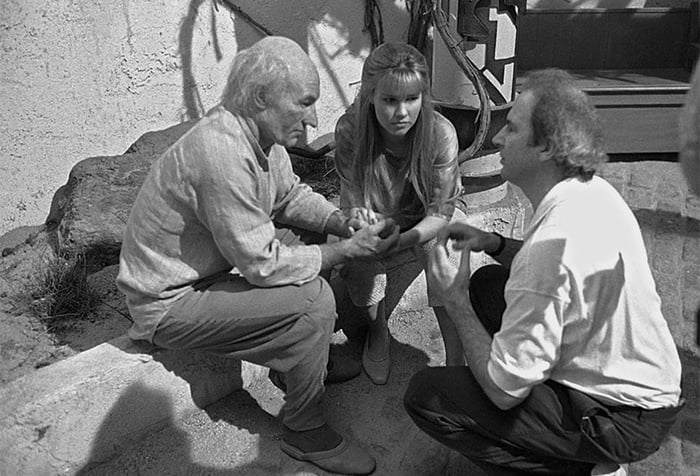
5. THE ENTERPRISE SET COULD BE ABSOLUTELY RIDICULOUS
When audiences watched Captain Picard confronting the Borg or negotiating with hostile alien civilizations, they saw a commander whose composure rarely faltered.
What they did not see was the laughter occurring between takes.
The Next Generation cast developed a reputation for elaborate jokes and spontaneous comedy. Even episodes involving serious political or philosophical themes could produce hours of laughter during filming.
Michael Dorn once recalled an incident in which he and Stewart were required to crawl around in the dirt on a Paramount location. Stewart began laughing at the absurdity of his situation: a respected Shakespearean actor reduced to crawling through a dusty outdoor set.
For Stewart, who once regarded the joking atmosphere as a professional distraction, such moments reflected how much he had changed.
He had learned that excellent dramatic performances did not require an atmosphere of perpetual seriousness.

6. CAPTAIN PICARD EVENTUALLY STEPPED BEHIND THE CAMERA
Stewart’s involvement with Star Trek extended beyond his starring role.
He directed five episodes of The Next Generation, including In Theory and A Fistful of Datas.
His classical theatrical training gave him an appreciation for the technical and emotional demands of directing, and he found satisfaction in shaping a story from behind the camera.
It was also a reminder that Stewart never considered acting a static achievement. Even after decades on stage, he remained eager to learn new aspects of his profession.
WHEN TWO CAPTAINS FINALLY MET
The success of Star Trek: The Next Generation led to four feature films that carried Picard and his crew into movie theaters.
In 1994, Star Trek Generations brought together the two men who defined separate eras of the franchise: William Shatner’s Captain James T. Kirk and Patrick Stewart’s Jean-Luc Picard.
For fans, this was the science-fiction equivalent of two generations finally meeting.
Behind the scenes, the filmmakers faced the considerable challenge of balancing two iconic characters without diminishing either one.
Production photographs reveal an atmosphere far removed from the dramatic confrontations on screen. Stewart and Shatner could be seen smiling and laughing between takes, surrounded by cameras, technicians, and the elaborate machinery required to create the illusion of their adventure.

The following film, Star Trek: First Contact, presented a much darker side of Captain Picard.
The Borg had previously assimilated him, transforming him into Locutus and using his knowledge against the Federation. In First Contact, the emotional scars of that experience finally erupt into anger and obsession.
Stewart brought a Shakespearean intensity to the role, creating one of Picard’s most powerful dramatic performances.
Behind the cameras, the movie required complicated visual effects, elaborate alien makeup, and an enormous amount of coordination. Jonathan Frakes directed the picture, meaning Stewart was now taking creative instructions from the actor who had spent years playing his first officer.
The transformation of a television ensemble into a major motion-picture cast was one of the most remarkable chapters in the Next Generation legacy.

PROFESSOR X: ANOTHER LEGEND IS BORN
As the 20th century drew to a close, Patrick Stewart had already accomplished something that few actors ever achieve. He had created a television character recognizable around the world.
Then Hollywood offered him the opportunity to do it again.
In 2000, director Bryan Singer’s X-Men introduced movie audiences to Professor Charles Xavier, the powerful telepath who founded a school where young mutants could discover their abilities without fear.
Stewart seemed almost physically destined for the role. His bald head, distinguished features, and commanding presence bore an uncanny resemblance to the character familiar to comic-book readers.
Yet Xavier represented something very different from Picard.
While the Enterprise captain commanded an experienced crew, Professor Xavier guided frightened young people who were often rejected by society.
He believed that humanity and mutants could learn to coexist, even when his oldest friend, Magneto, had abandoned that hope.
Stewart brought extraordinary compassion and dignity to Xavier, helping establish the emotional seriousness that would become essential to modern superhero cinema.
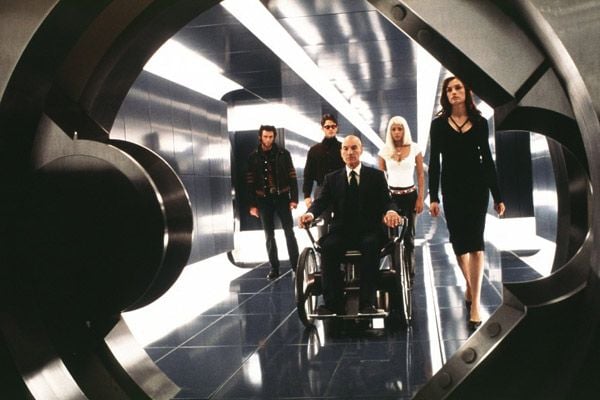
THE DAY HUGH JACKMAN ARRIVED WITHOUT KNOWING HE WOULD BECOME WOLVERINE
One of Stewart’s favorite stories from the original X-Men production concerns the arrival of a relatively unknown Australian actor named Hugh Jackman.
Filming was already underway when Jackman appeared for a screen test to play Wolverine.
Stewart, Ian McKellen, and other cast members encountered the young actor while waiting between scenes. They found him friendly and enthusiastic, and hoped that he would succeed.
At one point, Jackman returned looking deeply disappointed, leading the actors to believe he had lost the role.
They attempted to console him.
Shortly afterward, he was called away again. When he returned, the cast learned that he had been selected to portray Wolverine.
What began as an awkward audition would launch one of the most successful superhero performances in movie history.
Stewart had witnessed the beginning of Hugh Jackman’s extraordinary relationship with a character he would portray for decades.

7. PROFESSOR X HAD A SECRET TETRIS GAME HIDDEN IN HIS WHEELCHAIR
The X-Men movies required complex sets, elaborate visual-effects shots, and lengthy periods of waiting between scenes.
Stewart discovered that playing the world’s most powerful telepath could occasionally become rather boring.
During filming of sequences involving Cerebro, Xavier’s extraordinary mutant-detecting machine, he was sometimes required to remain seated for extended periods while technicians prepared the next camera setup.
His solution was wonderfully simple.
Stewart arranged for a hidden compartment in Professor Xavier’s wheelchair where he could keep a handheld Tetris game.
While waiting for the next scene, the distinguished Shakespearean actor could quietly entertain himself by arranging falling electronic blocks.
It is an irresistible behind-the-scenes image: Professor Charles Xavier, the great telepathic mentor of mutantkind, secretly playing video games while the fate of humanity hangs in the balance.
8. PROFESSOR X AND MAGNETO DID NOT KNOW HOW TO PLAY CHESS
Some of the most memorable scenes in the X-Men franchise feature Professor Xavier and Magneto sitting opposite one another at a chessboard.
The game perfectly represents their complicated relationship. Two brilliant men, both extraordinarily powerful, calmly debating opposing visions of humanity’s future.
Audiences naturally assume the actors understood the strategic intricacies of the game.
Apparently not.
Stewart revealed that when Bryan Singer asked him and Ian McKellen to make convincing chess moves, neither actor actually knew how to play properly.
The filmmakers arranged for a Canadian chess grandmaster to advise them so that their performances would appear authentic.
There is something delightfully absurd about two of Britain’s finest Shakespearean actors, both capable of portraying kings and military commanders, needing an expert to explain how to move the pieces on a chessboard.

9. THE FRIENDSHIP THAT BEGAN WITH TEA AND NEIGHBORING TRAILERS
One of the most cherished relationships in modern entertainment developed during the production of the original X-Men.
Patrick Stewart and Ian McKellen had previously moved through the same world of British theater, but their friendship became especially close when the two were cast as Professor Xavier and Magneto.
Their trailers stood near one another. Between filming scenes, they spent hours talking, drinking tea, and sharing stories about their lives and careers.
The friendship developed so naturally that the men eventually became nearly inseparable.
There is a wonderful irony in the relationship: two actors portraying ideological adversaries were becoming the closest of friends behind the cameras.
They would later perform together onstage in Waiting for Godot and No Man’s Land, appear together at numerous public events, and entertain fans with their affectionate teasing.
When Patrick Stewart married Sunny Ozell in 2013, McKellen officiated the ceremony.
For many fans, the friendship between the two men became as beloved as the characters they portrayed.
10. A SHAKESPEARE COMPETITION BROKE OUT ON THE X-MEN SET
During the filming of X-Men: Days of Future Past, actor James McAvoy, who portrayed the younger Charles Xavier, found himself in an extraordinary situation.
While undergoing hair preparation, McAvoy encountered Patrick Stewart and Ian McKellen discussing Shakespeare.
Before long, the two theatrical veterans began reciting passages from Macbeth.
McAvoy had recently performed the play himself and should have been ideally qualified to participate.
Instead, he found himself struggling to remember the words as quickly as the older actors.
Stewart and McKellen, drawing on decades of theatrical experience, seemed to recall the dialogue effortlessly.
Even on a massive superhero production filled with computerized visual effects, their love of classical theater remained at the center of who they were.

11. WOLVERINE’S NICKNAME FOR XAVIER WAS AN IMPROVISATION
Hugh Jackman’s Wolverine frequently demonstrated a complete lack of respect for conventional authority.
One of his most recognizable habits was referring to Xavier by the nickname Wheels.
Jackman later recalled that the nickname emerged from his own improvisation, inspired by the blunt sense of humor he had encountered while working at an English boarding school.
Then there was the wheelchair itself.
After the first X-Men film, the chair was reportedly sold at a charity auction. When the producers began preparing the next movie, they discovered that the original prop was no longer available.
The production reportedly had to arrange to rent it back from the buyer.
For an object that seemed so ordinary on screen, Professor Xavier’s wheelchair had become a surprisingly complicated and valuable piece of movie history.
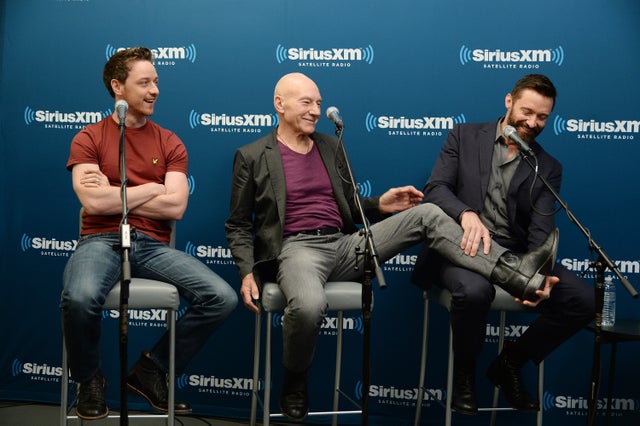
LOGAN: THE GOODBYE THAT BROKE TWO LEGENDS’ HEARTS
In 2017, Patrick Stewart delivered what many consider his most emotionally devastating performance as Professor Charles Xavier.
James Mangold’s Logan was unlike the superhero films that preceded it. Its world was harsh, violent, weary, and painfully human.
Hugh Jackman’s Wolverine was no longer an unstoppable warrior. He was exhausted, injured, and struggling to survive.
And Professor Xavier, once the brilliant leader whose telepathic abilities could influence the minds of millions, had become an elderly man struggling with illness and the gradual loss of his own independence.
For Stewart, the performance demanded an extraordinary level of vulnerability.
He abandoned the reassuring confidence associated with Xavier and instead portrayed a man who was frightened, confused, and increasingly dependent on the people around him.
It was one of his finest performances.

At a screening during the Berlin International Film Festival, Stewart sat beside Jackman as they watched the completed movie.
When the ending approached, both men became overwhelmed by emotion.
Stewart later recalled that Jackman reached out and took his hand.
They began crying together.
The experience was profoundly moving. For both actors, the picture appeared to represent the end of characters they had spent nearly two decades portraying.
Stewart subsequently described Logan as a particularly fitting conclusion to his version of Professor X.
The friendship between Jackman and Stewart had endured across multiple productions, thousands of working hours, and the remarkable evolution of superhero cinema.
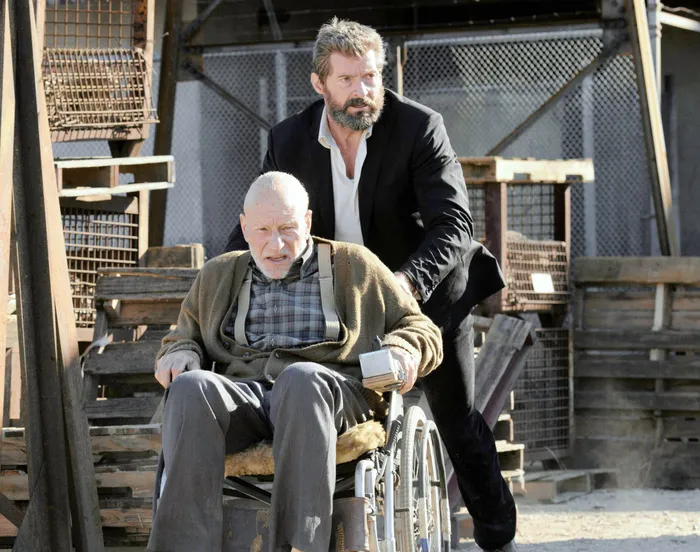
ONE LAST MARVEL SURPRISE
Although Logan had seemed to close Professor Xavier’s story, Marvel Studios would eventually offer Patrick Stewart another opportunity to portray the character.
In 2022, Doctor Strange in the Multiverse of Madness introduced an alternate-universe Charles Xavier as a member of the Illuminati.
For fans who remembered the 1990s X-Men animated series, the appearance contained a delightful surprise.
Professor Xavier arrived in a bright yellow hoverchair inspired by the design that had become familiar to an entire generation of cartoon viewers.
The familiar silhouette offered a powerful nostalgic connection between animated television, the original X-Men movies, and the Marvel Cinematic Universe.

12. THE MARVEL SCENE WAS FILMED WITHOUT MOST OF THE OTHER ACTORS PRESENT
What appeared on screen to be a gathering of famous superheroes concealed a rather unusual production process.
Stewart later explained that his material had largely been filmed separately from the other performers.
The actors were subsequently brought together using digital effects and editing.
For Stewart, whose greatest pleasure often came from interacting directly with fellow actors, the process was disappointing.
Production materials revealed the elaborate combination of practical scenery, partial wheelchair construction, computer-generated elements, and carefully arranged camera angles required to create the finished sequence.
It was another extraordinary example of how modern filmmaking creates worlds that appear effortless to audiences.

Stewart was also announced for Avengers: Doomsday, scheduled for release in December 2026. His passing means that audiences may have one final opportunity to see his interpretation of Professor Xavier on the big screen.
It would be a remarkable posthumous farewell to a character he first brought to movie theaters more than 26 years earlier.
THE FINAL VOYAGE OF CAPTAIN PICARD
Long after The Next Generation ended, Patrick Stewart initially resisted the idea of returning to Jean-Luc Picard.
He believed that the character had received an appropriate conclusion and did not wish to participate in a project that simply repeated familiar adventures.
Eventually, however, the idea of exploring Picard as an older man began to interest him.
Star Trek: Picard premiered in 2020 and presented a retired admiral struggling with regret, aging, and the consequences of decisions made throughout his life.
It was an opportunity to revisit a familiar character through the perspective of someone who had grown older alongside the fans who first encountered him in 1987.
The third and final season, released in 2023, reunited much of the original Next Generation cast.
Jonathan Frakes, Brent Spiner, LeVar Burton, Gates McFadden, Marina Sirtis, and Michael Dorn returned to the fictional world they had helped create.
The reunion was emotional, not simply because fans were seeing beloved characters together again, but because the actors themselves had shared an extraordinary portion of their lives.
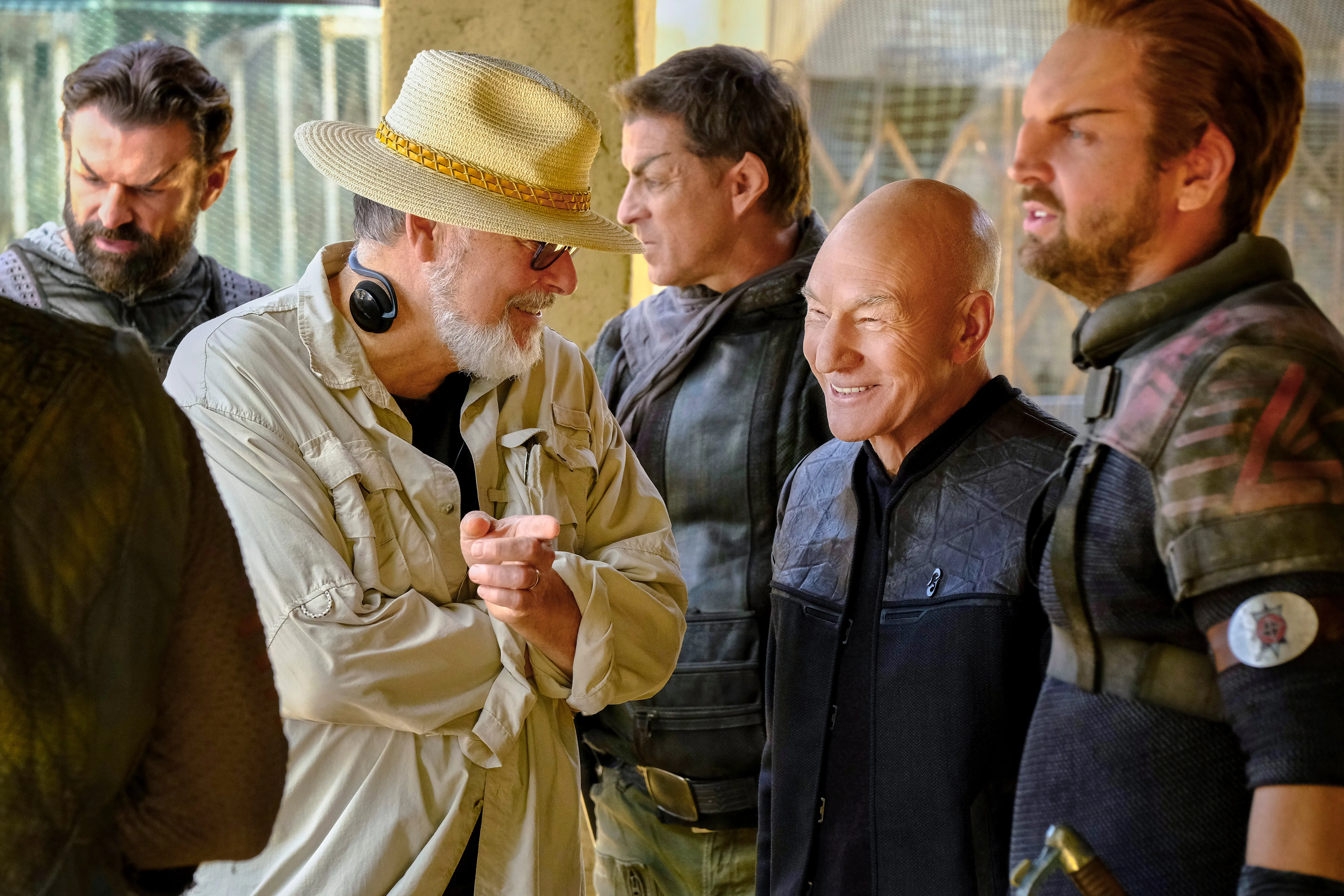
It is worth remembering how dramatically Stewart’s relationship with his colleagues had changed.
In 1987, he had struggled to understand their casual joking and laughter. By the time Picard concluded, those same actors had become lifelong friends.
The once-formal performer who initially seemed uncomfortable in the world of American television had become the emotional heart of one of science fiction’s most beloved ensembles.
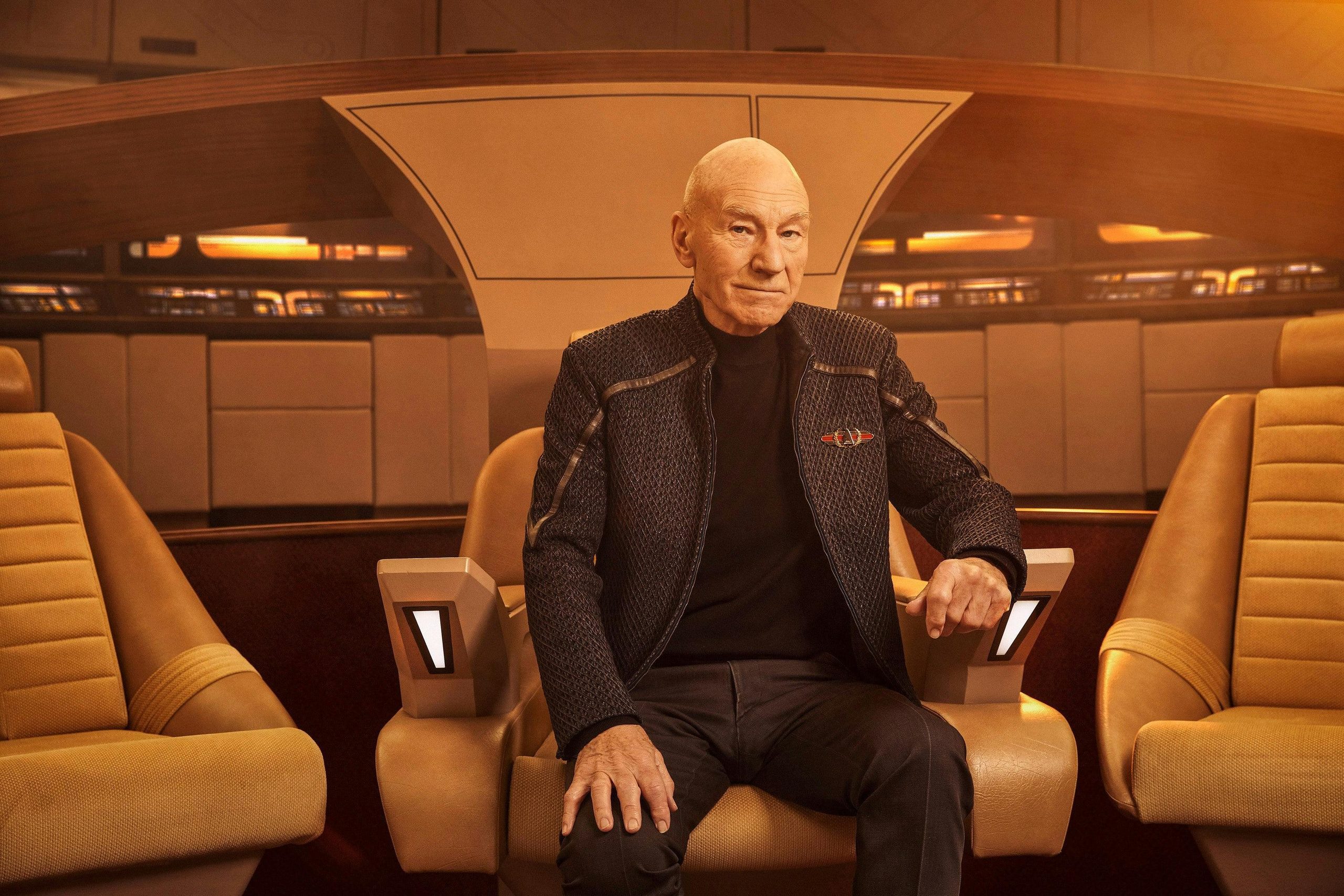
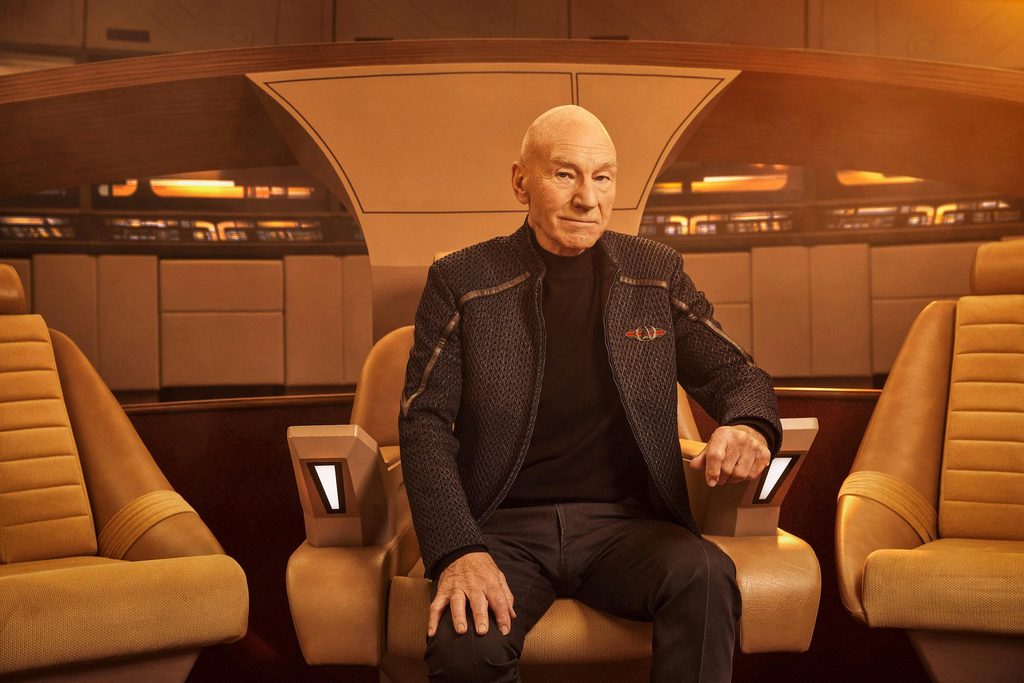
Picard’s final season also returned viewers to the familiar Enterprise-D bridge, recreating the setting where countless childhood memories had been formed.
For many fans, the sight of the original crew back at their stations was an emotional experience.
It was one final reminder that Star Trek had never been simply about spaceships.
It was about people and the relationships they built while exploring the unknown.
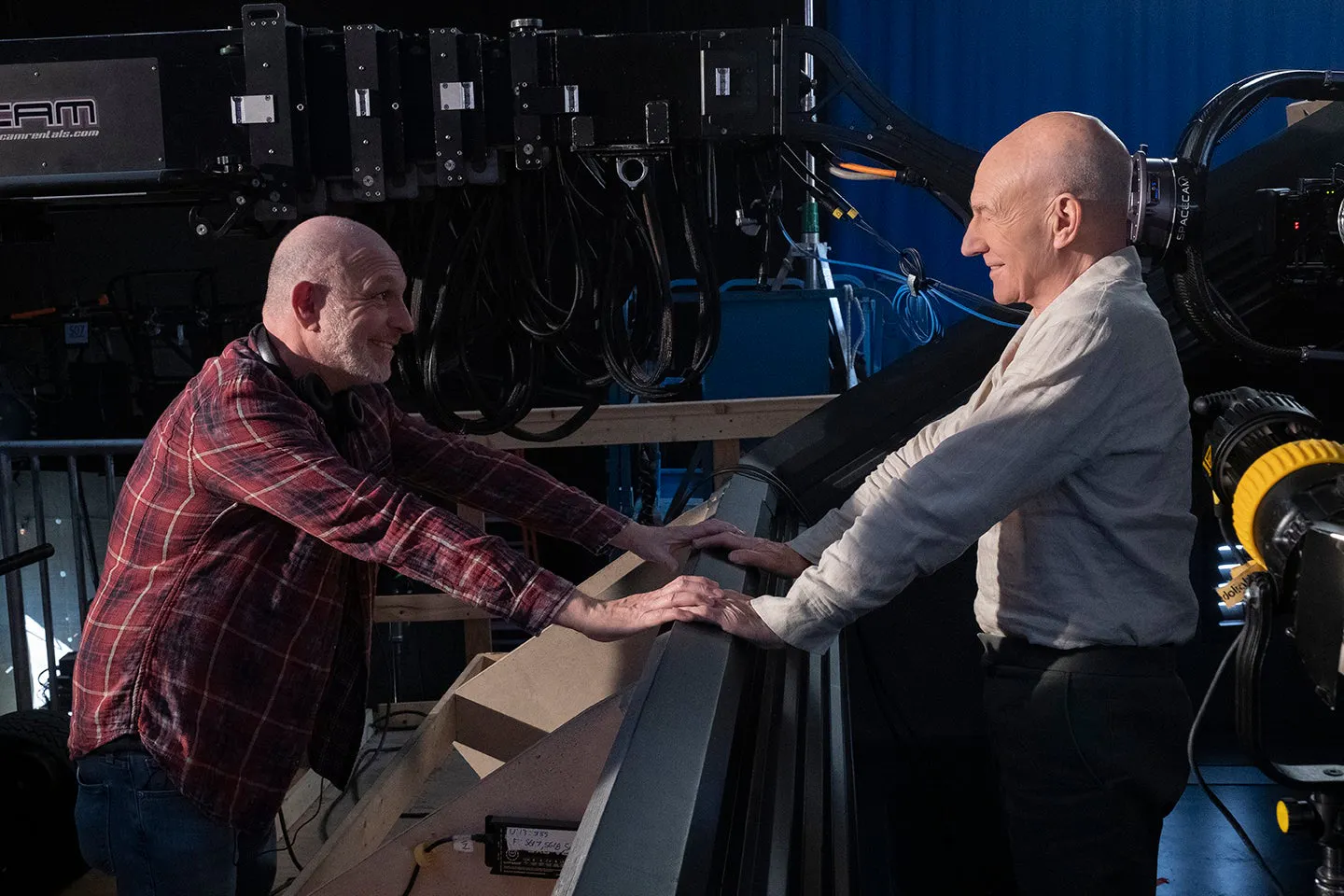
THE MAN BEYOND THE ENTERPRISE AND THE X-MANSION
As extraordinary as his science-fiction and superhero achievements were, Patrick Stewart’s life contained so much more.
He continued returning to Shakespeare and the theater throughout his career, never forgetting the discipline and beauty of the stage that had first inspired him.
His one-man performances of A Christmas Carol demonstrated his astonishing ability to create an entire world through voice, expression, and physical movement.
His stage collaborations with Ian McKellen became major theatrical events, bringing two of Britain’s most celebrated actors together before live audiences.
He was also remarkably willing to poke fun at himself.
Stewart’s voice acting on American Dad!, Family Guy and other animated comedies showed a wildly mischievous side that casual admirers of Captain Picard might never have expected.
His 2023 memoir, Making It So, offered an unusually personal account of his life, his family, his career, and the mistakes he had made along the way.
He spoke with candor about the breakdown of earlier marriages, the personal sacrifices demanded by his acting career, and the emotional distance that sometimes developed between himself and loved ones.
Stewart did not pretend to have lived a flawless life.
That willingness to acknowledge mistakes made him more human and gave additional depth to the dignity he projected on screen.
In 2010, Queen Elizabeth II knighted him for services to drama.
Yet Stewart’s public contributions extended far beyond the performing arts. He advocated for survivors of domestic abuse, refugees, veterans, and people whose lives had been altered by violence and trauma.
For a man whose childhood had included fear and hardship, helping others confront similar circumstances became an important part of his legacy.
HOLLYWOOD AND THE STAR TREK FAMILY SAY GOODBYE
Following the announcement of Patrick Stewart’s death on October 29, 2026, tributes began appearing from friends, colleagues, and admirers throughout the entertainment industry.
Hugh Jackman remembered the extraordinary actor and mentor with whom he had shared the X-Men franchise for so many years.
Jonathan Frakes, Stewart’s longtime Star Trek colleague and friend, expressed his grief over the loss of the man who had commanded the Enterprise.
William Shatner, whose Captain Kirk helped launch the franchise decades earlier, honored the intelligence and humanity Stewart brought to the role of Picard.
Across social media, fans shared memories of their favorite performances, beloved episodes, convention appearances, and personal encounters with the actor.
Some remembered his powerful performance as Locutus of Borg. Others returned to The Inner Light, The Measure of a Man, Darmok, Chain of Command, and All Good Things.
Marvel fans remembered the wisdom of Professor Xavier, the tragic dignity of Logan, and the friendship between Stewart and Ian McKellen.
In different ways, they were all remembering the same thing: a performer who made extraordinary fictional characters feel profoundly human.
Stewart is survived by his wife, Sunny Ozell, and his children, Daniel and Sophia.
OH CAPTAIN, MY CAPTAIN
There is a moment in the final episode of Star Trek: The Next Generation that seems particularly meaningful today.
For seven seasons, Captain Picard had maintained a degree of professional distance from the officers who served alongside him.
He respected them. He trusted them. He would willingly have sacrificed his life for them.
But he rarely allowed himself to become simply one of the group.
Then, near the end of All Good Things, Picard enters the room where his officers are playing poker.
Instead of walking away, he sits down at the table.
It is a small scene, but perhaps one of the most beautiful moments in the entire series.
After years of commanding his crew, Picard finally realizes that the people around him are not merely officers serving under his authority.
They are his friends.
In many ways, that was also Patrick Stewart’s journey.
He began The Next Generation as a formal, intensely disciplined Shakespearean actor who sometimes struggled to understand his colleagues’ laughter.
By the time his career came to an end, those same colleagues were among the people who knew and loved him best.
Across television, film, and theater, Stewart demonstrated that true greatness is not measured simply by fame, wealth, or recognition.
It is measured by the lives we touch, the people we inspire, and the memories we leave behind.
Jean-Luc Picard taught generations that leadership required intelligence, courage, empathy, and restraint.
Professor Charles Xavier taught us that differences should never make someone less worthy of dignity, belonging, or compassion.
And Patrick Stewart himself showed what could happen when a frightened boy from a modest Yorkshire household discovered the extraordinary possibilities of storytelling.
He crossed galaxies as Captain Picard.
He helped shape the future of superhero cinema as Professor Xavier.
He performed Shakespeare before audiences who understood that they were watching one of the finest actors of his generation.
He laughed, he struggled, he made mistakes, he formed extraordinary friendships, and he left behind performances that will continue inspiring viewers long after his passing.
Somewhere in our imaginations, the Enterprise-D is still traveling among the stars.
Somewhere, Professor Xavier is welcoming another frightened child through the doors of his school.
And somewhere, Captain Picard is standing on the bridge, looking toward the unknown with that unmistakable mixture of curiosity, determination, and hope.
Make it so.
Rest in Peace, Sir Patrick Stewart
July 13, 1940 – October 28, 2026
SOURCES AND ARCHIVAL PHOTOGRAPHY
The following reporting, interviews, memoir material, and official photograph galleries informed this feature.
- Associated Press – Patrick Stewart obituary
- CBS News – Official death announcement
- Los Angeles Times – Tributes from fellow performers
- StarTrek.com – Early Next Generation behind-the-scenes gallery
- StarTrek.com – Behind the scenes of the Next Generation movies
- StarTrek.com – Making of Star Trek: Picard photo gallery
- Patrick Stewart, Making It So: A Memoir (2023)
- The Art of VFX – X-Men production coverage
- The Direct – Professor X Marvel production photography
- CBS News – X-Men promotional photography
About the Author
Adam Jared is the founder of SerpentorsLair.com and creator of Destro Designs – Viper Den Studios. He holds a Master of Science in Social Media Management and is currently pursuing a PhD in Strategic Communication. His writing explores the history of popular culture, entertainment, nostalgia, media, collecting, and the extraordinary people who shaped generations of fans.
Editorial photography note: Images are embedded from publicly accessible archival, news, and production sources. Original photographers and copyright holders retain their rights. Some images are candid behind-the-scenes photographs, while others are publicity images or film stills identified in the captions. For permanent publication, use appropriately licensed copies uploaded to your WordPress Media Library.