October Monster Mash: Frankenstein’s Monster (1931) – The Birth of a Horror Icon
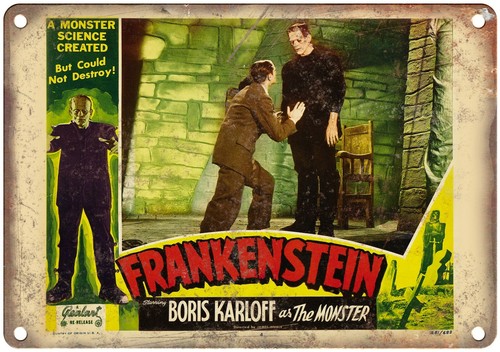
Welcome back to our October Monster Mash, where we honor the titans of terror and monsters of myth! Today’s feature is perhaps the most iconic horror character of all time—one that reshaped horror cinema, ignited pop culture, and gave us a performance so haunting it still resonates nearly a century later. We’re talking about Frankenstein’s Monster, as portrayed by the legendary Boris Karloff in Universal’s 1931 classic.
It’s not just a monster—it’s the Monster.
From the Page to the Silver Screen
Frankenstein was born from Mary Shelley’s imagination in 1818, but it was director James Whale who brought it to eerie life on film. Universal’s adaptation didn’t just adapt Shelley’s novel—it reimagined it for the screen, focusing on the mad science, gothic mood, and tragic pathos of its undead antihero.
But the film’s true lightning rod was Boris Karloff, whose portrayal of the Monster turned what could have been a mindless brute into a tortured soul caught between life and death.
A Monster with Depth
Despite being mute for most of the film, Karloff delivered one of horror’s most emotional performances using nothing but his eyes, expressions, and staggering movement. Under layers of makeup by Jack Pierce, Karloff’s Monster wasn’t evil—he was misunderstood, abandoned, and struggling to find his place in a world that feared him.
In fact, Frankenstein flips the script: the real monster might be Dr. Henry Frankenstein himself, a man playing God and then casting aside his creation.
The Monster becomes a mirror of humanity’s worst impulses—fear of the unknown, cruelty toward outsiders, and the price of unchecked ambition.
Iconic Imagery That Defined a Genre
Few horror images are as instantly recognizable as Frankenstein’s Monster lurching through shadowed corridors, bolts in his neck, heavy eyelids drooping, and arms outstretched. From the thunderclap that greets his first breath to the unforgettable cry of “It’s alive!”, this film cemented horror tropes that still echo today.
Shot in stark black and white, the film uses German Expressionist shadows, dramatic angles, and looming architecture to build a surreal and nightmarish world that traps both man and monster.
The Tragic Climax
Perhaps what makes the Monster so enduring is the sadness at his core. In one of the film’s most controversial scenes, he innocently tosses a little girl into a lake, not understanding the consequences. This misunderstood act—and society’s brutal reaction—leads to a tragic climax: an angry mob, torches in hand, cornering the creature in a windmill and setting it ablaze.
It’s less a villain’s defeat and more a brutal punishment of something we failed to understand.
Why He Still Matters
As part of our October Monster Mash, Frankenstein’s Monster reminds us that monsters aren’t always born—they’re made. Made by neglect, by hubris, and by fear. Karloff’s performance—sympathetic, sorrowful, and strangely beautiful—elevated the character from monster to myth.
His legacy is everywhere: countless sequels (Bride of Frankenstein, Son of Frankenstein, and more), parodies, Halloween costumes, comic books, and even philosophy classrooms discussing Shelley’s original themes of creation, ethics, and what it means to be human.
Final Thoughts: A Bolt of Cinematic Brilliance
Frankenstein (1931) isn’t just a movie—it’s a landmark. It launched Karloff’s career, expanded what horror could be, and gave the genre its first true icon. For anyone crafting their own Monster Mash watchlist this October, this film belongs at the very top.
So light the torches, lower the lightning rod, and prepare to meet the creature who made horror alive.
Coming up next on the Monster Mash: More silver screen ghouls, legends, and nightmares to haunt your Halloween!