Quarter Munchers & Magic Carpets: The Glory Days of Aladdin’s Castle
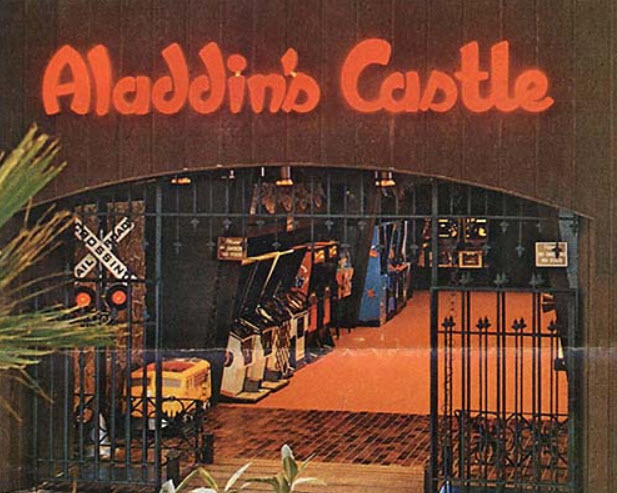
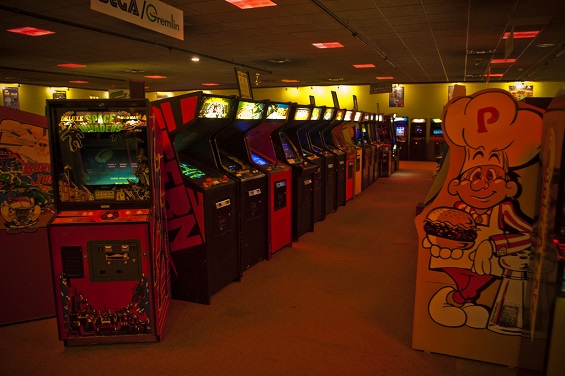
Long before online gaming, battle passes, and headset trash talk, there was a magical kingdom hidden inside America’s shopping malls. You could hear it before you saw it. The clatter of tokens, the electronic explosions, the hum of CRT monitors, and the occasional shout of victory from a kid who just beat a high score. And standing proudly above it all was the glowing sign of Aladdin’s Castle.
For many kids growing up in the late 1970s, throughout the 1980s, and even into the 1990s, Aladdin’s Castle wasn’t just an arcade. It was an event. A destination. A place where birthdays happened, friendships formed, and allowances disappeared one quarter at a time.
What many people don’t realize is that Aladdin’s Castle was actually one of the first arcade chains to make gaming feel family friendly. During the early days of arcades, many parents viewed video game parlors as dark, noisy hangouts filled with rowdy teenagers. Aladdin’s Castle changed that image completely. Founded in 1974 by the American retail company Bally Manufacturing, the chain was intentionally designed to feel cleaner, brighter, and safer than competing arcades. The fantasy castle theme, medieval fonts, and friendly wizard mascot gave the locations an atmosphere closer to a Disney attraction than a seedy game room.
Another detail most people forget is just how massive the chain became. At its peak in the 1980s, Aladdin’s Castle operated hundreds of locations across malls in the United States. If your town had a decent-sized shopping center, chances are there was an Aladdin’s Castle sitting near the food court or movie theater. The arcade became one of the cultural anchors of mall life during the Reagan era. Teenagers could spend an entire Saturday bouncing between Spencer Gifts, Orange Julius, Waldenbooks, and Aladdin’s Castle without ever getting bored.
One of the most fascinating pieces of arcade history tied to Aladdin’s Castle involved the rise of competitive gaming long before esports existed. Certain locations became legendary for high-score competitions on games like Pac-Man, Donkey Kong, and Dragon’s Lair. Serious players would travel between arcades chasing leaderboard fame. Some stores even kept handwritten champion boards near the entrance, immortalizing local gaming heroes months before magazines ever covered competitive play.
Aladdin’s Castle also quietly helped shape the social side of gaming culture. Before home consoles became dominant, arcades were one of the rare places where gamers gathered face to face. Kids watched strangers master difficult levels and learned tricks simply by standing nearby. Entire crowds formed around cabinets like Street Fighter II and Mortal Kombat. If someone pulled off a flawless victory or discovered a secret fatality, word spread through the arcade within minutes like ancient mythology being passed down by quarter-fed warriors.
Then there were the tokens. Aladdin’s Castle tokens became collectible pieces of nostalgia themselves. Many featured unique wizard imagery and logos that changed over the years. Some arcades even issued region-specific tokens, making them prized items for collectors today. To kids in the 1980s, carrying a pocket full of those gold-colored tokens felt like holding treasure from another world.
Of course, the golden age couldn’t last forever. The rise of powerful home consoles like the Nintendo Entertainment System and later the Sony PlayStation slowly pulled gamers away from malls. By the late 1990s and early 2000s, many Aladdin’s Castle locations vanished along with the malls themselves. A few stores survived under different ownership, but the era of the grand mall arcade kingdom had faded.
Still, people who grew up with Aladdin’s Castle remember it differently than modern gaming spaces. It wasn’t isolated gaming through a headset. It was loud, colorful, social, and electric. You smelled popcorn from the nearby theater, heard Journey or Duran Duran echoing through the mall speakers, and hoped the older kid at the machine would finally step away so you could claim your turn.
For one magical generation, Aladdin’s Castle truly was a palace of electronic adventure hidden between department stores and pretzel stands. And honestly, no modern gaming lobby will ever feel quite the same.