October Monster Mash: “The Bells of Tragedy!” – Lon Chaney’s The Hunchback of Notre Dame (1923)
Before the Monsters, There Was a Man
Before vampires, mummies, and creatures of the lagoon haunted movie screens, there was Quasimodo — the bell ringer of Notre Dame. His story wasn’t one of evil or menace, but of pain, beauty, and loneliness.
In 1923, Universal Pictures released The Hunchback of Notre Dame, starring the incomparable Lon Chaney, known as “The Man of a Thousand Faces.” The film marked a turning point for Universal and the horror genre. Though not a “monster” in the traditional sense, Quasimodo became the first of Universal’s tragic figures — the misunderstood soul who would pave the way for Frankenstein’s creature, the Phantom, and countless others.
The Man Behind the Mask
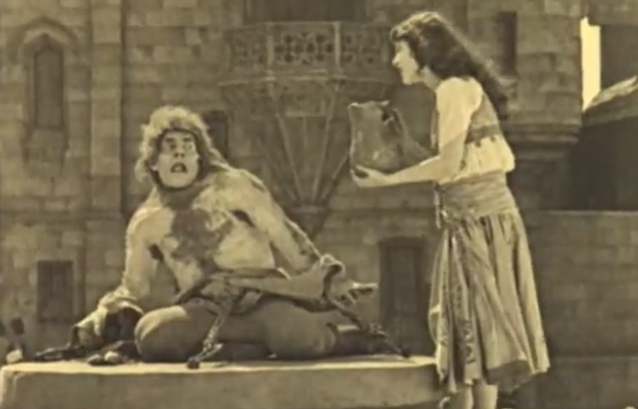
Lon Chaney was a master of transformation, and The Hunchback of Notre Dame showcased his brilliance at its peak. Playing the deformed bell ringer Quasimodo, Chaney endured hours of grueling makeup, prosthetics, and an uncomfortable harness that twisted his body into a grotesque hunch.
The result was hauntingly real. Quasimodo’s misshapen form, bulging eye, and twisted back were offset by Chaney’s expressive eyes — filled with pain, devotion, and humanity. He wasn’t a monster; he was a man who loved deeply and suffered for it.
Chaney’s performance transcended words. In a silent film, his body language and facial expressions told the story — from childlike joy as he rang the cathedral bells to unbearable heartbreak as he faced rejection and death.
A Cathedral of Shadows and Stone
Set in 15th-century Paris, The Hunchback of Notre Dame is a visual masterpiece. The film’s recreation of the Notre Dame Cathedral was breathtaking, with massive sets built on the Universal lot. Its gothic spires, stained glass, and shadowed corridors gave the movie an almost mythic scale.
Under the direction of Wallace Worsley, the film used sweeping camera angles and atmospheric lighting that foreshadowed the grandeur of later Universal horrors. It wasn’t just a film — it was a living painting of medieval tragedy, filled with life, suffering, and devotion.
The Tragic Tale
At its core, The Hunchback of Notre Dame is a story about love and cruelty. Quasimodo, the deformed bell ringer, lives under the cruelty of the archdeacon Frollo, who lusts after the beautiful gypsy Esmeralda (played by Patsy Ruth Miller). When Esmeralda shows Quasimodo kindness, he mistakes it for love — and becomes fiercely protective of her.
The story’s emotional climax, when Quasimodo rescues Esmeralda and cries, “Sanctuary!” from the cathedral steps, remains one of the most iconic moments in silent film.
But as with all great gothic tales, tragedy follows beauty. Misunderstood and hated, Quasimodo ultimately dies clutching Esmeralda’s body — a final image that symbolizes pure, unrequited love destroyed by the cruelty of man.
The Monster with a Soul
Lon Chaney’s Quasimodo isn’t a monster in the way Dracula or the Wolf Man would be. He’s a victim of appearance, scorned by society but rich in heart and emotion. That duality — beauty within ugliness — became a defining feature of Universal’s later monsters.
Quasimodo’s story forced audiences to confront their own prejudices. The real horror wasn’t the hunchback’s deformity — it was human cruelty and the rejection of compassion.
Legacy of a Masterpiece
The Hunchback of Notre Dame was a massive success upon release. It launched Universal Pictures into the realm of grand, gothic storytelling and made Lon Chaney a household name. More importantly, it showed that horror could be beautiful — that tragedy and terror could coexist.
The film also laid the groundwork for Universal’s future monster movies of the 1930s. Without Quasimodo, there may never have been Frankenstein or The Phantom of the Opera. Chaney’s artistry showed that makeup and performance could merge into something transcendent — a form of emotional expression that reached beyond words.
Conclusion
As part of our October Monster Mash, Lon Chaney’s The Hunchback of Notre Dame stands as a monument to silent-era artistry — a film that shaped the foundation of cinematic horror and pathos.
Quasimodo may have been monstrous in form, but in spirit, he was the purest soul of them all. His story reminds us that true monstrosity lies not in appearance, but in the absence of compassion.
So when the cathedral bells toll this October, listen closely — you might just hear the echo of Quasimodo’s heart, still ringing for love, still mourning beneath the shadow of Notre Dame.
“Why was I not made of stone… like thee?”