October Monster Mash: “The One-Eyed Terror!” – The Cyclops, Giant of Atomic Horror
A Monster Born of the Atomic Age
In the 1950s, giant monsters ruled the silver screen. From massive insects to colossal lizards, the era’s sci-fi horror reflected the fears of a world living under the shadow of the atomic bomb. Among these towering terrors stood one of the strangest and most tragic of them all: The Cyclops, the one-eyed mutant giant from Bert I. Gordon’s 1957 cult classic.
The Cyclops blended ancient myth with Cold War anxiety, fusing Greek legend with modern-day radiation horror. The result was a film that was equal parts eerie, campy, and strangely heartbreaking—a true relic of the age when monsters symbolized mankind’s fear of its own scientific power.
Lost in the Valley of Giants
The film follows Susan Winter (Gloria Talbott) as she leads an expedition into the remote jungles of Mexico, searching for her missing fiancé, Bruce Barton, who disappeared in a plane crash years earlier. Accompanied by scientists and adventurers, she journeys into a mysterious valley where radiation from uranium deposits has caused strange mutations.
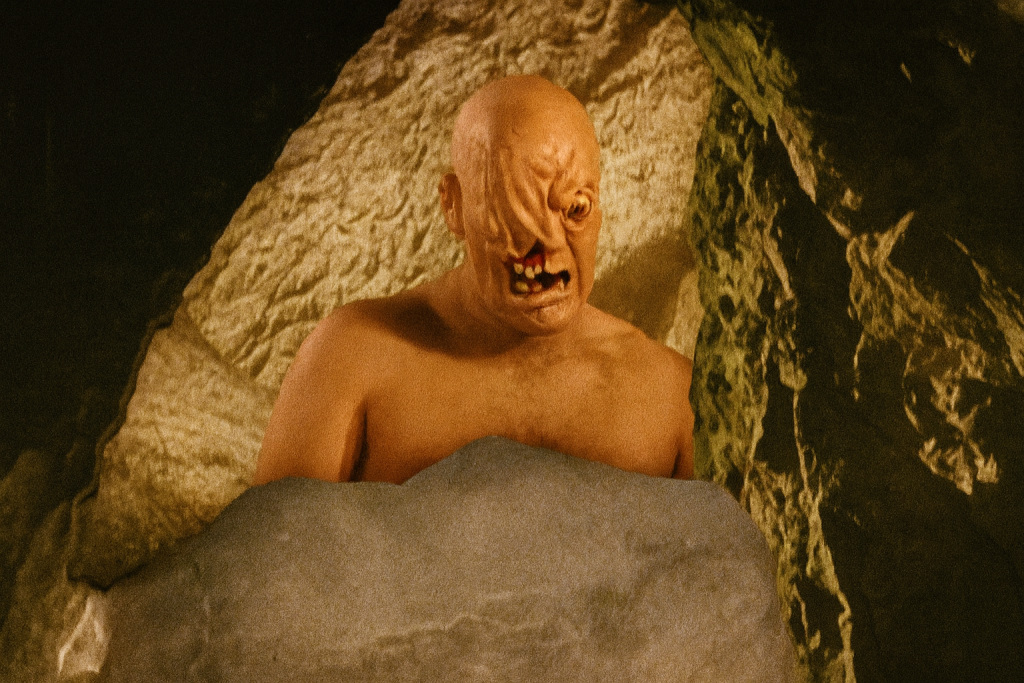
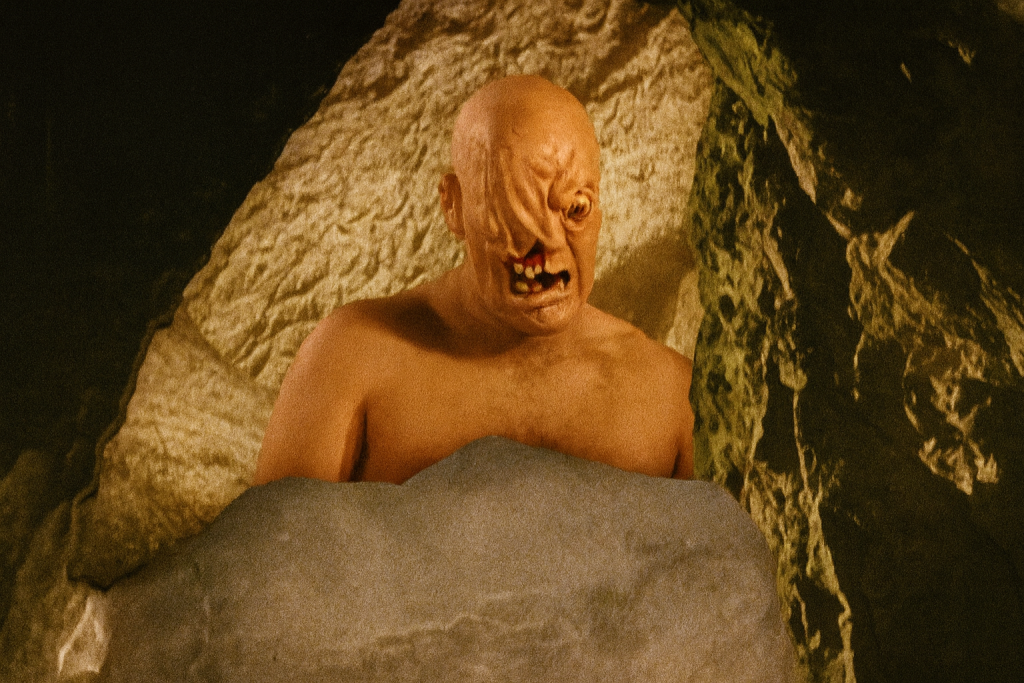
There, amid the rocky cliffs and eerie silence, they encounter The Cyclops—a towering, deformed giant with a single glaring eye, shredded clothing, and grotesque scars across his face. In a chilling twist, Susan discovers that the creature is none other than her lost fiancé, transformed into a monstrous shadow of his former self.
The revelation gives The Cyclops a tragic dimension that many of its contemporaries lacked. This wasn’t just another giant beast rampaging for spectacle—it was a man, warped by radiation and condemned to wander in pain and isolation.
The Vision of Bert I. Gordon
Director Bert I. Gordon, affectionately nicknamed “Mr. B.I.G.” for both his initials and his love of oversized creatures, became a cult figure in 1950s cinema. His special effects were ambitious for their time, often using optical tricks and compositing to make humans appear monstrous.
In The Cyclops, Gordon created a sense of awe and dread using clever camera angles and scale effects. The film’s mutant fauna—giant birds, lizards, and insects—added to the surreal, radioactive landscape. While the effects might look quaint by modern standards, there’s an undeniable charm to their handmade execution.
The Cyclops himself, portrayed by Duncan Parkin, was designed to be horrifying yet sympathetic. His single oversized eye, heavy brow, and twisted body captured the dual nature of 1950s monsters: terrifying to behold but pitiable at heart.
Atomic Anxiety and Human Tragedy
Like many monster films of the era, The Cyclops served as a metaphor for the dangers of unchecked science and nuclear experimentation. The valley of radiation acted as a cautionary symbol—a forbidden zone where nature and man alike were warped beyond recognition.
But unlike Them! or The Beast from 20,000 Fathoms, this story was intimate. The horror wasn’t global; it was personal. The monster wasn’t a stranger—it was a loved one, transformed. That emotional core gave The Cyclops a haunting melancholy that lingered long after the credits rolled.
From Camp to Cult Classic
Over time, The Cyclops found its audience among fans of retro sci-fi and drive-in horror. Its mix of heartfelt tragedy, low-budget effects, and classic monster tropes gives it a unique charm. The film’s imagery—a lonely giant stumbling through the jungle, blinded by pain and rage—captures both the fear and fascination of the atomic age.
Though Bert I. Gordon would go on to make more famous films like Earth vs. the Spider and The Amazing Colossal Man, The Cyclops remains one of his most emotionally resonant creations.
Conclusion
As part of our October Monster Mash, The Cyclops stands tall—both literally and figuratively—as a symbol of the 1950s’ most enduring fears: the consequences of human arrogance and the fragility of our own creations.
Half man, half monster, The Cyclops wasn’t evil by choice. He was a victim of science gone wrong—a warning wrapped in the tragic body of a giant.
So when you look up at the stars tonight and think about humanity’s endless curiosity, remember The Cyclops… the one-eyed giant who saw too much.