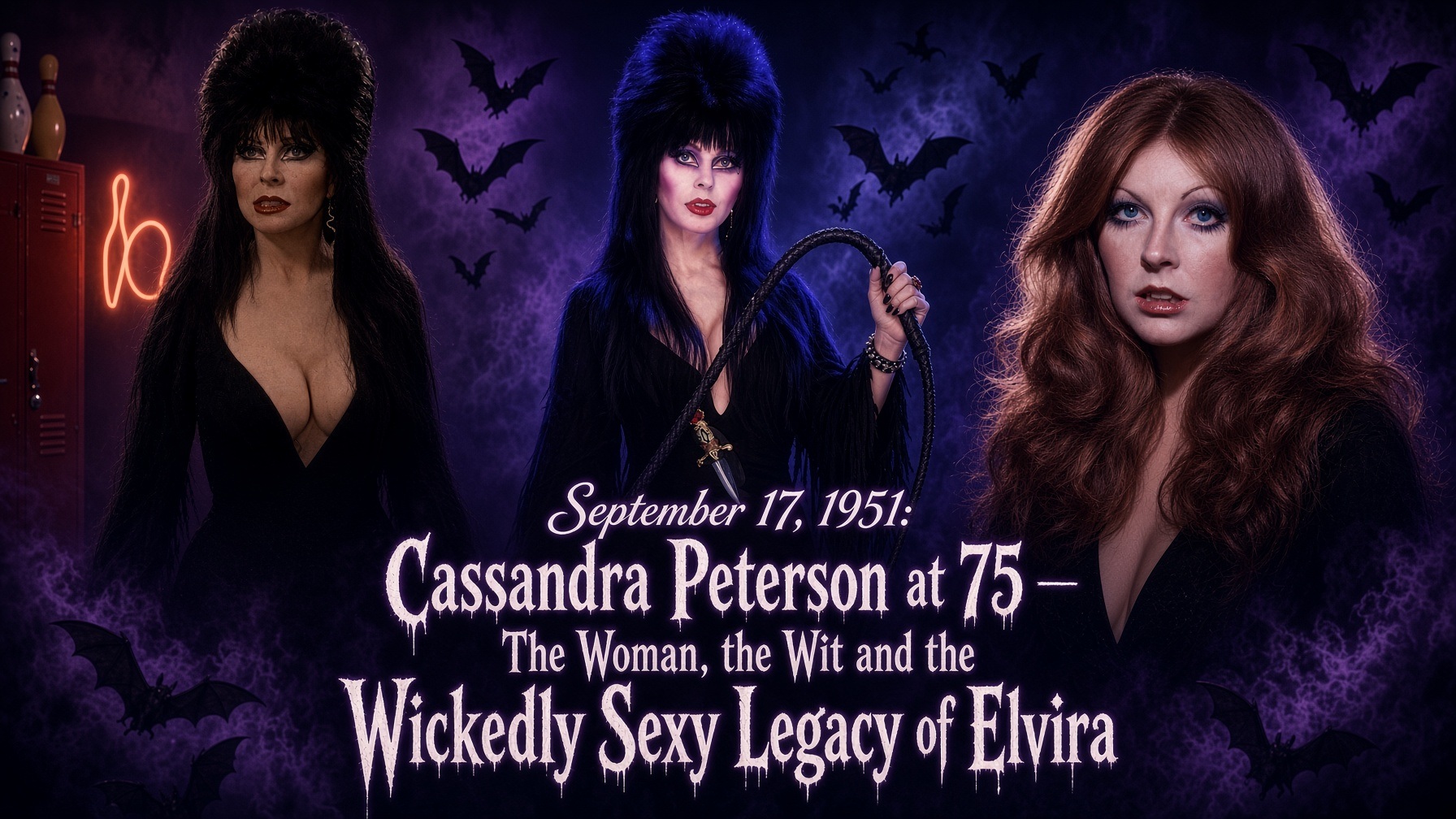
September 17, 1951: Cassandra Peterson at 75 — The Woman, the Wit and the Wickedly Sexy Legacy of Elvira
For more than four decades, she has appeared every autumn like a glamorous emissary from some wonderfully inappropriate corner of the underworld: towering black hair, impossibly plunging gown, scarlet lips, dagger at her waist and a one-liner usually sharp enough to draw blood.
But Elvira, Mistress of the Dark, was never simply a costume.
Behind one of the most recognizable characters in modern horror stands Cassandra Peterson—a comedian, writer, performer, businesswoman and former Las Vegas showgirl whose improbable career carried her from Kansas to the Strip, across Europe, through Los Angeles improvisational comedy and ultimately into pop-culture immortality.
Today, September 17, 2026, marks Cassandra Peterson’s 75th birthday. Peterson was born September 17, 1951, in Manhattan, Kansas.
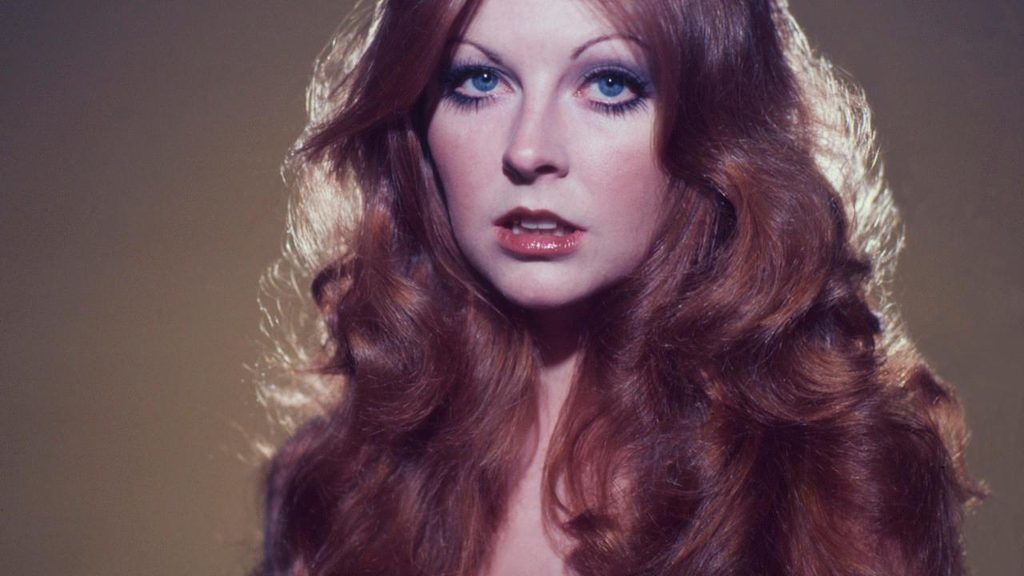
It is a milestone worth celebrating because Peterson’s achievement extends considerably beyond creating a memorable Halloween character. She managed something exceptionally difficult in entertainment: she created a persona so distinctive that it became an institution while retaining ownership of much of the wit, personality and creative intelligence that made the character work.
Long before there was Elvira, there was Cassandra.
Peterson’s path to Hollywood hardly followed the traditional route. As a teenager, she headed to Las Vegas and became a showgirl at the Dunes, beginning a performing career while still extraordinarily young. Her adventures eventually took her to Europe, where she sang, performed and appeared in film, including work connected with Federico Fellini’s Roma. After returning to the United States, she eventually found one of the most important creative environments of her career: Los Angeles’ legendary improvisational comedy troupe The Groundlings.
That comedy background is crucial to understanding Elvira.
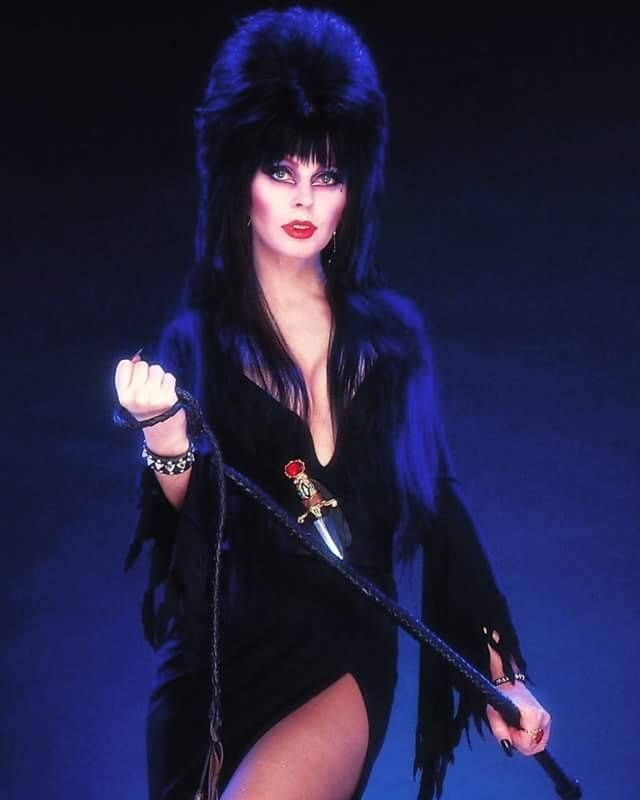
It is tempting—particularly when looking at Peterson in the famous black dress—to assume Elvira became successful primarily because she was sexy. Sex appeal was certainly part of the package, and Peterson never pretended otherwise. But plenty of entertainers have possessed sex appeal without creating a character capable of remaining commercially viable and culturally recognizable for more than 40 years.
Elvira worked because the joke was always bigger than the neckline.
Peterson combined gothic imagery with the rhythms of a sarcastic California Valley Girl. Elvira looked like she should emerge from a crypt surrounded by thunder and bats, but then she opened her mouth and delivered jokes that were irreverent, self-deprecating, suggestive and intentionally ridiculous.
The contrast was the character.
Peterson joined the Groundlings in the late 1970s, working alongside performers who included Paul Reubens, Phil Hartman and John Paragon. Reubens later recalled initially underestimating Peterson before discovering how sharp her comedic instincts were. Her ability to make herself part of the joke would become central to Elvira’s appeal.
Then, in 1981, opportunity arrived wearing black.
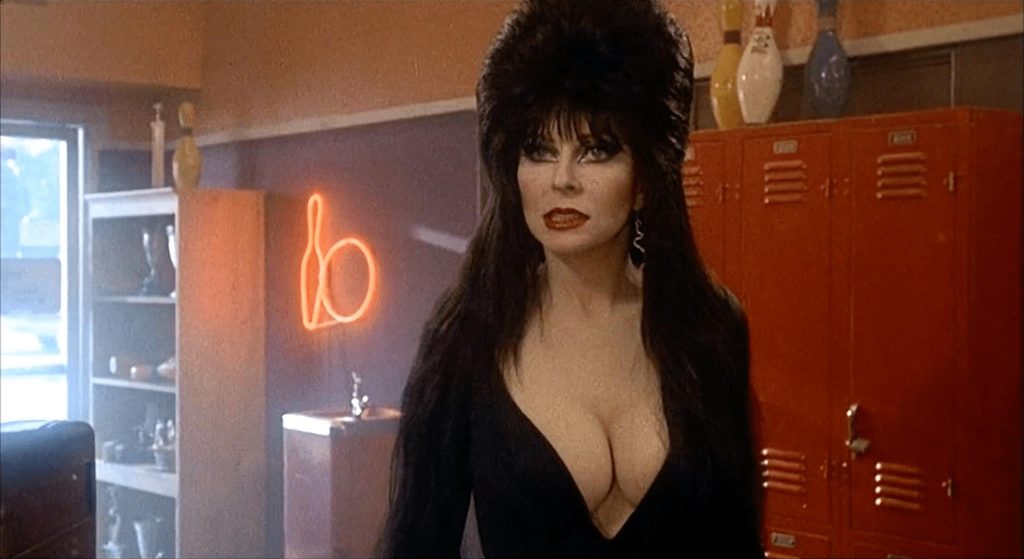
Los Angeles television station KHJ-TV was searching for a female host for a horror-movie program. Peterson auditioned, won the job and, together with designer Robert Redding, developed the exaggerated gothic appearance that would become instantly recognizable. Her horror-host program, Elvira’s Movie Macabre, debuted that year.
The transformation was extraordinary.
Peterson’s naturally red hair disappeared beneath an enormous jet-black wig. Her complexion became ghostly pale. Purple and black eye makeup gave her an almost comic-book quality. And then there was the dress: black, skin-tight and aggressively low-cut, with a slit designed with approximately the same philosophy.
The look was sexy, but it was also a parody of sexiness. Everything about Elvira was turned past eleven.
That is why she never felt interchangeable with conventional glamour models. Peterson understood camp.
Elvira knew exactly what the audience was looking at, and she was usually already preparing the joke about it.

Peterson herself later described the appeal of the character as the collision between Elvira’s dark, sexy image and her slapstick personality. The audience could see a glamorous gothic vamp one second and a complete klutz the next.
That combination proved irresistible.
What began as a local Los Angeles television job became nationally syndicated. Peterson’s official site notes that Elvira became the first horror host syndicated nationally, and the character subsequently expanded into television appearances, live performances, books, recordings and an enormous licensing business.
By the middle of the 1980s, Elvira was no longer simply hosting bad horror movies. She was becoming one of the defining faces of Halloween.
And unlike many television personalities tied permanently to one program, Peterson understood branding before celebrity branding became an industry obsession.
Elvira appeared on everything.
Costumes, calendars, comic books, trading cards, model kits, perfume, dolls, Halloween merchandise and even pinball machines carried her likeness. By the 1990s, industry observers were already describing Elvira as a classic licensing character whose distinctive identity separated her from competitors.
Then Hollywood came calling.
In 1988, Peterson brought her alter ego to the big screen with Elvira: Mistress of the Dark, which she co-wrote. The movie expanded the character beyond the horror-host desk and allowed Peterson to build an entire comedy around Elvira’s outsider identity, sexuality and refusal to conform.
The film was not merely Peterson performing somebody else’s creation.
She helped write it.
That distinction matters.
For decades, beautiful women in entertainment have frequently been marketed while men behind the scenes controlled their image. Peterson’s career complicates that familiar story because she increasingly became one of the people controlling the joke, the character and the business.
Elvira’s provocative humor was not something Peterson simply endured. She helped create it.
When critics suggested that too many Elvira jokes revolved around her famous cleavage, Peterson’s response was essentially that she knew—because she had written the jokes herself.
There is something quietly subversive about that.
Elvira appears at first glance to embody an exaggerated male fantasy, yet Peterson repeatedly turns that expectation back on the audience. Elvira is the one delivering the punchline. She is rarely embarrassed by her sexuality because embarrassment would require believing someone else has authority over it.
Instead, Elvira owns the room.
That attitude helped her become more than a pinup.
Women embraced her. Horror fans embraced her. Goth audiences embraced her. LGBTQ+ audiences embraced her. Comedy fans embraced her. People who had spent much of their lives feeling strange, theatrical or outside conventional expectations saw something familiar beneath the bouffant.
Peterson understood that feeling personally.
Her career had always existed somewhat outside Hollywood’s standard template.
She had been a Vegas showgirl, singer, European performer, improvisational comedian and horror hostess before most people even knew her real name. For decades, Peterson could walk through public places without being recognized while Elvira remained instantly identifiable.
That anonymity eventually began to change.
Her 2021 memoir, Yours Cruelly, Elvira: Memoirs of the Mistress of the Dark, pulled Cassandra Peterson herself into the spotlight. The book explored a life considerably more complicated than the wisecracking television persona suggested and revealed Peterson’s long relationship with Teresa “T” Wierson.
For perhaps the first time on such a large scale, audiences were invited to separate—and then reconnect—the woman and the character.
There was Cassandra Peterson: red-haired, comparatively understated, thoughtful and candid.
And there was Elvira: black-haired, outrageous, supernatural and permanently ready with a double entendre.
Yet the distinction ultimately revealed how much of Peterson had always been inside Elvira.
The independence was hers.
The humor was hers.
The willingness to look ridiculous was hers.
And, unmistakably, the confidence was hers.