The Holiday Film That Made Child Neglect Hilarious
A Loud, Clever, Eternally Rewatchable Look Back at Home Alone (1990)
Some Christmas movies warm your heart. Some make you cry. And then there’s Home Alone, the holiday classic that casually asked, “What if we left a child behind… and it was actually kind of awesome?” On paper, the premise sounds horrifying. In execution, it’s one of the most beloved Christmas movies of all time. And somehow, thirty-plus years later, it still works—still funny, still quotable, still perfectly timed to kick off the holiday season.
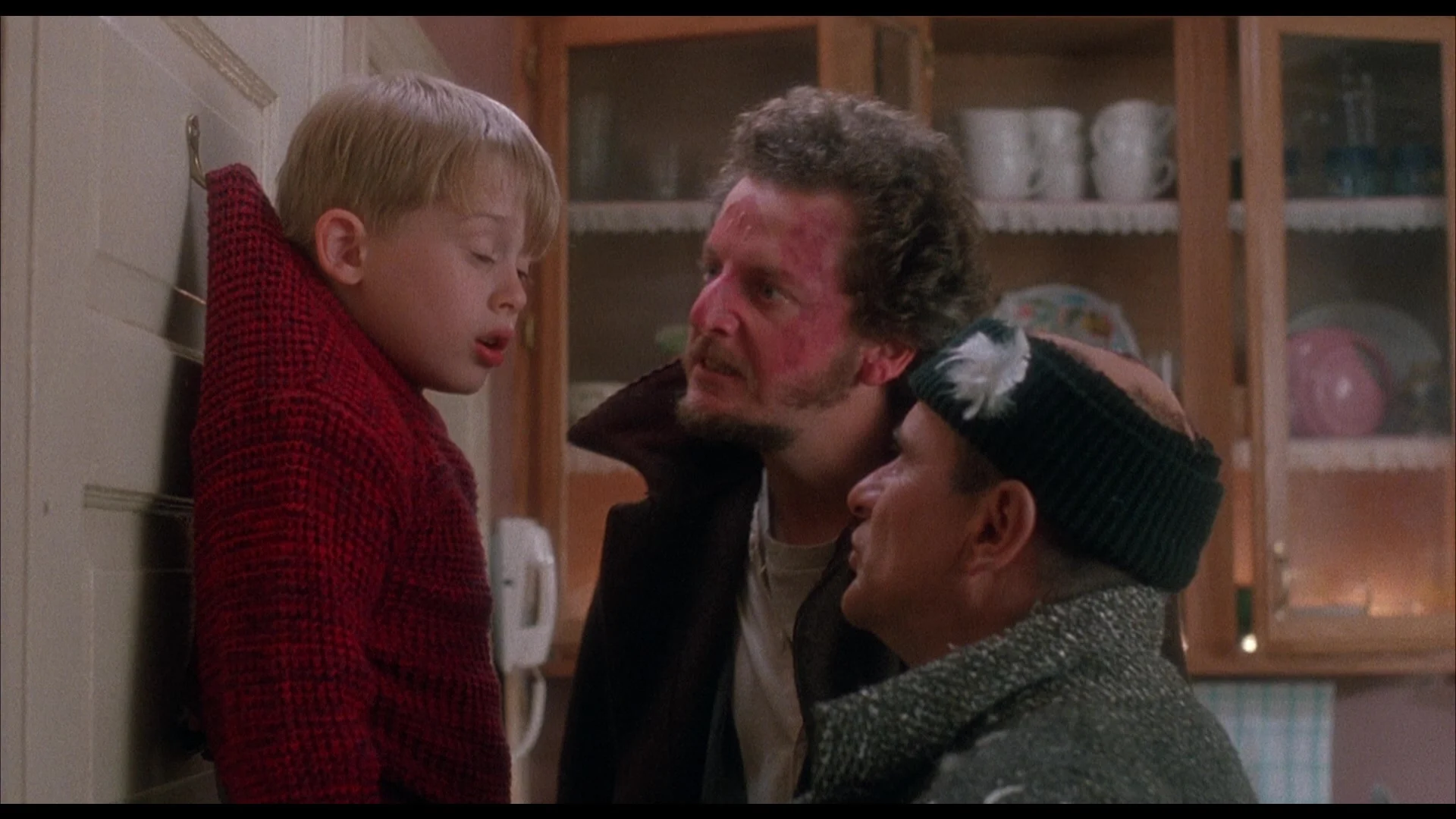
At the center of it all is Kevin McCallister, played by Macaulay Culkin in a performance that basically defined early-’90s childhood. Kevin is smart, sarcastic, underestimated, and completely fed up with his family. He’s not evil—he’s just overwhelmed. And when he wishes that his family would disappear, the movie grants that wish in the most extreme way possible. Through a perfect storm of chaos, noise, and bad headcounts, Kevin wakes up alone in his house while everyone else is on a plane to Paris.
What makes Home Alone so effective is how it lets Kevin’s independence play out before the danger sets in. The grocery store trip. The junk food. The sledding down the stairs. The iconic scream-aftershave moment. These scenes tap directly into a childhood fantasy: being in charge without adults hovering. The movie gives you time to enjoy that freedom before reminding you that freedom also comes with responsibility—and burglars.
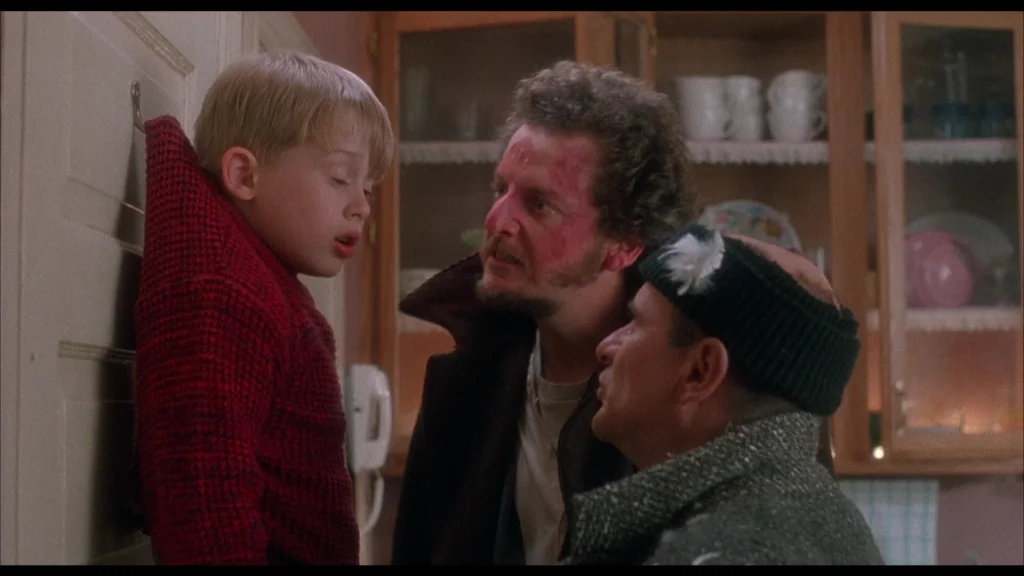
Enter the Wet Bandits. Harry and Marv are cartoonishly inept criminals, and that’s exactly why the movie works. They’re threatening enough to justify Kevin’s fear, but goofy enough to survive what comes next. And what comes next is one of the most legendary sequences in movie history: the trap montage. Paint cans. BB guns. Tarantulas. Micro Machines. A blowtorch to the head. This movie turned household objects into weapons and made an entire generation deeply suspicious of door handles.
And yet, beneath all the slapstick violence and pratfalls, Home Alone has a surprisingly strong emotional core. Kevin isn’t just fighting burglars—he’s learning what family actually means. His quiet conversations with Old Man Marley, the misunderstood neighbor everyone thinks is scary, mirror Kevin’s own journey. Marley’s story about estrangement and regret adds a layer of sincerity that grounds the movie. It reminds you that Christmas isn’t just about presents or pranks—it’s about reconciliation.
The moment Kevin finally realizes he misses his family is subtle but powerful. It’s not a dramatic speech. It’s loneliness. Silence. The absence of noise in a house that’s usually overflowing with it. That realization hits harder as you get older. As a kid, the fantasy is being alone. As an adult, the fantasy is everyone making it home safely.
Visually, Home Alone is soaked in Christmas atmosphere. Snow-covered streets. Twinkling lights. A massive, cozy house that feels like it was designed specifically for holiday chaos. John Williams’ score deserves special credit too—it adds a sense of wonder and warmth that elevates every scene. Without that music, the movie would still be funny, but it wouldn’t feel quite as magical.
Rewatching Home Alone now, it’s easy to see why it became a tradition. It’s fast-paced but never rushed. It’s silly but never empty. It treats kids as clever and capable without turning adults into villains. And it balances comedy with heart in a way that feels effortless. Even the ending—Kevin reunited with his family, smiling instead of scolding—feels earned. He’s grown, just a little. And that’s enough.
Of course, modern parents watching this movie probably spend half the runtime muttering, “There’s no way this would happen,” while still laughing at every single trap. And that’s part of the charm. Home Alone exists in a heightened reality where consequences are temporary, burglars bounce back from concussions, and Christmas magic smooths over everything else.
So yes—this is the holiday film that made child neglect hilarious. But it’s also a story about independence, kindness, and realizing that the thing you thought you wanted—being alone—isn’t nearly as good as the people who drive you crazy in the first place.
And honestly? That’s a pretty great Christmas lesson to sneak into a movie filled with falling paint cans.