
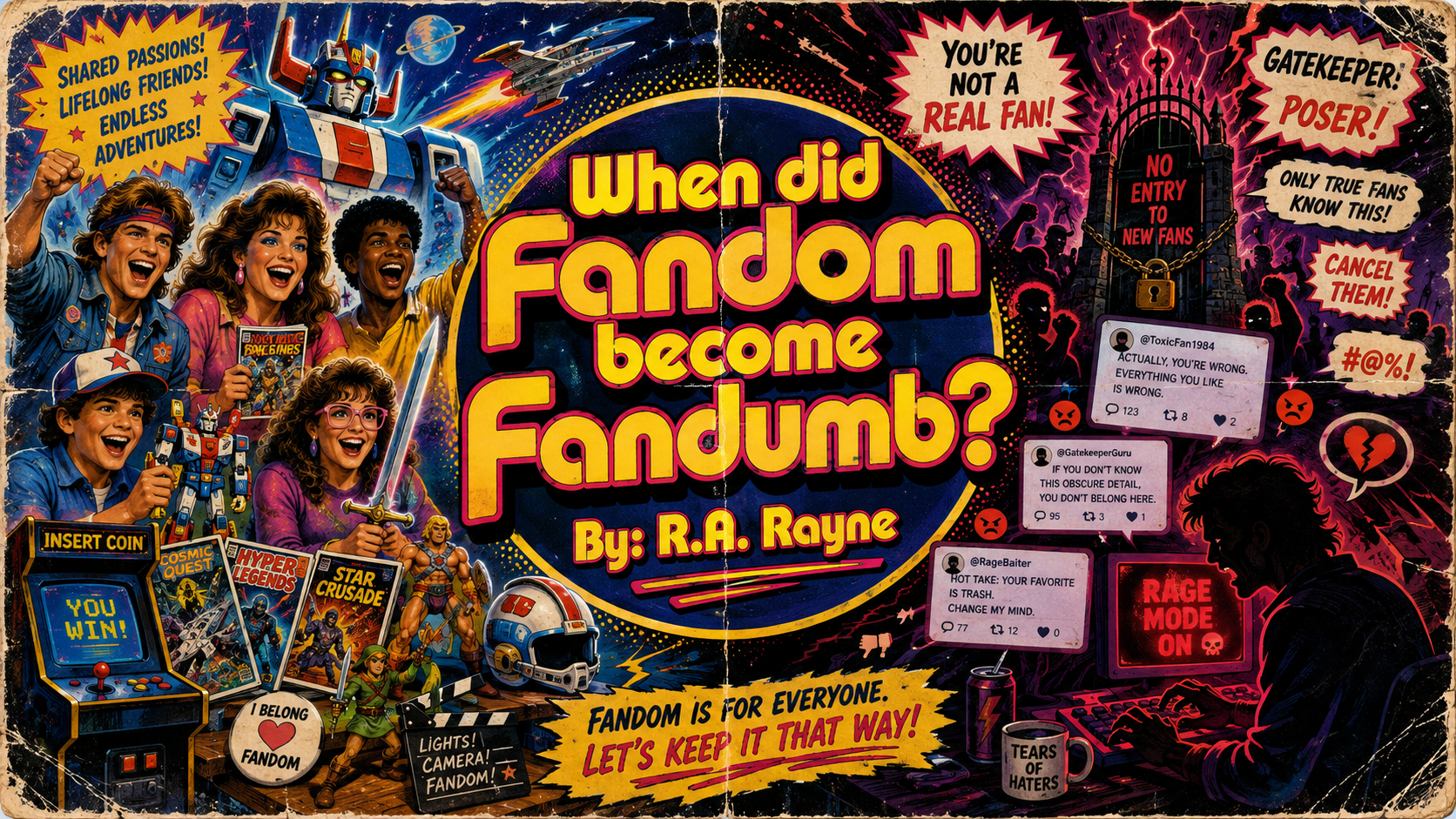
When did Fandom become Fandumb?
By R.A. Rayne
We live in the Golden Age of fandom. It’s an energy field created by all living things that surrounds, penetrates, and binds the galaxy together. Okay, it may not be all that, but it is everywhere. You can’t turn on a television, go to the movies, the store, or an amusement park without seeing one of your favorite superheroes, sci-fi or fantasy characters, or at least once a day hear someone quote a line from one of your favorite properties. Things most people used to think were nerdy, geeky, and for dweebs are now mainstream.
For those of us who grew up hiding, tucking our Superman capes under our baseball uniforms or stashing our X-Men and Spider-Man comic books in our Social Studies books, this should be our time to stand on the Bridge of Khazad-dûm and shout, “You shall pass!” We have finally been accepted. We are part of the tribe. And no one is getting stuffed in a locker for admitting they cried harder at E.T.’s death than they did when Artax died in the Swamp of Sadness.
But if “Knowing is Half the Battle,” then we haven’t learned anything. We spend more time picking apart and bashing the things that made us who we are today. Now, before I get into this, let me just say I am not blind to bad writing, poor craftsmanship, choosing the cheap, easy way to make a quick buck, or not understanding what the fandom community wants and expects.
There will always be the good, the bad, and the ugly when it comes to anything we hold dear. It is how we deal with the bad parts that separates the real fans from those who like to call themselves fans or believe they are fans. The word fan comes from the word fanatic. Merriam-Webster Dictionary defines the word fanatic as a person who is extremely enthusiastic about and devoted to some interest or activity. The key words here are extremely enthusiastic and devoted, but as the popularity of those things we call ourselves fans of has grown, so has toxic fandom, or, as I call it, toxic fandumb and rage baiting.
What is toxic fandom? Google defines it as a subculture of enthusiastic supporters who exhibit harmful behaviors, such as harassment, entitlement, and gatekeeping. It occurs when an intense emotional investment in a piece of media or a celebrity turns into hostility toward outsiders, creators, or fellow fans who hold different views.
For many of us, we belong to special-interest groups on Facebook, Reddit, and other social media platforms designed to be places where we can share and discuss our favorite toys, movies, comics, and television shows. Unfortunately, these groups also attract many people who call themselves fans but seem to spend most of their time online bashing the thing they claim to love. Or worse, they rage-bait others into fighting with them over meaningless topics, ideas, or opinions.
As I said before, I know there are times we are all going to be upset or dislike something about the properties we love. And yes, I am well aware that we create attachments to these properties and expect them to be done a certain way. Look, not everything is going to be Empire Strikes Back, and lets be real, more times than not we are going to end up with a Green Lantern movie, but that doesn’t mean “Our childhood has been ruined,” or “A toy line is suddenly dead.”
Let’s be real. We all have that cousin or uncle who is JarJar Binks. You wish he wasn’t related to you, but hey, you can either tolerate him when he’s around, or just avoid being around him if he bothers you that much. Getting on the internet and complaining about him isn’t going to make him any less of a part of your family, and all it’s going to do is piss off the rest of your family who likes him.
The same can be said of fandom. If you don’t like a certain action figure, movie, or show, then, as He-Man would say, “I have the power,” you have the power not to buy, see, or listen to what you don’t like. And bashing those who do enjoy things like The Last Jedi, Rise of Skywalker, Supergirl, or Lt. Falcon’s head sculpt doesn’t make them go away. It just wastes your time and everyone else’s, having to deal with a grown adult throwing a temper tantrum. Look, I’m not saying you can’t get upset when you don’t like something. And I am most definitely not saying you don’t have a right to voice your opinion. What I am saying is that how you express it matters.
As Stone Cold would say, “Here’s the bottom line.” If you keep hating everything you claim to be a fan of… you’re not a fan. Just because the only movie in the entire Star Wars franchise you like is The Empire Strikes Back doesn’t mean you’re a Star Wars fan. It means you’re a fan of that particular movie. If you only like Snake Eyes, Skeletor, or Captain America, you are only a fan of them, not their franchises. Stop kidding yourself, or pretending that you do.
Look, we all are going to get angry or not like something. All I am asking is that you try to remember that just because you don’t like something, or feel that it’s bad, doesn’t mean that there isn’t someone else who enjoys it, and the more you get angry about it, the harder it is for everyone else.
Remember, these are toys, movies, music, shows, and sports designed to entertain us. If they are causing you to lash out, they aren’t doing their job, and you need to pull yourself away from them.
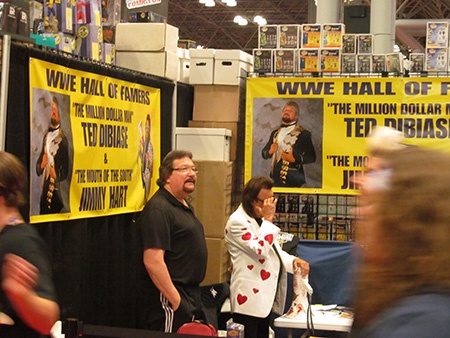


It’s amazing how much of this feeling is just…present now, isn’t it? I definitely notice a huge difference compared to my childhood.