G.I. Joe Special Missions at 40: Marvel’s Forgotten War
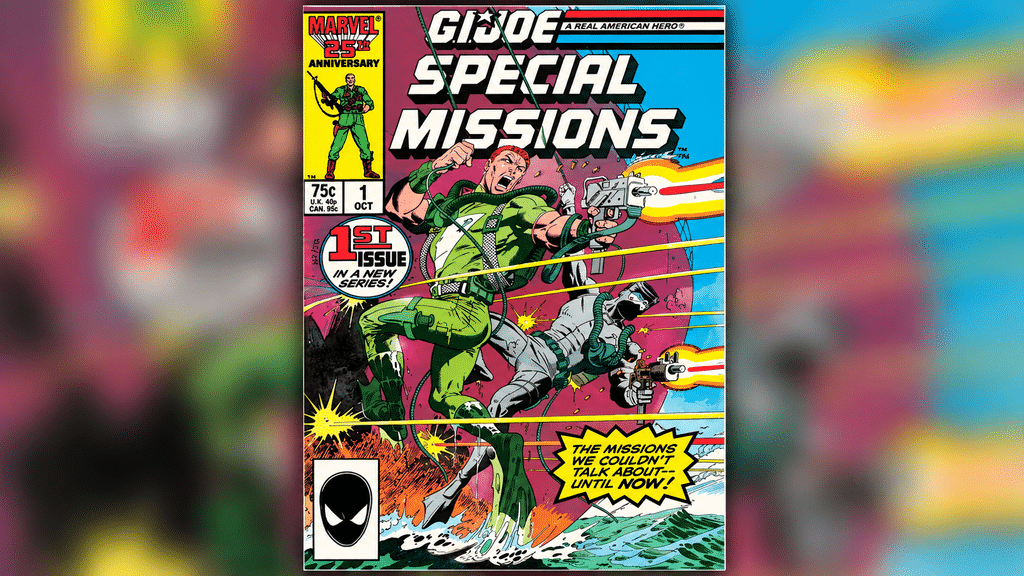
SERPENTORSLAIR.COM EXCLUSIVE • 40TH ANNIVERSARY RETROSPECTIVE
G.I. Joe’s Forgotten Second War: How Marvel’s Special Missions Changed the Franchise 40 Years Ago
In 1986, while millions of children watched G.I. Joe battle Cobra on television, Larry Hama and Herb Trimpe were creating something different: dangerous covert operations, morally complicated enemies, and military adventures where victory sometimes came at a terrible price.
By Adam Jared — SerpentorsLair.com Founder
November 11, 2026

For an entire generation of children, G.I. Joe was the ultimate Saturday-morning adventure.
There were laser battles, Cobra’s spectacular military schemes, unforgettable vehicles, and a colorful collection of heroes whose personalities seemed as distinctive as their uniforms.
But somewhere between the adventures of Snake Eyes and Storm Shadow, the rise of Serpentor, and the weekly battles between G.I. Joe and Cobra, Marvel Comics quietly introduced a second comic-book series that dared to explore a different side of America’s favorite fictional fighting force.
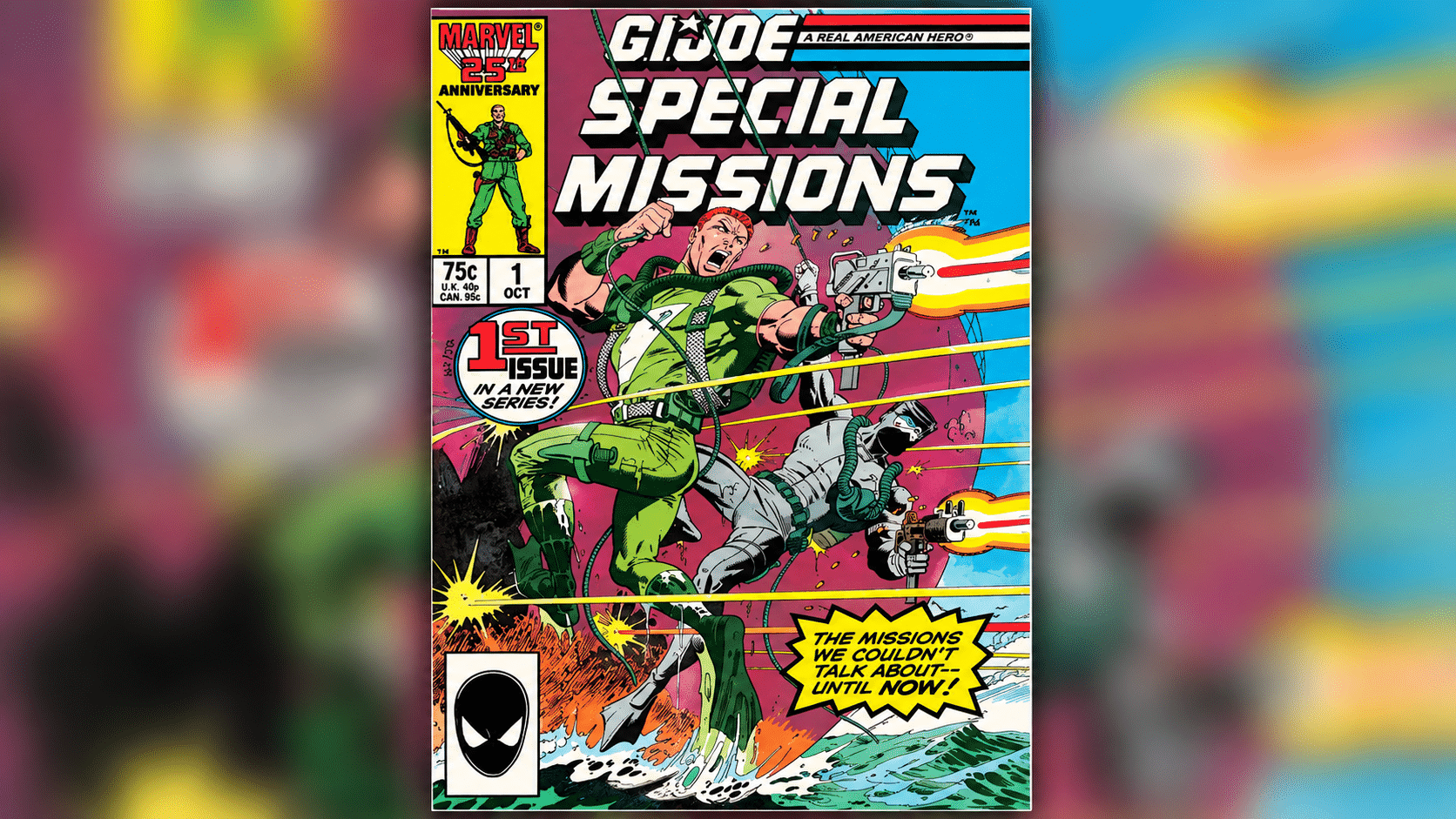
It was called G.I. Joe: Special Missions.
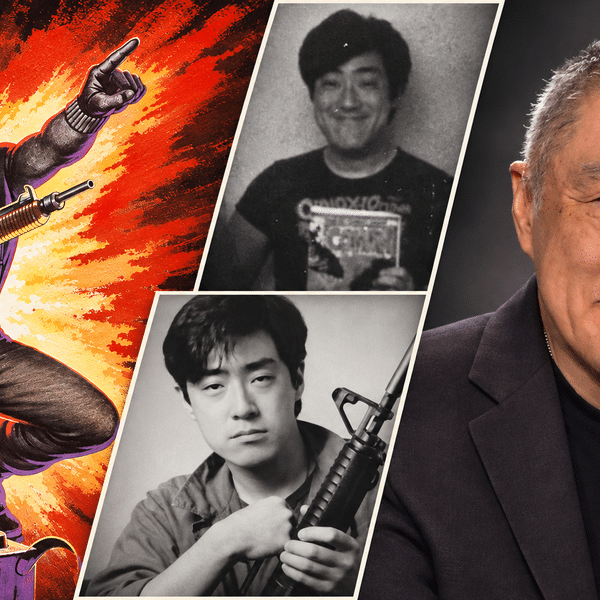
First published in 1986, this companion title was written primarily by Larry Hama and illustrated for much of its run by veteran comic-book artist Herb Trimpe.
Unlike the increasingly elaborate mythology unfolding in the flagship comic, Special Missions emphasized intelligence operations, military tactics, international crises, and the difficult personal decisions faced by soldiers operating far from home.
Sometimes the enemy was Cobra. Sometimes it was a foreign government, a group of terrorists, a criminal organization, or an intelligence operation gone terribly wrong.
And sometimes the greatest danger was the realization that even the most carefully planned mission could end in disaster.
Forty years later, the series deserves recognition as one of Marvel’s most fascinating contributions to the G.I. Joe universe.
Its stories helped establish that G.I. Joe could be more than a battle between recognizable heroes and villains.
It could also be a military thriller.
The Secret Beginning: Special Missions Actually Debuted Before Issue #1
Here is something even longtime G.I. Joe comic collectors occasionally overlook.
The first Special Missions adventure did not appear in Special Missions #1.
Its introduction appeared as a backup story in the giant-sized G.I. Joe: A Real American Hero #50, cover-dated August 1986.
The issue is best remembered for its main story, “The Battle of Springfield,” which brought the ongoing conflict between G.I. Joe and Cobra to a dramatic confrontation.
But tucked inside that milestone publication was a second adventure titled “Best Defense.”

Written by Larry Hama and drawn by Herb Trimpe, “Best Defense” involved the hijacking of a civilian airliner traveling from San Francisco toward the Soviet Union.
The situation threatened to become an international crisis.
Rather than assembling an enormous strike force or sending hundreds of soldiers into battle, the Joes had to deal with the threat through intelligence gathering, precision planning, and a limited counterterrorist operation.
Hawk, Stalker, Flint, Lady Jaye, and Beach Head were among the characters involved.
It was an ideal demonstration of the new series’ direction.
The danger was recognizable. The political consequences mattered. The mission required professionals making difficult decisions, not simply heroes exchanging fire with brightly colored enemy soldiers.
Perhaps most importantly, the adventure demonstrated that G.I. Joe did not need Cobra Commander to produce an effective story.
Marvel had established an entirely different kind of conflict within the same fictional universe.
A Surprising Publication Detail
Although the first standalone issue of Special Missions carried an October 1986 cover date, the Grand Comics Database records its direct-market edition as being on sale June 3, 1986, with the newsstand edition following on June 26.
In other words, by the time the October cover date arrived, the comic had already been available for months.
This is a perfect example of why collectors researching comic-book history should distinguish a printed cover date from the actual retail release date.
The series is celebrating its fortieth anniversary in 2026, even though its publishing history began earlier in the year than the cover suggests.
Why Larry Hama Wanted to Tell These Kinds of Stories
By 1986, Larry Hama had become the defining storyteller of the modern G.I. Joe franchise.
His work on the principal comic had helped establish the relationships between Snake Eyes, Scarlett, Stalker, and Storm Shadow, while developing the expanding military organization that fought Cobra.
Yet the franchise was also becoming increasingly ambitious.
New action figures were introduced annually. New characters entered the cast. Cobra’s leadership became more complicated, and the main comic was developing long-running plots involving elaborate technology, secret organizations, and increasingly interconnected storylines.
There was still room for grounded military adventures, but the primary series now had an enormous amount of ongoing continuity to manage.
Special Missions offered another storytelling format.
Instead of making every issue part of a lengthy confrontation with Cobra’s leadership, Hama could construct a single operation around a limited group of characters.
The mission itself became the story.
This suited one of Hama’s greatest strengths: understanding how people behave under pressure.
As a Vietnam veteran, Hama brought personal knowledge of military life to his writing. But his creative approach also depended on carefully differentiated personalities, plausible dialogue, and an understanding that soldiers are not interchangeable simply because they wear similar uniforms.
Special Missions worked because its soldiers were not invincible superheroes. Their training made them effective, but their decisions—and their mistakes—still mattered.
The Oktober Guard: Soviet Soldiers Who Weren’t Simply the Enemy
One of the most interesting creative decisions behind Special Missions was the prominent role given to the Oktober Guard.
The Soviet military team had originally appeared in Marvel’s G.I. Joe #6, cover-dated December 1982.
Led by Colonel Brekhov, the group was essentially a Soviet counterpart to the American G.I. Joe team.
Its members included Daina, Horrorshow, Schrage, and Stormavik, among others.
But the Oktober Guard was never simply another version of Cobra.
Its soldiers represented a rival military force operating under a different government, with different orders and national priorities.
They could be opponents one day and reluctant allies the next.
G.I. Joe: A Real American Hero #6 (December 1982)
The original appearance of the Oktober Guard. View the original issue’s cover and collector photographs in the linked archive.
VIEW THE ORIGINAL COVER AND ISSUE DETAILSThat distinction was especially meaningful during the Cold War.
American popular culture frequently portrayed Soviet military forces as threatening adversaries. Hama’s Oktober Guard, however, allowed readers to recognize that soldiers serving competing governments could still possess courage, professional competence, and personal honor.
This complexity became central to Special Missions #1.
Issue #1: “That Sinking Feeling”—A Cold War Thriller Disguised as a G.I. Joe Comic
The opening issue immediately established the series’ unusual tone.
In “That Sinking Feeling,” American intelligence uses the supposed disappearance of a U.S. submarine in the Baltic Sea to create a cover for a dangerous operation involving a Soviet naval officer.
The mission becomes increasingly complicated as Cobra and the Oktober Guard investigate the situation.
Shipwreck, Torpedo, Wet-Suit, Deep Six, Cutter, and other Joes become involved in an operation where information is as important as firepower.
The Baroness, Destro, and Firefly also enter the story, but Cobra is only one part of a larger geopolitical puzzle.
The situation requires deception, timing, and an understanding of how military organizations respond to intelligence.
That makes the story feel markedly different from a conventional cartoon adventure.
Hama does not treat the Soviet personnel as faceless enemies. Their motivations and professional responsibilities affect the outcome.
And the Joes are not simply attempting to defeat an opposing army. They are trying to accomplish a specific intelligence objective without triggering a wider international confrontation.
An Obscure Historical Reference Hidden in the Story
One particularly revealing detail involves the Russian battleship Potemkin.
The comic refers to the famous 1905 mutiny when discussing the limitations placed on weapons aboard Soviet naval vessels.
This is an example of Hama bringing real historical references into fictional military dialogue.
The Potemkin mutiny itself was a genuine historical event, although the comic’s suggestion about later Soviet naval weapons policies should be understood as part of the fictional narrative rather than independently established military doctrine.
That kind of detail is precisely what made Special Missions feel distinctive.
Hama expected his readers to appreciate a story involving military history and political circumstances, not merely explosions.
Issue #2: The Forgotten Story That Revealed Something Important About Clutch
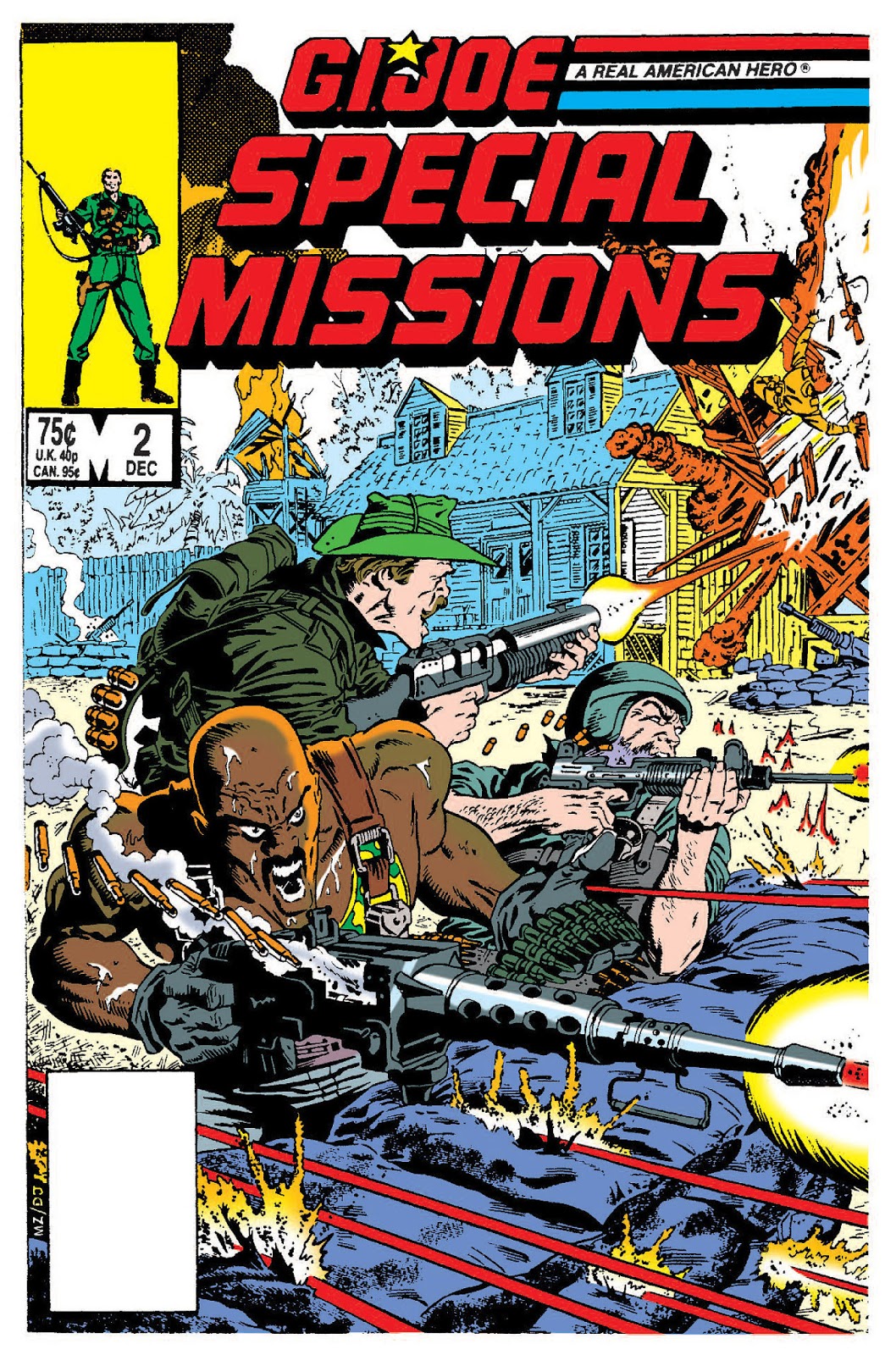
The second issue, “Words of Honor,” demonstrated that Special Missions was willing to explore subjects with direct connections to real historical atrocities.
The story begins with the discovery of a German military aircraft from World War II trapped in the ice of Greenland.
The aircraft contains a deadly chemical weapon.
To prevent disaster, the G.I. Joe team must locate someone who understands the dangerous substance: a former Nazi scientist who has survived in South America.
The adventure divides the Joe team between the frozen wreckage and the effort to locate the scientist.
It is a compelling premise, combining historical military technology, the aftermath of World War II, and an immediate international danger.
But the story also explores a deeply personal dimension for one of the original 1982 G.I. Joe characters.
Clutch’s Jewish Heritage
During this adventure, readers learn about Clutch’s Jewish background.
That revelation gives his involvement with a former Nazi an emotional significance beyond the mission’s immediate objective.
For fans accustomed to seeing Clutch primarily as the tough-talking driver of the original VAMP, this is an important piece of character development.
Hama uses the situation to explore the uncomfortable reality that a soldier’s professional obligations can conflict with deeply held personal feelings.
The Joes cannot simply ignore the threat posed by the nerve agent. Yet the knowledge needed to resolve the crisis may come from someone associated with horrific historical crimes.
The issue also includes an early appearance by Dial-Tone, making it noteworthy to collectors interested in character publication histories.
Here was a comic that could expand a familiar toy character’s identity while examining difficult ethical questions.
That was the power of Special Missions.
Issue #3: “Burn-Out” and the Realities of Covert Operations

The third issue moved the action into the politically volatile Middle East.
Characters including Stalker, Leatherneck, and Slip-Stream were involved in a mission where the surrounding political environment was as important as the actual fighting.
Instead of simply deploying the full G.I. Joe roster, Hama selected characters whose individual specialties could contribute to a specific operation.
That structure provided an opportunity to showcase abilities that sometimes received relatively little attention in the cartoon or the larger comic-book storylines.
A soldier trained in reconnaissance, an experienced Marine, and a skilled pilot might face very different problems within the same mission.
Special Missions made those distinctions meaningful.
The result was a comic that frequently resembled a compact military adventure novel rather than an installment of a conventional superhero series.
Issue #4: Lifeline’s Principles Put to the Test
Few early Special Missions stories illustrate Larry Hama’s approach to character better than “No Holds Barred.”
The fourth issue places Lifeline, Roadblock, Leatherneck, and Wild Bill in a dangerous escape operation involving a captured Cobra Firebat aircraft.
When the team is forced to abandon the aircraft, the situation becomes a desperate effort to escape with crucial intelligence.
But there is an additional problem.
Lifeline refuses to compromise his identity as a noncombatant medic.

It is a fascinating conflict because the people around Lifeline are trained combat soldiers who understand that the entire team may be killed if they cannot escape.
Roadblock and Leatherneck approach the emergency from the perspective of soldiers trying to survive an active threat.
Lifeline sees his responsibility differently.
His refusal to take up a weapon is not simply an inconvenient character trait. It is part of how he defines his duty to protect life.
Hama creates dramatic tension without requiring a disagreement over loyalty.
Each man believes he is fulfilling an important responsibility, even as their competing principles threaten the success of the mission.
The Interior Artwork Shows the Conflict
Inside Special Missions #4: Lifeline’s Battlefield Dilemma
Original interior comic panels from “No Holds Barred,” featuring the confrontation over Lifeline’s refusal to carry a weapon.
VIEW THE ORIGINAL INTERIOR ARTWORKThe artwork reinforces this dilemma.
Rather than merely presenting a sequence of spectacular action scenes, Trimpe uses the characters’ body language, facial expressions, and physical positions to emphasize their competing responsibilities.
It is not the kind of conflict that can always be resolved with a laser blast.
And it illustrates why Special Missions appealed to readers who wanted to see these familiar characters treated as genuine individuals.
Herb Trimpe: The Artist Who Made the Missions Feel Real
While Larry Hama receives much of the recognition for the franchise’s literary achievements, Herb Trimpe’s contribution to Special Missions deserves equal attention.
Trimpe was already a major figure in Marvel history, having worked extensively on The Incredible Hulk and other titles.
He had also been involved with G.I. Joe from its early comic-book years.
For much of the early Special Missions run, he handled both the penciling and inking of the interior artwork.
That matters because one artist controlling both stages could maintain a recognizable approach to layouts, character movement, and visual pacing.
Trimpe was particularly effective at communicating how people and equipment occupied the same physical space.
Vehicles had size and weight. Characters moved through recognizable environments. Equipment could interfere with movement, and a badly positioned soldier could become vulnerable.
These details helped support Hama’s stories.
A covert operation relies upon the reader understanding where the participants are located, what obstacles exist, and why one action might cause another.
Trimpe’s pages often made those relationships clear without distracting from the characters themselves.
The Mike Zeck Connection
There was another important artist associated with the series: Mike Zeck.
Although Trimpe handled most of the interior art during the early run, Zeck produced the striking covers for the initial issues, working with inkers including John Beatty, Dennis Janke, Joe Rubinstein, and Bob McLeod.
That combination gave Special Missions an immediately recognizable identity on comic-book racks.
The covers promised explosive action.
Inside, readers discovered stories that were frequently more complicated than the illustrations suggested.

Aerial Combat Without a Giant Cobra Army
Special Missions #5 demonstrated that the series could create suspense even when the combat involved only a handful of people.
“Showdown!” placed G.I. Joe pilots Ace and Slip-Stream against a dangerous Cobra aerial threat.
The situation revolved around an aerial engagement in which speed, aircraft performance, and the pilots’ decisions were central to the story.
Rather than relying on an enormous battle involving multiple teams, Hama concentrated on the hazards of an operation taking place at high speed.
It was a reminder that a successful adventure did not require every major character in the toy line to make an appearance.
One or two appropriately selected Joes could be enough.
The issue also marked a visible shift in the series’ retail history: its American cover price increased from seventy-five cents to one dollar.
That small detail is another clue to the changing economics of the comic-book business during the late 1980s.
Issue #6: The Mission Where Leaving Men Behind Became the Story
For many longtime Marvel G.I. Joe readers, “Evasion” is one of the strongest examples of the series’ willingness to challenge heroic expectations.

Set in the fictional Eastern European country of Borovia, the story finds several Joes in a desperate situation following a mission that has gone wrong.
Stalker, Quick Kick, and Snow Job are unable to escape safely with Outback.
Stalker orders Outback to leave the others behind and report what has happened.
For Outback, the decision carries an enormous emotional burden.
He must follow an order that seems to contradict the instinct to remain with his teammates.
For readers, the situation creates a deeply uncomfortable question.
What happens when carrying out an order means leaving friends behind?
This is not a simple matter of a hero abandoning someone out of fear.
It is a conflict between obedience, survival, and loyalty.
And the consequences extend beyond the boundaries of this single issue.
An Overlooked Connection to the Main Series
Although Special Missions is often remembered as a collection of mostly self-contained adventures, “Evasion” was directly connected to developments in the flagship comic.
The circumstances followed the events of G.I. Joe #61, while the continuing situation involving the stranded soldiers extended into issue #62.
This is important because it demonstrates that Marvel’s two G.I. Joe titles were not separate fictional universes.
They were different storytelling approaches operating within the same continuity.
A decision made in one series could have lasting consequences in the other.
For readers who followed both titles, that created a richer understanding of the characters.
Issue #7: An Espionage Thriller and a Hidden Larry Hama Bonus
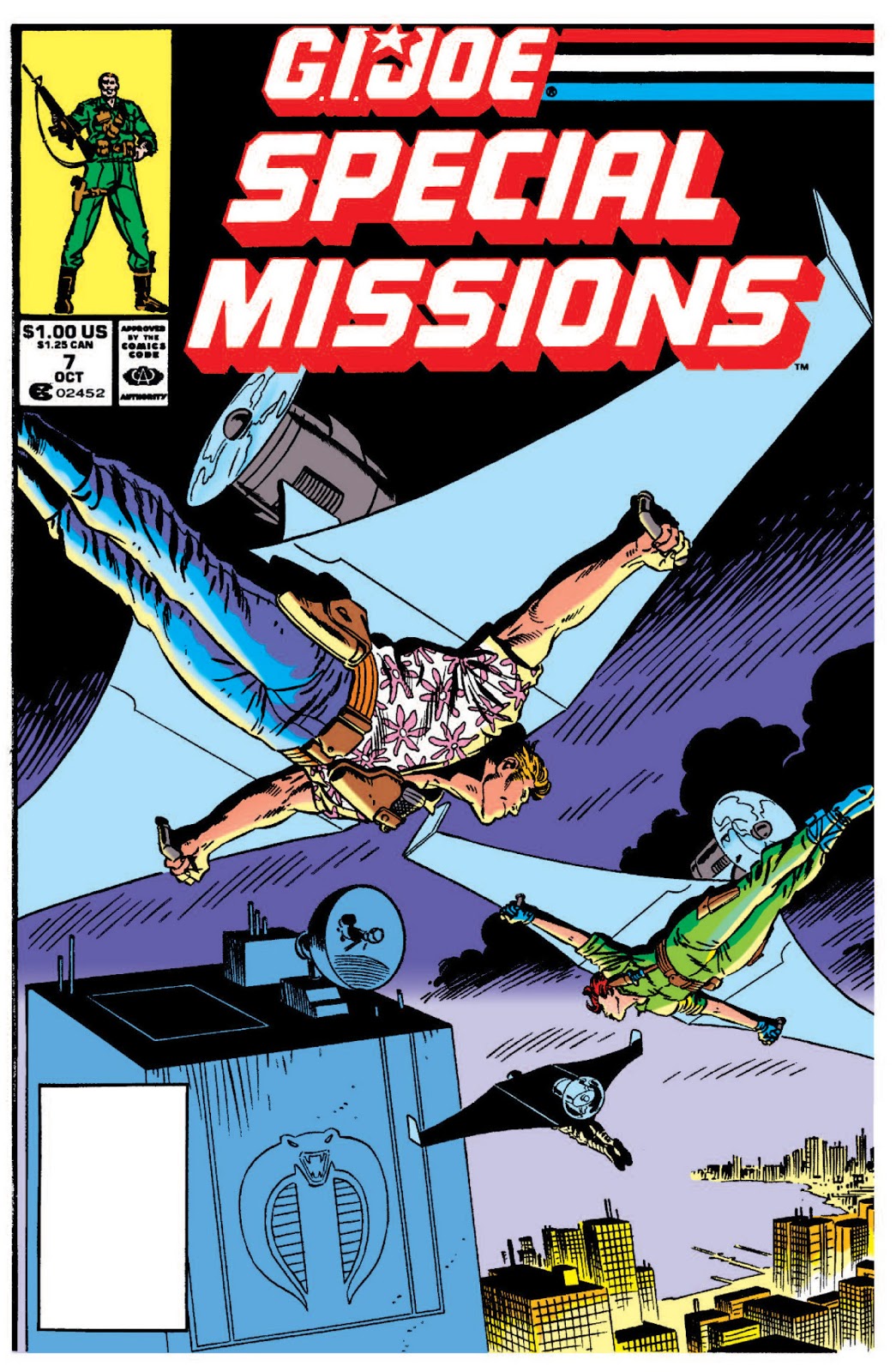
By the seventh issue, Special Missions had established that international espionage could be just as exciting as battlefield combat.
“The Old Switcheroo” involved an elaborate operation centered on Cobra’s diplomatic and communications infrastructure.
Characters including Chuckles, Lady Jaye, Dial-Tone, and Psyche-Out became involved in an operation designed around deception and intelligence gathering.
The adventure emphasized skills that rarely received the same attention as physical combat.
A convincing identity, an effective diversion, and the successful placement of a surveillance device could be more valuable than an entire armored column.
For collectors, this issue is also noteworthy for an early appearance by Psyche-Out, the team’s psychological operations specialist.
A Bonus Hidden in the Original Comic
The original publication also included a Marvel editorial feature titled “Pro File on: Larry Hama.”
That means readers purchasing the comic in 1987 could encounter material about the man writing their favorite military adventures.
It is exactly the kind of original publishing detail that can disappear from memory when older comics are revisited primarily through story collections.
For fans assembling a complete collection of Marvel’s G.I. Joe publications, the original issues offer more than the stories alone.
They preserve editorial pages, advertising, publishing information, and other material connected to the era in which the comics were produced.
Issue #8: What Happens When Intelligence Officers Don’t Tell Soldiers the Whole Truth?

One of the recurring ideas in Special Missions was that soldiers could face dangers created by people who supposedly belonged to their own side.
In “Ambush,” a team of Joes is sent into Southeast Asia on an operation involving a scientist and intelligence personnel.
But the mission becomes increasingly complicated as questions emerge about the information provided to the team.
The story raises an issue that remains important to military thrillers today.
How can a soldier successfully complete an assignment when the people planning the operation may not be telling the whole truth?
In a conventional adventure, heroes can usually identify the villain by the uniform they wear.
Special Missions frequently made that assumption unreliable.
A government representative might have conflicting objectives. An intelligence briefing might be incomplete. A seemingly straightforward rescue operation might involve political interests never disclosed to the soldiers carrying it out.
This ambiguity made the characters’ reactions more important.
Hama’s heroes could be loyal to one another while questioning the decisions made by the institutions directing their missions.
Why Special Missions Felt So Different From the Cartoon
For viewers who primarily remember the Sunbow animated series, the tone of Marvel’s Special Missions may seem surprisingly intense.
The animated series was built around spectacular adventures featuring recognizable characters, distinctive voices, memorable vehicles, and conflicts suitable for a young television audience.
Its presentation emphasized energetic action, clear objectives, and the personalities that made the cast so appealing.
Special Missions approached those same characters through a different medium and narrative structure.
Its conflicts were often smaller in scale, but more difficult to resolve.
Instead of a massive Cobra offensive threatening the world, the story might involve an intelligence extraction, an abandoned soldier, or an aircraft carrying dangerous weapons.
The comic could devote substantial attention to character motivations and ethical conflicts.
It could also allow a mission to produce consequences that could not be neatly resolved by the final page.
Herb Trimpe’s artwork reinforced that approach through environments, equipment, and action sequences that emphasized the physical circumstances of the operation.
In many cases, characters who were already recognizable from their toys were suddenly given far more complicated responsibilities.
There was no need to make Cobra Commander appear in every adventure.
The wider world provided more than enough danger.
And unlike the simplified moral divisions common to children’s action television, the comic could examine the difficult boundary between doing what was necessary and doing what was right.
The Oktober Guard Tragedy That Changed Everything
Although the series began with relatively self-contained operations, its later issues demonstrated how much dramatic weight Hama could attach to these secondary characters.
One of the most consequential stories appeared in Special Missions #26, cover-dated October 1989.
Titled “Passing of the Guard,” the issue brought members of the Oktober Guard into a deadly confrontation during an operation in the fictional country of Sierra Gordo.

The story involved G.I. Joe personnel, the Oktober Guard, and forces associated with Voltar.
But what made the adventure memorable was its tragic outcome.
Colonel Brekhov, Horrorshow, Stormavik, and Schrage were killed during the mission.
Daina and Dragonsky survived.
For readers who had followed the Oktober Guard since its early appearances, these were not anonymous soldiers introduced simply to be eliminated.
They were familiar characters with years of history in the G.I. Joe universe.
Their deaths demonstrated how seriously Hama was willing to treat the dangers surrounding the team’s international operations.
And the storyline did not end neatly within Special Missions.
Its aftermath continued into G.I. Joe: A Real American Hero #92.
The shared continuity was no longer simply a place where characters could make guest appearances.
It had become a structure in which tragic events could permanently reshape the fictional world.
For many longtime readers, this remains one of the clearest demonstrations of how far Special Missions was willing to move beyond conventional toy-based adventure storytelling.
The Comic That Didn’t Always Need Cobra
One of the series’ most unusual characteristics becomes clear when examining the complete twenty-eight-issue run.
Cobra was not the opponent in every mission.
Numerous adventures involved different threats, including terrorist groups, foreign military personnel, political instability, and difficult intelligence operations.
Longtime G.I. Joe historian JMM’s G.I. Joe Comics Home Page has observed that Cobra appeared in fewer than half of the Special Missions issues.
For a franchise commercially identified with the battle between G.I. Joe and Cobra, that was a remarkable creative choice.
It allowed Hama to remind readers that the team existed for a much broader purpose.
G.I. Joe was not simply an organization created to pursue one terrorist army.
Its members were highly trained military specialists who could be deployed to confront many different kinds of dangers.
That gave the fictional team a sense of purpose beyond the merchandising conflict that helped popularize the franchise.
The Forgotten Publishing History: 28 Issues and an Unusual Legacy
Special Missions continued from 1986 until 1989, publishing twenty-eight issues.
The series initially followed a bimonthly schedule before shifting to monthly publication during its later run.
Although Hama and Trimpe became strongly associated with the title, the creative team changed over time, with artists including Dave Cockrum contributing to later issues.
The covers also reflected the broader visual history of Marvel Comics during the period.

In 1988, Marvel released a Special Missions trade paperback collecting the first four issues along with the earlier “Best Defense” preview story.
This edition helped establish the adventures as a connected body of work that could be read independently of the regular comic.

There is another interesting detail in the series’ history.
The comics were reprinted internationally, with editions appearing in countries including the Netherlands and Norway.
The second issue’s “Words of Honor” was also republished for British readers under the title “Words of Honour.”
That may seem like a small distinction, but it illustrates how Marvel’s G.I. Joe stories traveled internationally while retaining their distinctive identity.
Decades later, IDW Publishing collected the complete Special Missions run in a series of trade paperbacks.
More recently, the material has also appeared within large-scale collections of the Marvel G.I. Joe continuity, making it possible for a new generation of readers to discover these stories alongside the main title.
The Real Reason These Stories Still Matter
Looking back across four decades, it becomes clear that Special Missions provided an important creative counterbalance to the larger G.I. Joe franchise.
The original toy line and animated series offered an extraordinary universe of recognizable heroes, memorable villains, and imaginative military technology.
The regular Marvel comic developed those elements into an extensive continuity.
But Special Missions frequently asked a different question.
What would happen if these characters were placed in situations resembling the kinds of problems military and intelligence personnel might actually confront?
What would happen if their opponents were not always recognizable villains?
What if a mission could succeed while leaving its participants emotionally devastated?
What if obeying an order meant abandoning a friend?
And what if a soldier’s personal conscience came into conflict with the demands of an emergency?
These questions gave readers a more complicated understanding of the familiar characters.
They also helped establish that the G.I. Joe concept was flexible enough to support several kinds of storytelling.
It could be an animated adventure, an elaborate military fantasy, a character-driven drama, or a tense international thriller.
Special Missions proved that all those approaches could exist within the same fictional universe.
Forty Years Later, It’s Time to Remember G.I. Joe’s Second War
When fans discuss Marvel’s G.I. Joe, certain moments almost always dominate the conversation.
The mystery of Snake Eyes.
His complicated relationship with Storm Shadow.
The creation of Serpentor.
The rise of Cobra Island.
And the enormous battles that defined the franchise’s original comic-book years.
Those stories deserve their place in G.I. Joe history.
But the twenty-eight issues of Special Missions deserve a place beside them.
Larry Hama and Herb Trimpe helped create a military adventure series where familiar heroes faced unfamiliar dangers, where national loyalties could complicate personal relationships, and where success sometimes demanded terrible sacrifices.
The comic reminded us that military service was more complicated than the simple division between heroes and villains.
Its characters were professional soldiers, but they were also people.
They had beliefs, responsibilities, fears, and friendships.
Sometimes their greatest act of courage was not defeating the enemy.
Sometimes it was making a decision they knew would haunt them afterward.
Forty years after its debut, G.I. Joe: Special Missions remains one of the most compelling and underappreciated chapters in Marvel’s original A Real American Hero universe.
For readers who remember buying those comics from the local newsstand, it is an opportunity to rediscover what made them special.
For younger collectors who know the characters primarily from action figures and animated television, the series offers an entirely different perspective.
And for everyone who appreciates the storytelling legacy of Larry Hama and Herb Trimpe, it remains proof that some of the greatest G.I. Joe adventures were not always the biggest battles.
Sometimes the most important battles were the ones nobody was supposed to know about.
Join the Conversation
G.I. Joe fans, we want to hear from you!
Did you collect Marvel’s Special Missions series during its original 1986–1989 run?
Which story made the strongest impression on you: the Oktober Guard missions, Lifeline’s battlefield dilemma, Outback’s desperate escape, or another unforgettable adventure?
And here’s the biggest question:
Was Larry Hama’s Special Missions actually better than the main G.I. Joe comic?
Share your memories and opinions in the comments!
FOLLOW SERPENTORSLAIR.COM FOR G.I. JOE HISTORY, TRANSFORMERS, VINTAGE TOYS, EXCLUSIVE INTERVIEWS, AND 1980s NOSTALGIA.
Historical Research and Sources
Grand Comics Database — G.I. Joe Special Missions Series Bibliography
Grand Comics Database — Special Missions #1, Original Creative Credits and Publication Records
Grand Comics Database — G.I. Joe #50 and Special Missions Preview
MyComicShop — Complete Original Special Missions Issue Guide
3DJoes — Special Missions 1986–1989 Research Archive
Mike Zeck — Special Missions Cover Art Portfolio
JMM’s G.I. Joe Comics Home Page — Special Missions Series History
Studio Remarkable — Historical Analysis of G.I. Joe #50 and Special Missions
Grand Comics Database — Special Missions #6, “Evasion”
Grand Comics Database — Special Missions #26, “Passing of the Guard”
Joepedia — Special Missions Publication and Reprint History
About the Author
Adam Jared is the founder of SerpentorsLair.com, a community dedicated to G.I. Joe, Transformers, vintage toys, entertainment, and popular culture. He holds a Master of Science in Social Media Management and is pursuing a PhD in Strategic Communication. Through SerpentorsLair.com, he explores the history, creators, and cultural legacy of the entertainment that defined generations of fans.