Cobra-La’s Secret History: Lost G.I. Joe Toys and Designs REVEALED
SERPENTOR’S LAIR EXCLUSIVE FEATURE
THE SECRET HISTORY OF COBRA-LA
Lost Designs, Abandoned Toys, and the G.I. Joe Movie That Divided a Generation
By Adam Jared | SerpentorsLair.com Founder
November 22, 2026
For nearly four decades, Cobra-La has been one of the most controversial chapters in the history of G.I. Joe. But the story behind its creation may be even stranger than the movie itself.
In 1987, millions of G.I. Joe fans encountered something they never expected. The familiar world of military commandos, terrorists, secret weapons, and Cobra conspiracies suddenly gave way to a hidden civilization populated by biological monsters, ancient rulers, and an emperor who was half man and half serpent.
For some children, it was astonishing. For others, it was the moment G.I. Joe jumped the shark.
Yet buried within surviving production designs, vintage Hasbro documentation, and interviews with the men who created the film are details that completely change how we should look at Cobra-La.
There was once a completely different version of Golobulus. A mysterious female Cobra ruler was drawn long before the familiar animated Pythona emerged. A canceled insect-inspired vehicle almost expanded the toy line. And pieces of an abandoned Cobra-La storyline survived in the most unlikely places.
1. BEFORE GOLOBULUS, THERE WAS AN ANCIENT ASTRONAUT’S BRAIN
Many collectors assume Cobra-La began as a plan to create snake-themed action figures. The development history suggests a substantially more complicated process.
According to documentary research by Brett White for Pop Heist, early movie ideas developed by screenwriter Ron Friedman in May 1985 included a villain named Animus Serpentus.
This was no ordinary Cobra commander.
In Friedman’s early concept, the character was an ancient astronaut whose deteriorated body was separated from his extraordinary brain. The brain itself floated within a holographic enclosure.
Imagine that appearing in a G.I. Joe cartoon in 1987: instead of Cobra Commander answering to a giant serpent emperor, the secret power behind Cobra might have been a science-fiction intelligence existing independently of its own failing body.
Also present was a mysterious woman called Cersei, whose abilities involved manipulating minds. During development, names and concepts evolved, eventually contributing to the characters and mythology that viewers recognized as Cobra-La.
The important distinction is that these were early story-development ideas, not proof that Hasbro approved corresponding action figures.
2. THE FORGOTTEN FEMALE COBRA RULER: THE DRAWINGS COLLECTORS NEED TO SEE
Of all the discoveries associated with Cobra-La, perhaps the most visually fascinating is a group of illustrations by legendary Hasbro designer Ron Rudat.
These surviving 1985 concepts show an imposing woman dressed in elaborate snake-themed clothing, complete with scale patterns, extravagant collars, flowing capes, and serpent staffs.
They bear almost no resemblance to the Pythona fans remember from the film.

Look carefully at the lower-right illustration. The gold-scaled costume, serpent ornamentation, dramatic cobra-shaped collar, and elaborate ceremonial staff recall the visual language eventually associated with Serpentor.
Could a female Cobra monarch have existed alongside the famous Cobra Emperor? Was the figure envisioned as a consort, rival, or completely separate character?
The drawings are genuine, but the answer is not established by their appearance alone.
OAFE suggested in 2016 that the art represented an early female counterpart to Serpentor. Later archival research complicates that interpretation. Some of Rudat’s sketches date to August and September 1985, after the visual development of Serpentor was already underway. This makes it risky to claim that the familiar male Serpentor directly evolved from these later images.
There is another intriguing possibility: Hasbro’s toy development team and Sunbow’s animation writers were exploring related Cobra concepts on different schedules. The name Pythona could have been associated with more than one developing idea before the film’s character design was finalized.

One thing is certain: the Cobra mythology being developed in 1985 was far richer and stranger than the three action figures eventually released under the Cobra-La name.
3. THE ORIGINAL GOLOBULUS WASN’T A SERPENT EMPEROR AT ALL
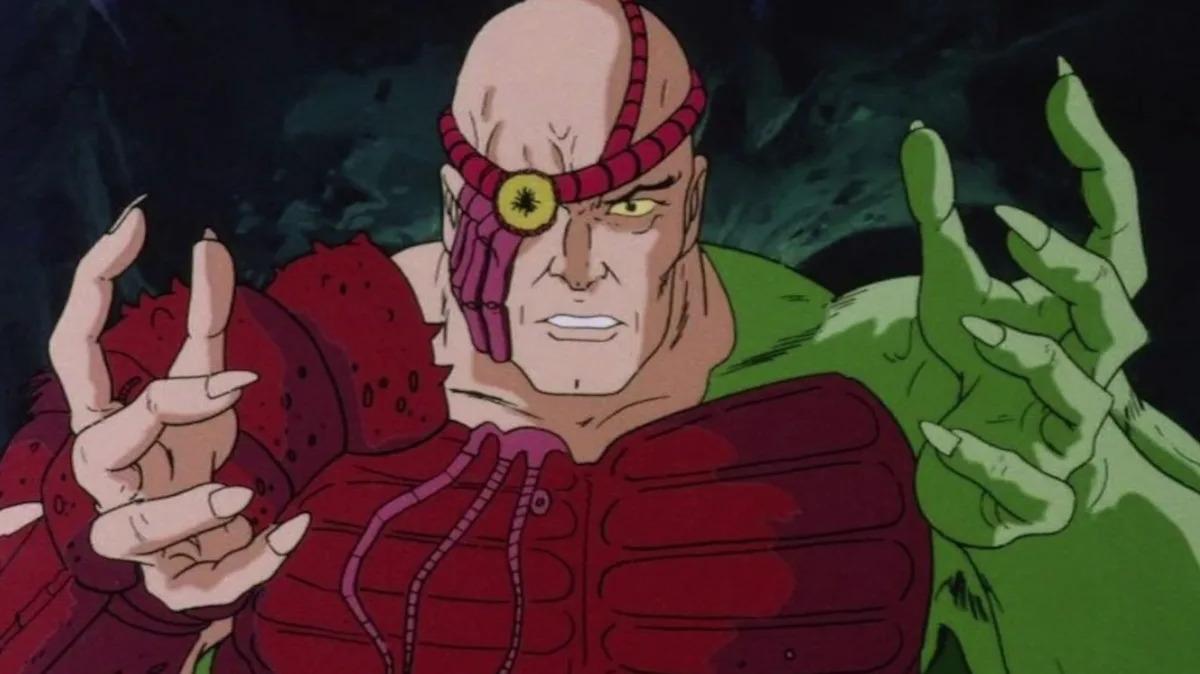
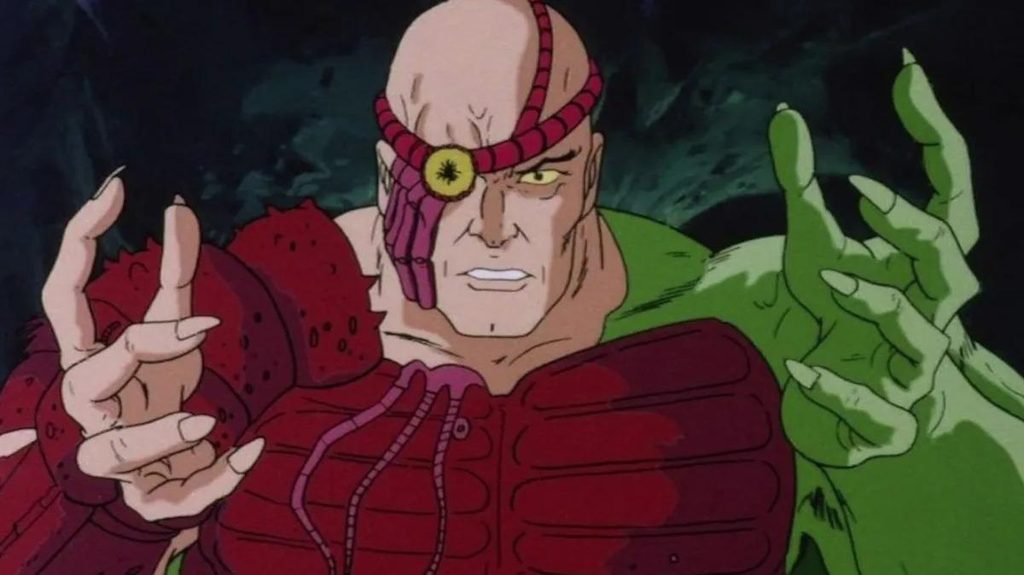
Collectors know Golobulus as the intimidating, muscle-bound ruler with biological armor, a monstrous serpentine lower body, and a floating transport pod.
That was not how Buzz Dixon initially imagined him.
In an interview conducted by Brett White, Dixon explained that one version of the character was modeled on the image of an indulgent Roman emperor: enormous, decadent, and apparently physically unimpressive.
He was supposed to be carried by attendants and treated like a ruler so powerful that he never needed to move under his own strength.
Then came the twist.
When Golobulus finally fought Sgt. Slaughter, he would reveal shocking physical abilities, transforming from an apparently helpless despot into an extraordinarily dangerous opponent.
One proposed scene reportedly had the villain mock Sgt. Slaughter through an exaggerated dance-like movement before attacking. That characterization did not survive the production process.
The eventual design by artist Russ Heath went in a dramatically different direction: a muscular creature whose monstrous power was visible immediately.
It is worth asking whether the abandoned version might actually have produced a more surprising movie villain.
4. THE ORIGINAL COBRA-LA MODEL SHEETS REVEAL HOW DIFFERENT THE MOVIE WAS
When Russ Heath began designing Cobra-La’s animated inhabitants, he approached the concept with the instincts of a seasoned comic-book illustrator.
Organic armor, insect anatomy, anatomical distortion, and creature-like detailing helped define the civilization’s appearance.
Surviving character model sheets provide a remarkable look at the actual animation development.

Consider the design of Pythona. Her bald, alien-like forehead, severe facial markings, prominent ponytail, and unusual organic costume gave her a visual personality unlike any member of the original Cobra organization.
In contrast to the earlier snake-royalty sketches, the movie’s Pythona was not simply a woman wearing Cobra ceremonial armor.
She appeared to be a creature who belonged to an entirely different civilization.
That is a significant design choice, because it explains why the older Hasbro sketches cannot automatically be described as early versions of the final movie costume.
5. THE STRANGE TENTACLES ON NEMESIS ENFORCER FINALLY MAKE SENSE
For decades, collectors have looked at the original 1987 Nemesis Enforcer figure and wondered why Hasbro included tentacle-like appendages alongside the character’s enormous wings.
They are a peculiar design detail, especially when the animated character is remembered primarily for his enormous size, strength, and bat-like wings.
Surviving design research provides a fascinating possible explanation.
In Friedman’s earlier story development, Nemesis Enforcer was conceived with shape-shifting abilities. Rudat’s 1985 design work reflected a creature different from the imposing winged monster that eventually reached the screen.
When the figure was adapted for production, elements from earlier concept art appear to have persisted, even as the film’s version took shape.
This makes the figure unusually interesting from a design-history perspective. A toy accessory may preserve a trace of a creative direction that was abandoned before audiences ever saw the movie.
The connection is strongly suggested by the production chronology, although the precise reason the accessory was retained is not fully documented.
6. WHY DID HASBRO RELEASE THREE COBRA-LA FIGURES — BUT NO PYTHONA?
In 1987, Hasbro released the Cobra-La Team three-pack containing Golobulus, Nemesis Enforcer, and the Royal Guard.
One of the movie’s most memorable characters was missing.

Buzz Dixon’s recollections reveal an interesting production contradiction. During script development he had been led to believe that the movie’s extraordinary villains would not necessarily become toys.
As a result, he was free to develop unusual characters without needing to make them practical for Hasbro’s 3.75-inch action-figure format.
That decision changed. Hasbro eventually greenlit the Cobra-La three-pack.
But why not Pythona?
Possible explanations include production cost, sculpting requirements, clothing considerations, and the marketing assumptions surrounding female figures in boys’ action-toy lines.
Those are plausible factors, not a confirmed official explanation for the omission.
What makes the decision especially puzzling is that the film opens with Pythona demonstrating her abilities in one of the most memorable sequences of the entire production.
Collectors were left with the ruler, a monster, and an army guard — but not the character who introduced audiences to Cobra-La.
The familiar movie version of Pythona did not receive an official figure until the G.I. Joe Collectors’ Club’s 2016 release, long after the original A Real American Hero era ended.
7. THE INSECTICYCLE: THE COBRA-LA VEHICLE THAT DISAPPEARED
Now we arrive at one of the most tantalizing lost toys in G.I. Joe history.
Hasbro considered a Cobra-La vehicle for the 1988 assortment called the Insecticycle.
Rather than a conventional motorcycle or tank, the design belonged to the biological fantasy direction that distinguished Cobra-La from ordinary Cobra hardware.
The project was canceled, leaving collectors with concept-art evidence instead of a commercially released vehicle.
But that was not necessarily the end of its development legacy.
Research by 3DJoes and subsequently documented by Pop Heist identifies the vehicle’s intended driver with the character ultimately released as Nullifier.
Nullifier appeared in 1988 as the pilot of Destro’s Iron Grenadiers A.G.P., the Anti-Gravity Pod.
This is the remarkable part: a figure associated with Cobra-La’s unproduced future may have survived by becoming part of an entirely different Cobra-related faction.
That is a compelling explanation for why Nullifier’s original design feels so unusual alongside the military and industrial appearance of the Iron Grenadiers.
Collector evidence: The historical Insecticycle discussion and design references are preserved in the following research archives:
View the archival Insecticycle discussion and imagery at Pop Heist
Read the older collector discussion identifying the canceled design
Compare the actual 1988 Nullifier figure at 3DJoes
The surviving artwork proves that the vehicle concept existed. It does not establish that finished retail-ready production tooling was ever completed.
For collectors, that distinction is important. An abandoned concept illustration is not the same thing as a fully manufactured prototype.
8. LT. FALCON WAS ORIGINALLY CONNECTED TO A COMPLETELY DIFFERENT JOE
One of the least discussed elements of the movie’s development involves Lt. Falcon.
In early story outlines, the character was known as Kitty Hawk and was envisioned as General Hawk’s son.
Another early development name was Baby Hawk.
Later drafts turned him into the younger half brother of Duke.
This was more than a cosmetic change.
Under the earlier concept, the young recruit’s story would have revolved around his connection to G.I. Joe’s commanding general. The finished movie instead tied his personal recklessness and eventual redemption directly to Duke, making the film’s central injury and climactic mission more emotionally personal.
For a movie already undergoing dramatic changes in villains, mythology, and toy tie-ins, Falcon’s family relationship was another substantial creative revision.
9. EVEN THE NAME COBRA-LA WAS NEVER SUPPOSED TO SURVIVE
Perhaps the funniest part of the whole production history is that Buzz Dixon did not intend Cobra-La to become the civilization’s permanent name.
In a November 2000 interview with David Thornton at JoeGuide, Dixon explained that he used the name to make the concept’s connection to the mythical Shangri-La obvious during the development process.
It was effectively a working name.
Unfortunately for Dixon, the executives liked it.
And thus a name meant to help communicate an initial creative idea became permanently attached to one of the most controversial factions in the history of the franchise.
Even the famous Cobra-La battle cry went through a less-than-ideal creative process. Dixon envisioned a particular kind of high-pitched, ululating cry, but the recorded performance did not match his expectations.
The result was the famous extended Cobra-La chant that fans continue quoting almost forty years later.
10. THE ORIGINAL MARVEL COMIC ESSENTIALLY REFUSED TO ACKNOWLEDGE COBRA-LA
The divide between animation and comics became particularly obvious after the movie.
Larry Hama’s original Marvel comic was willing to embrace many of the line’s more eccentric concepts. Yet Cobra-La was an exception.
Hama did not incorporate the civilization into the original comic continuity.
Nevertheless, the production history contains an irony: Hama was still responsible for writing the biographies that appeared on the Cobra-La action-figure packaging.
Normally the toy-development process gave Hama considerable room to create the characters’ backgrounds before those details filtered into animated stories.
With Cobra-La, that process was largely reversed. The film characters had already been developed for animation when their action-figure identities needed to be established.
It was an uncomfortable arrangement for a writer strongly associated with the more grounded military interpretation of G.I. Joe.
And collectors who have never read Britain’s Action Force Monthly may be surprised to learn that a Cobra-La-related prequel appeared in issue #6 in November 1988. Its creative team included Mike Collins and Robin Smith, and it featured an early comic-book appearance by Pythona.
11. A FORGOTTEN TRADING CARD STORY QUIETLY BURIED COBRA-LA
Most fans remember Cobra-La’s destruction in the animated movie.
Far fewer remember what happened in a set of G.I. Joe trading cards released by Impel in 1991.
Some of the cards for Cobra-La characters described a massive earthquake that sealed the entrance to the hidden civilization and left the fate of its inhabitants uncertain.
It was an unexpectedly specific continuation of the movie’s aftermath, appearing not in the main comic or cartoon, but on collectible cards.
Even more strangely, Crystal Ball was associated with that disaster in the trading-card storyline.
For a franchise that had spent years distancing itself from Cobra-La, the cards preserved an unusual little fragment of continuity.
12. THE COBRA-LA SEQUEL THAT WAS CANCELED AFTER ARTWORK HAD BEEN COMPLETED
One final piece of the Cobra-La mystery is considerably more recent.
Writer and artist Tommy Lee Edwards developed an IDW Publishing project that would have returned to the events of the 1987 animated film.
The proposed project, Infinite Cobra, was conceived as a continuation of the story, involving Falcon’s continuing pursuit of Cobra-La survivors and attempts to restore Cobra’s power.
Most tantalizingly, the project was not merely an idea in someone’s notebook.
A four-page prologue illustrated by Davide Gianfelice appeared in G.I. Joe Yearbook 2019.
The story teased a larger continuation, but the planned miniseries did not materialize.
In comments later published by Pop Heist, Edwards said that a change in Hasbro’s leadership direction brought the project to an end because it was considered too focused on the franchise’s past.
That means Cobra-La fans were tantalizingly close to seeing a continuation of their favorite animated film, complete with genuine published comic art, before another corporate decision closed the door.
See the original research and reproductions of the prologue artwork in Brett White’s Cobra-La history.
THE VERDICT: WAS COBRA-LA REALLY THE MISTAKE FANS REMEMBER?
Nearly forty years later, Cobra-La remains one of the most unusual experiments in the history of G.I. Joe.
It represented a collision between two creative philosophies: a military adventure franchise built around believable equipment and identifiable soldiers, and a science-fiction fantasy universe filled with biological monsters, ancient civilizations, and increasingly extraordinary characters.
But the evidence tells us something important.
Cobra-La did not suddenly appear because one creative team decided to abandon everything G.I. Joe represented.
It was the product of a complicated development process involving toy designers, animation writers, producers, marketing executives, and artists, each working with different ideas, deadlines, and expectations.
And the surviving concepts suggest that the Cobra-La we received was only one possible version of a story that might have gone in several dramatically different directions.
Some fans will always hate it. Others will always love it.
Yet the forgotten artwork, discarded vehicle plans, and abandoned screenplays make one thing difficult to deny:
The Cobra-La we never got might be just as fascinating as the Cobra-La we remember.
THE GREAT COBRA-LA DEBATE
Did Cobra-La ruin G.I. Joe, or was it one of the boldest stories Sunbow ever attempted?
And if Hasbro had produced only ONE additional Cobra-La toy, would you have chosen Pythona or the Insecticycle?
TELL US IN THE COMMENTS!
Historical Research and Image Credits
Brett White, Pop Heist — The Cobra-La Corpus. Comprehensive research using interviews, production records, and original art.
Brett White’s interview with Buzz Dixon. Firsthand recollections of the movie’s development.
JoeGuide — Buzz Dixon Interview, November 2000. Production history and naming decisions.
OAFE — The Pythona That Almost Was. Reproductions of original Rudat art.
3DJoes — Golobulus Preproduction. Collector archive and toy-design context.
3DJoes — 1988 Nullifier. Original action figure and packaging archive.
Collector Archive — Cobra-La Team. Vintage retail product photography.
Historical illustrations, character artwork, packaging, and trademarks belong to their respective rights holders. Archival source reproductions are identified for commentary and historical examination. This article does not claim ownership of those images.
About the Author
Adam Jared is the founder of SerpentorsLair.com, a longtime destination for G.I. Joe, Transformers, toy collecting, comic books, and pop-culture nostalgia. He holds a master’s degree in Social Media Management and is pursuing a Ph.D. in Strategic Communication.