KITT, Michael Knight, and the Dream of One Man Making a Difference
The 1980s loved a good machine.
Talking computers. Transforming robots. Time-traveling cars. Super helicopters. Laser-equipped everything. If it had flashing lights, a dashboard full of buttons, and a theme song that made you want to run through a wall, the decade was ready for it.
But few machines were cooler than KITT.
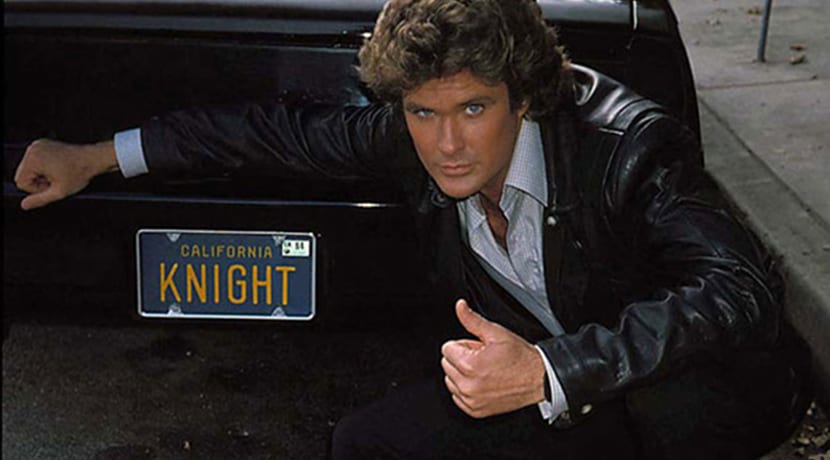
That black Pontiac Trans Am rolling through the night with the red scanner light sweeping back and forth across the front. The voice. The turbo boost. The bulletproof shell. The impossible technology. The feeling that justice itself had four wheels and could jump over a semi-truck if the situation called for it.
Knight Rider was pure 1980s magic.
But the reason it still matters is not just because KITT was cool. It is because the show was built around one simple, hopeful idea:
One person can make a difference.
That phrase was baked into the soul of Knight Rider. Michael Knight was not an army. He was not a billionaire superhero in a cape. He was not a chosen warrior from another planet. He was one man with a second chance, a talking car, and a mission to help people who had nowhere else to turn.
That is what made the show work.
Michael Knight had already lost one life before his story really began. After being betrayed and nearly killed, he was given a new face, a new identity, and a new purpose. That alone gave Knight Rider a powerful emotional engine. Michael was not just driving into danger. He was living proof that a person’s story does not have to end where it breaks.
He got another chance.
And he used it to help others.
That is the kindness hidden beneath all the turbo boosts and tire smoke. Michael Knight was often sent into situations where people were being threatened, cheated, framed, bullied, or exploited. Small communities. Innocent workers. Families. Ordinary folks caught in the machinery of greed and corruption.
The same kind of people 80s television loved to rescue.
Michael showed up with confidence, charm, and that glorious leather-jacket cool, but his mission was not about looking good. It was about standing between vulnerable people and the powerful forces trying to crush them. He was there because someone needed help.
And then there was KITT.
KITT could have been just a gimmick. A talking car with sarcastic lines and futuristic gadgets. But KITT became more than that because he gave the show its heart. He was intelligent, precise, cautious, and often hilariously unimpressed with Michael’s risk-taking. Their relationship was half action partnership, half buddy comedy, and half old married couple arguing at 90 miles per hour.
Yes, that is three halves.
That is how 80s television math works.
Michael and KITT were great because they balanced each other. Michael had instinct. KITT had calculation. Michael had charm. KITT had logic. Michael was willing to leap. KITT usually wanted to explain why leaping was a terrible idea before doing it anyway.
Together, they became something better than either one alone.
That is another hopeful part of Knight Rider. Even a show about “one man making a difference” understood that nobody really does it alone. Michael needed KITT. KITT needed Michael. Devon Miles and Bonnie Barstow gave the mission support, wisdom, and the kind of technical brilliance that kept the dream alive.
The message was not that one person can fix everything by themselves.
The message was that one person willing to act can start something.
That is a big difference.
Michael Knight did not wait for the world to become fair. He drove straight into unfairness and did what he could. He used the tools he had. He listened when people were scared. He challenged bullies. He exposed liars. He took risks for strangers. He made the idea of justice feel personal.
For kids watching in the 1980s, that mattered.
Because Knight Rider gave us a fantasy that felt thrilling and comforting at the same time. What if there was someone out there driving the dark highways, looking for people who needed help? What if the lonely road was not empty? What if justice did not always arrive in a courtroom or an office, but sometimes came roaring over the hill in a black Trans Am with a red scanner and a plan?
That was the magic.
The show made kindness look cool.
It told us that helping people did not have to be boring, weak, or sentimental. It could be bold. Stylish. Fast. Brave. It could come with a roaring engine and a theme song. Michael Knight was not kind because he was soft. He was kind because he knew what it meant to be saved.
That matters.
People who have been given a second chance often understand the value of offering one to someone else. Michael’s life was rebuilt after betrayal and violence. Instead of using that new life for revenge, he used it for purpose. That is a hopeful idea in any decade.
Your past can hurt you.
But it does not have to own you.
Your scars can become part of your mission. Your second chance can become someone else’s rescue. Your broken road can still lead somewhere good.
That is the deeper story inside Knight Rider.
Of course, it was also wonderfully ridiculous in the best possible way. KITT could hack systems, scan buildings, drive himself, survive attacks, and launch into the air like physics had signed a waiver. Michael could somehow infiltrate anything with a smile, a jacket, and perfect hair. Every episode had danger, mystery, and at least one moment where the car did something no car should reasonably do.
But the heart stayed the same.
Someone was in trouble.
Michael and KITT showed up.
That simple formula still feels good because the world still needs people who show up. It needs people willing to make the call, take the risk, drive the road, and say, “You are not alone in this.” It needs people who believe that one act of courage can matter, even if the whole world does not change overnight.
That is why Knight Rider still rolls through our memories.
It gave us a hero who understood that strength should serve. It gave us a machine with a soul. It gave us action wrapped around a message of compassion. It gave us the hope that the road ahead could still lead to something better.
And maybe that is why the image still works all these years later.
A black car cutting through the darkness.
A red light sweeping across the front.
A man behind the wheel who has already been given a second chance.
A voice from the dashboard reminding him to be careful.
And somewhere ahead, someone who needs help.
Michael Knight and KITT were not just chasing bad guys.
They were chasing the belief that one person, one friend, one choice, and one act of kindness could still make a difference.
And in the 1980s, that dream had turbo boost.