SERPENTOR’S LAIR PRESENTS
A G.I. JOE COMIC BOOK RETROSPECTIVE
Silence Is Golden
BY: R.A. RAYNE
MARVEL COMICS • 1984 • THE SILENT INTERLUDE
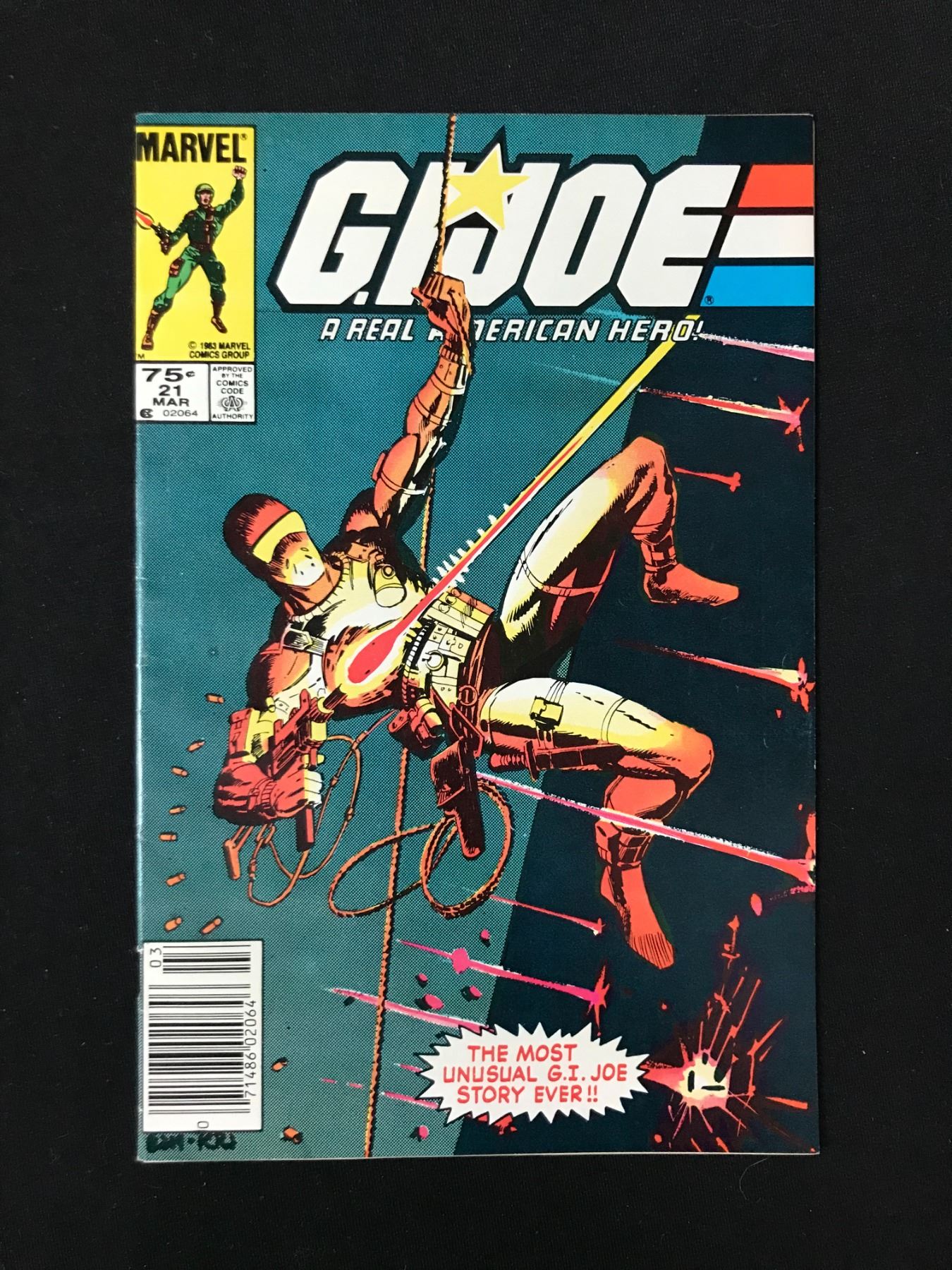
THE LEGENDARY ORIGINAL • G.I. JOE #21 • 1984
For many G.I. Joe fans, even those who don’t enjoy the comic books, Marvel’s G.I. Joe: A Real American Hero Issue #21 is considered one of the greatest stories ever written in G.I. Joe lore. But was this issue always intended to be a masterpiece? Was it ever even supposed to see the light of day? To answer these questions and really understand how the issue came to be, we have to look back to 1984 and examine how the comic book industry, especially Marvel, went about producing comic books.
BEHIND THE COMICS
THE MARVEL DEADLINE MACHINE
Popular comic books like G.I. Joe were published monthly. This means comic book writers and artists are responsible for creating 12 books a year and meeting deadlines for each issue. If… or, should I say, when… a deadline is missed, because let’s face it, shit happens, the publisher has to be ready. The common practice was that when a title fell behind, the publisher would pull an older issue and reprint it with a “new and exciting” cover by some featured artist.
LARRY HAMA • ON INVENTORY STORIES
However, for Marvel, Jim Shooter established an ‘inventory story’ system. Larry Hama described the system as: “Marvel needed to publish 12 monthly issues per title per year. If the writers or artists missed a deadline, the publisher would be screwed. [In the past] They usually would fish out an old issue and publish a reprint—a re-run of a former issue. Jim Shooter instituted an ‘inventory story’ system. They would hire comic teams to produce self-contained stories (1 or 2 issues) that could be plunked in with little or no work to make up the distance. Inventory stories have fallen out of favor in comic book circles since, but the practice is still sound.”
This practice gives the publisher a ‘filler’ just in case a deadline is missed. It was also easy to exploit. Remember, being a writer usually isn’t a steady gig. Writers and artists are paid per piece, so writing an extra issue or two each year meant earning more. Some writers would even sabotage these inventory issues by adding plot or character details that would quickly become outdated, giving them a chance to create another issue and get paid again. Others used the opportunity to tell a story they’d been thinking about for years or to try out new ideas. Since most of these filler issues were never published, at least they got paid for the idea.
And who knows, maybe one of those stories would turn into something bigger.
Kind of like how “Fury Force” became G.I. Joe: Before Hasbro came to Marvel to ask them to make a comic book, they just happened to walk past Larry Hama and ask if he’d be interested. He had a pitch for a spinoff of the Nick Fury: Agent of S.H.I.E.L.D. comic book collecting dust in his desk.
While the ‘Fury Force’ antidote is not entirely the same as the ‘inventory story system,’ it’s a good reminder, especially for writers, to keep writing even when no one is going to read it. You never know when someone might walk up to you asking if you’ve got something, so you should be prepared. I guess we figured out the other half of the battle.
MARVEL COMICS • MARCH 1984
THE ROAD TO ISSUE #21
So this brings us to G.I. Joe: A Real American Hero Issues #20 and #21. Issue 20, “Home is Where the War Is,” was the first G.I. Joe ‘filler issue.’ The story is a one-shot about Clutch, who goes on leave and returns to his hometown of Asbury Park, New Jersey. In the story, we learn that Clutch’s childhood friend, Billy Kline, is being manipulated by Cobra into building a compact jet pack. What made this one-shot interesting was that it felt more like an episode of the cartoon series than the comic book issues before it. Since Issue #20 had no connection to the overall story arc, it distracted from the battle in Issue #19, where General Flagg, Kwinn, and Doctor Venom died. Many fans were left confused and frustrated, especially since this was before the internet and social media — an age when, if a comic book is behind schedule, fans seem to know before the editors do.
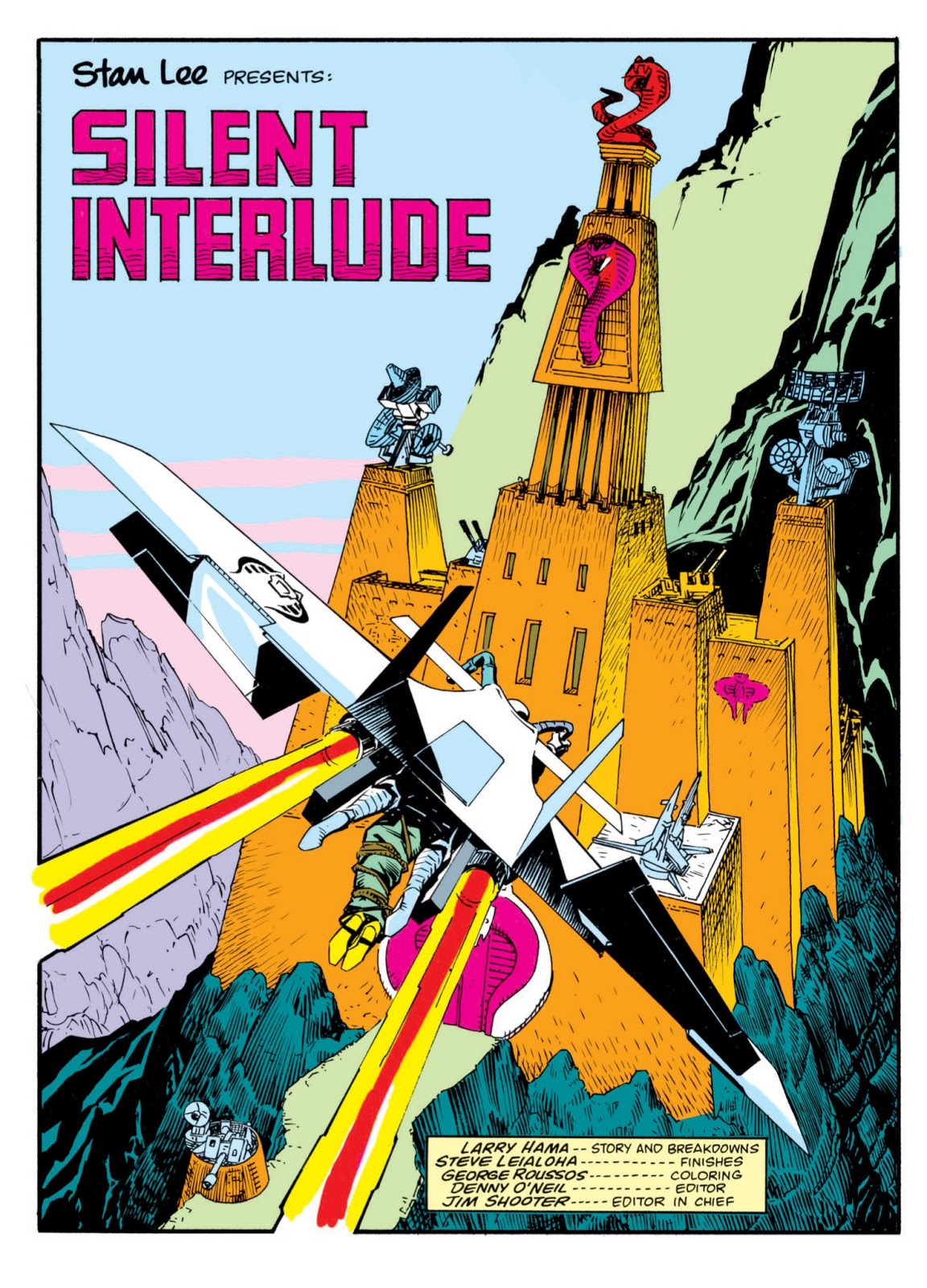
INSIDE THE COMIC • THE COBRA CITADEL
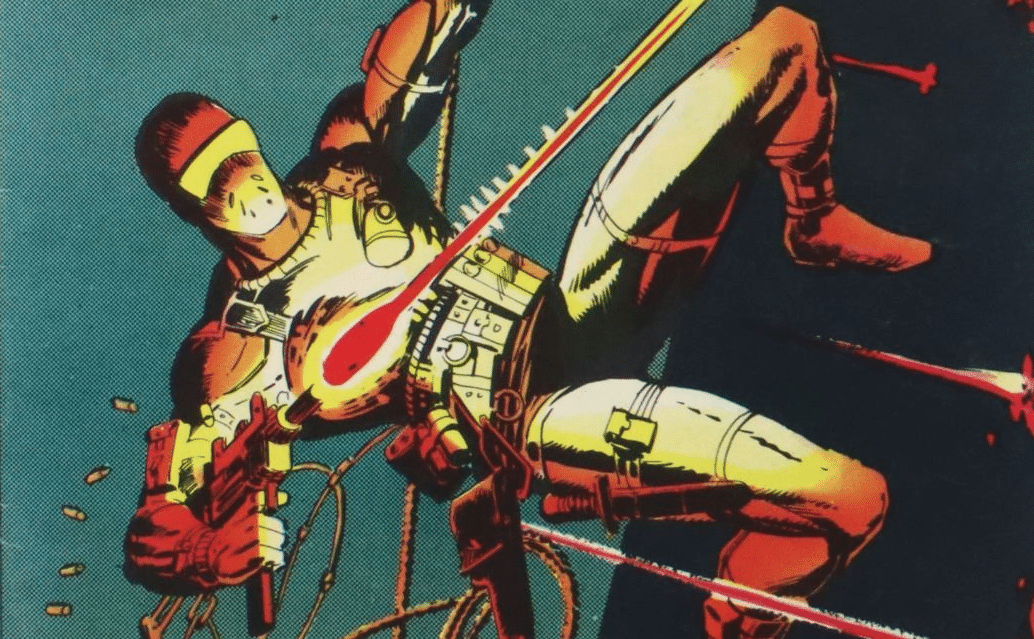
What fans didn’t know was that this delay in the main story was about to give G.I. Joe fans not just one of the greatest comic books in Joe history, but also one of the top 100 greatest comic books of all time. While there is no official information on how many copies of this comic have been sold, it had an initial print run of somewhere between 250,000 and 350,000 copies, making it one of Marvel’s higher-printed titles that year. Since it first came out in March 1984, it has been reprinted by three different publishing companies, inspired a second ‘silent issue’ for IDW’s G.I. Joe Origins #19, drawn by Joe Benitez and Victor Llamas, and paved the way for other silent or ‘near-silent’ comic book issues in titles like Daredevil, The Walking Dead, and Quartet.
THE STORY THAT CHANGED EVERYTHING
SNAKE EYES. STORM SHADOW. SCARLETT.
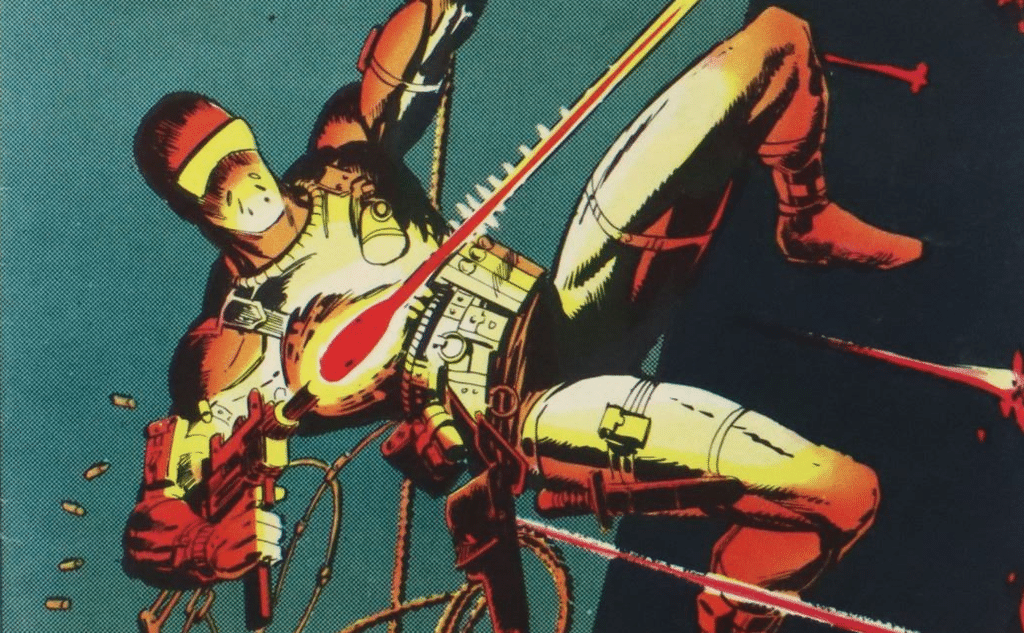
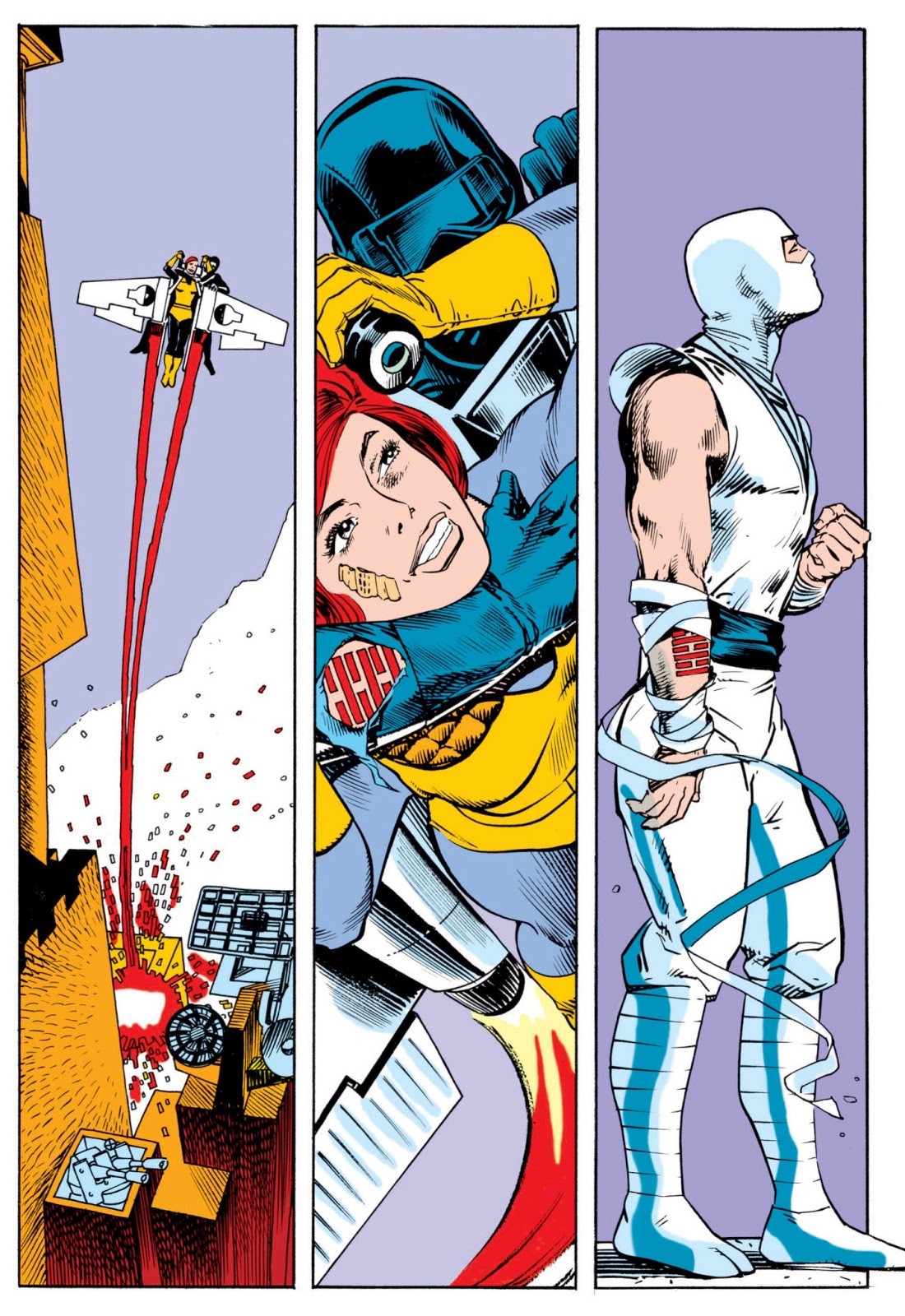
Issue #21, “The Silent Interlude,” not only impacted the comic book world at large, but also had a major impact on the world of G.I. Joe. Despite being a one-shot from the ‘filler issue’ in the inventory story system, Issue #21 gave us our first look at the Cobra temple in the comic books, a tease of the Baroness’s new black iconic uniform, and introduced us to the Arashikage connection between Snake Eyes and Storm Shadow. It also “without saying it” told us that Snake Eyes loved Scarlett so much that he would risk diving into a nest of Cobras to save her. It also showed that Scarlett is a badass and doesn’t need anyone to rescue her.

THE SILENT RESCUE • SCARLETT AND STORM SHADOW
The Silent Interlude was also Snake Eyes’ finale ‘leap’ from being a commando to a ninja. While we had seen him displaying many aspects of his character that were ‘ninja-like’ up until now, they were easily explained in his file card as:
CLASSIFIED • SNAKE EYES FILE CARD
“Snake Eyes is proficient in 12 different unarmed fighting systems (Karate, Kung-Fu, Jujitsu) and is highly skilled in the use of edged weapons. Has received extensive training in mountaineering, underwater demolitions, jungle, desert, and arctic survival, and some form of holistic medicine. Qualified Expert: All NATO and Warsaw pact small arms.”
While his early file card makes no mention of him being a ninja, it can be implied. We don’t really find out he’s a ninja until the last two pages of Issue #21. First, he catches Storm Shadow’s sword between his hands and tosses it over his head just before it can impale Scarlett, and in the second-to-last panel, we see the Arashikage hexagram tattooed on Snake Eyes’ forearm, matching the same tattoo on Storm Shadow’s forearm in the final panel.

THE LEGENDARY NINJA BATTLE • ORIGINAL 1984 COMIC ART

EVERY PANEL TELLS A STORY • THE SILENT INTERLUDE
BEHIND THE ARTWORK
HOW THE MASTERPIECE WAS CREATED
What might be more interesting that the issue is how it came to be. While on a trip to Los Angeles to get a walkthrough at Sunbow Studios, the home of the first two seasons of the G.I. Joe: A Real American Hero animated series, as well as many other Hasbro cartoons, including Transformers and Jem, Larry Hama began looking over the shoulder of storyboard artist George Foster Goode. At the time, Goode was rendering a background plate for the G.I. Joe series. Hama said he remembers seeing either a black-and-white draft or a colored pencil drawing of the Cobra Temple. Either way, Hama said what he saw turned out completely different from the Cobra Temple that appeared in the animated series.
Seeing Goode’s designs gave Hama the idea for his own concept of the Cobra citadel. Hama said his idea was a “weird blend of George’s drawing and Mad King Ludwig’s fantasy castle with an Egyptian influence.” Hama added radar dishes and anti-tank gun emplacements to Destro’s fortifications, and created a stylized structure that mixed the Babylon Fortress, the Citadels of Qaitbay and Salah Ed-Din, and the Neuschwanstein castle that so famously inspired Sleeping Beauty’s Disneyland castle. He wanted to feel a 19th-century Romanesque Revival castle set on a “craggy hill” overlooking a small town in Bavaria, Germany.
THE COBRA CITADEL • HAMA’S FORTRESS DESIGN
With his setting in place, Hama returned to the West Side of New York and spent the weekend penciling the 22 pages that would become Issue #21, “The Silent Interlude.” When the issue first came out, it was not well received. Kids thought they had gotten a misprinted issue and demanded to know where the dialogue was! That initial shock didn’t last long, and fans began to see the brilliance in the comic, and that ‘while words matter,’ sometimes more can be said with no words at all.
THE ENDURING LEGACY
WHEN SILENCE SPOKE VOLUMES
Issue #21 “The Silent Interlude has been reprinted, studied, dissected, and discussed for over forty years now. It is a favorite among comic fans the world over. If you haven’t had the chance to ‘read’ it, I suggest you do. If this comic does nothing else, it will help you appreciate the art and the artists who create comic books. It will teach you to see that the panels aren’t just pretty pictures on the page, but have their own story and nuance.
ORIGINAL ARTICLE SOURCES
Sources for this article include Larry Hama, Skybound, IDW, Hasbro, Sunbow Entertainment, and the G.I. Joe Silent Interlude 30th Anniversary Edition.