Speedy Gonzales at 71: Celebrating the Fastest Mouse in All Mexico
On September 17, 1955, a tiny mouse in an oversized yellow sombrero raced onto movie screens and straight into animation history. Seventy-one years later, Speedy Gonzales remains one of the most instantly recognizable characters to emerge from the golden age of Warner Bros. animation.
Although September 17 marks the anniversary of the Speedy audiences recognize today, his story actually began two years earlier.
Before He Was an Icon
Speedy’s earliest incarnation appeared in the Merrie Melodies short Cat-Tails for Two, released August 29, 1953 and directed by Robert McKimson. That version looked considerably different: thinner and scruffier, with a prominent gold tooth and red shirt.
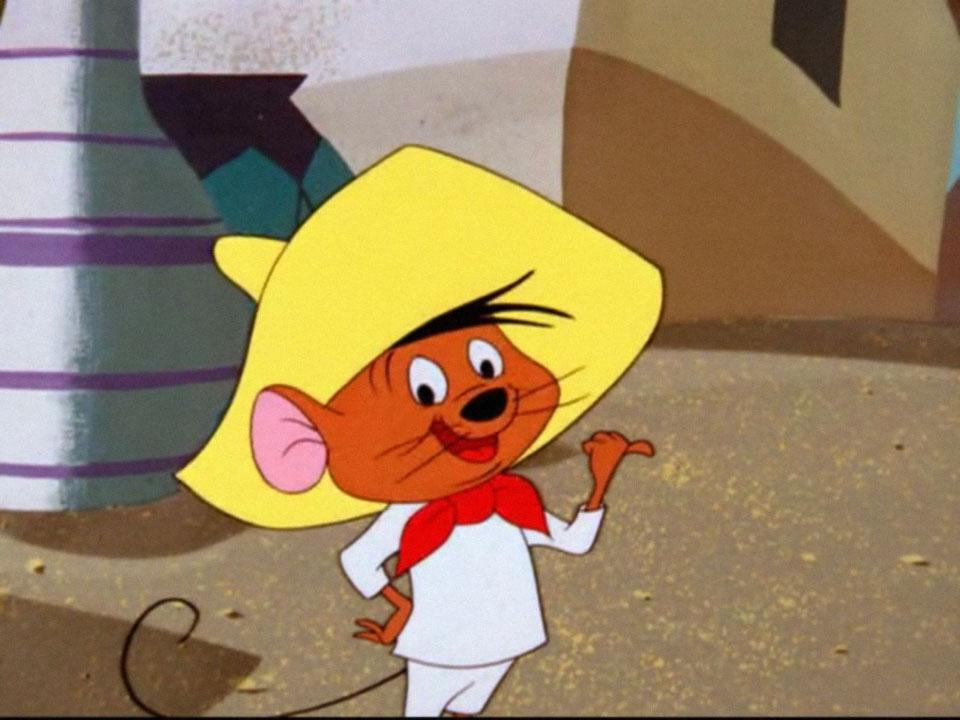
The transformation came in 1955. Director Friz Freleng and artist Hawley Pratt reworked the character into the Speedy generations would come to know: enormous yellow sombrero, white clothes, red neckerchief, enormous personality—and seemingly unlimited horsepower.
The redesigned mouse debuted on September 17, 1955, in the appropriately titled Speedy Gonzales.
And Speedy wasn’t merely fast. He was a hero.
In the short, Sylvester guards a cheese factory near the U.S.–Mexico border, preventing a community of hungry mice from reaching the cheese inside. Their solution is to summon the one mouse capable of running circles around the cat. Speedy repeatedly outmaneuvers Sylvester, turning what should have been an impossible mission into classic Looney Tunes mayhem.
The cartoon proved more than popular—it won the Academy Award for Best Short Subject (Cartoons).
Faster Than Sylvester

Much of Speedy’s enduring appeal came from a wonderfully simple formula.
Sylvester had the traps. Speedy had the speed.
But the character was never simply a four-legged Road Runner. Speedy talked, joked, flirted, strategized and frequently acted on behalf of other mice. His speed was his superpower, but his confidence and cleverness gave him personality.
Then there was Mel Blanc.
The legendary voice actor performed Speedy from 1953 until 1989, helping establish the character’s distinctive sound and famous rapid-fire exclamations.
Speedy became prolific during Warner Bros.’ theatrical era, ultimately appearing in dozens of shorts. Sylvester became his most famous adversary, although Daffy Duck would later find himself hopelessly trying to keep pace with the little mouse as well.
Speedy’s popularity wasn’t confined to theaters. Television transformed the Looney Tunes library into a multigenerational phenomenon. Children who had never experienced a Warner Bros. cartoon before a feature film could watch Speedy repeatedly on television, introducing him to audiences decades after his theatrical debut.
A Character Who Kept Running
Speedy’s history hasn’t been without controversy. Some of the old cartoons contain exaggerated ethnic stereotypes reflective of their era, prompting debate over how the character and some of his supporting cast should be presented to modern audiences.
Yet Speedy’s legacy has proven surprisingly resilient. The little mouse himself is generally depicted as courageous, resourceful, intelligent and fiercely loyal to his friends—the guy everyone calls when nobody else can get the job done.
And he kept returning.
Different generations have encountered Speedy through television revivals, merchandise, video games and feature films. He appeared in Space Jam: A New Legacy in 2021, where comedian Gabriel Iglesias supplied his voice.
Even more remarkably, more than seven decades after the character’s creation, Speedy remains part of Warner Bros.’ plans for new animation, demonstrating just how much life remains in the character.
71 Years—and Still Running
Perhaps Speedy Gonzales has endured because the joke never really gets old.
A huge adversary sees a tiny mouse and assumes the contest is already over.
Then comes a streak across the screen.
A confused cat.
A cloud of dust.
And somewhere in the distance, Speedy is already celebrating.
The animation surrounding him has changed. The voices have changed. Generations of viewers have come and gone. But that yellow sombrero and red neckerchief remain instantly identifiable.
September 17, 2026 marks 71 years since the definitive Speedy Gonzales raced onto theater screens.
After seven decades, the fastest mouse in all Mexico hasn’t slowed down.
¡Ándale! ¡Ándale!