The Karate Kid and the Quiet Kindness of Mr. Miyagi
The 1980s gave us a lot of heroes who made noise.
They drove fast cars, fired laser rifles, kicked down doors, flew through space, transformed into trucks, and shouted battle cries while running straight into danger. It was a decade built for big entrances and bigger victories.
But one of the greatest heroes of the 1980s did not need any of that.
He was quiet.
He trimmed bonsai trees.
He fixed things with his hands.
He spoke softly.
He listened carefully.
And when a bullied kid had nowhere else to turn, Mr. Miyagi stepped in.
That is what made The Karate Kid more than just a martial arts movie.
It was a story about kindness showing up when a young person needed it most.
Daniel LaRusso arrives in California already feeling out of place. He is far from the life he knew. He is trying to adjust to a new home, a new school, and a world that does not seem interested in making room for him. Then come the bullies. Johnny Lawrence and the Cobra Kai students do not just beat Daniel up. They make him feel small, trapped, and alone.
That is a terrible place for any kid to be.
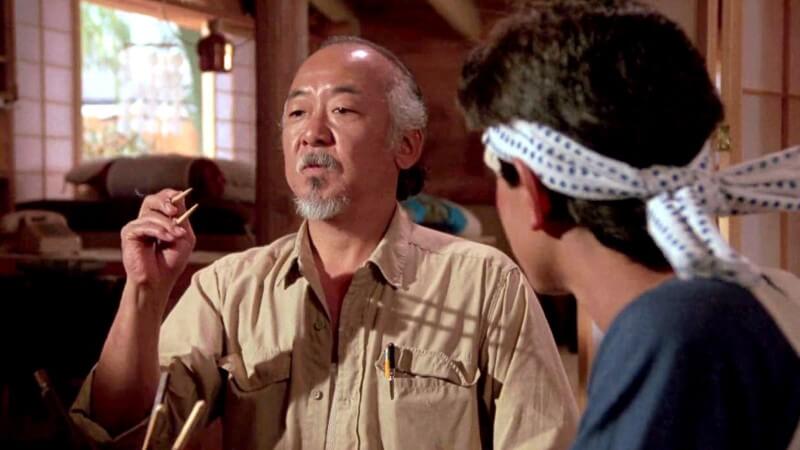
And then Mr. Miyagi notices.
That is the first act of kindness in the movie: he sees Daniel. Not as a problem. Not as an annoyance. Not as some loud teenager who needs to figure it out on his own. He sees a kid who is scared, angry, embarrassed, and hurting.
Sometimes being seen is where hope begins.
Mr. Miyagi does not rush in with big speeches. He does not try to make Daniel feel weak for needing help. He does not treat him like a victim. Instead, he offers something much deeper: patience, guidance, discipline, and presence.
He becomes a mentor.
That word gets used a lot, but Mr. Miyagi shows what it really means. A mentor is not just someone who teaches skills. A mentor teaches a person how to carry themselves in the world. Mr. Miyagi teaches Daniel karate, but more than that, he teaches him balance.
Balance in the body.
Balance in the mind.
Balance in the heart.
That is the real lesson of The Karate Kid.
Daniel thinks he needs to learn how to fight. And on one level, he does. He needs to defend himself. He needs confidence. He needs to stop feeling helpless. But Mr. Miyagi understands that karate is not about revenge. It is not about rage. It is not about proving you are tougher than the people who hurt you.
Karate, at its best, is self-control.
That is why the training scenes matter so much. Wax on. Wax off. Sand the floor. Paint the fence. Daniel thinks he is being used for chores. Every 80s kid watching probably thought the same thing at first. But Mr. Miyagi is teaching him something before Daniel even understands he is learning.
That is wisdom.
Real growth does not always look dramatic while it is happening. Sometimes it looks like repetition. Work. Frustration. Doing small things with care. Trusting a process before the results are visible.
Mr. Miyagi teaches Daniel that strength is built quietly.
That message stands in direct contrast to Cobra Kai. Their motto is aggressive and merciless. Strike first. Strike hard. No mercy. It is confidence twisted into cruelty. It is discipline without compassion. Power without humility. Skill without wisdom.
Mr. Miyagi offers the opposite.
He teaches Daniel that mercy matters. He teaches him that defense is different from domination. He teaches him that the goal is not to become the bully who wins, but to become someone strong enough not to be controlled by fear.
That is the heart of kindness in the movie.
Kindness does not mean letting people hurt you. It does not mean standing there while cruelty wins. Mr. Miyagi’s kindness is not soft weakness. It is protective. It is disciplined. It is strong enough to block a punch and gentle enough to heal the spirit behind it.
That is why he remains one of the greatest mentor figures in film history.
He does not only give Daniel karate. He gives Daniel dignity.
The friendship between Daniel and Mr. Miyagi becomes the emotional center of the story. They are from different generations, different cultures, and different life experiences, yet they find something both of them need. Daniel needs guidance. Mr. Miyagi, quietly carrying grief of his own, needs connection.
That is one of the beautiful things about kindness.
It does not only help the person receiving it. It also opens something in the person giving it.
Mr. Miyagi is not a perfect, untouchable guru floating above human pain. He has suffered. He has lost. He has memories that hurt him. That makes his gentleness even more powerful. He is not kind because life has been easy. He is kind because he knows what pain can do to a person, and he chooses not to pass that pain on.
That choice is heroic.
The tournament ending works because it is not really about a trophy. It is about Daniel standing where fear once stood. He has been beaten down, humiliated, chased, and injured. But he is still there. He is still standing. He is not alone anymore.
Mr. Miyagi is with him.
That final crane kick became iconic for a reason. It is cinematic. It is dramatic. It is pure 1980s glory. But the deeper victory is not just that Daniel beats Johnny. It is that Daniel proves he does not have to be broken by what happened to him.
He can rise.
Even Johnny’s final moment carries a touch of hope. When he hands Daniel the trophy and says he is all right, it reminds us that people are not always trapped forever in the roles they have been given. Johnny was the bully, yes. But even he shows a flicker of respect when the fight is over.
That matters too.
The Karate Kid endures because it understands that kids need more than victory. They need someone to believe they can grow. They need someone to teach them that fear is not the end of the story. They need someone to show them that discipline and kindness can live in the same heart.
Mr. Miyagi was that someone.
For 80s kids, he became the mentor we all wanted. Calm when the world was loud. Wise when everyone else was angry. Strong enough to protect, gentle enough to listen, and patient enough to teach a bullied kid how to believe in himself.
That is why the movie still hits.
Because everyone has felt like Daniel at some point. Out of place. Pushed around. Angry. Embarrassed. Unsure whether they are strong enough to face what is coming.
And everyone needs a Mr. Miyagi.
Someone who does not just tell you to fight back, but teaches you how to stand. Someone who sees the hurt behind the attitude. Someone who helps you discover strength you did not know was already inside you.
That is the quiet kindness of The Karate Kid.
It tells us that compassion can teach courage. It tells us that discipline can heal fear. It tells us that a good mentor can change the entire direction of a young person’s life.
The 1980s gave us plenty of loud heroes.
But Mr. Miyagi showed us something better.
Sometimes the greatest hero in the room is the one who speaks softly, trims a bonsai tree, and teaches a kid that he was never as helpless as he felt.
Wax on.
Wax off.
Hope begins.