The Care Bears and the Radical Power of Caring
The 1980s were not exactly subtle.
This was the decade of giant robots, muscle-bound heroes, laser battles, monster trucks, neon colors, sword fights, ninjas, commandos, and cartoons that looked like toy aisles had exploded into Saturday morning television.
And then there were the Care Bears.
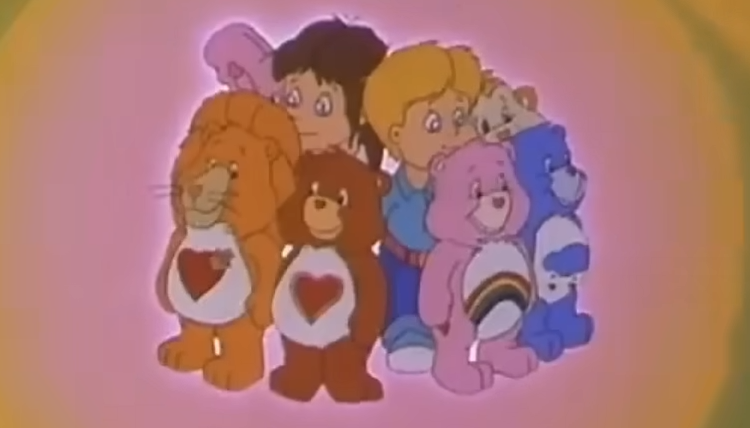
Soft. Colorful. Round. Smiling. Living in the clouds. Shooting beams of love, courage, cheer, friendship, hope, and kindness out of their bellies like emotional laser cannons.
On paper, that sounds ridiculous.
In practice, it was kind of brilliant.
Because while so many 1980s heroes fought evil with swords, blasters, fists, and vehicles that required every kid’s birthday money, the Care Bears fought darkness with caring. Not as a side message. Not as a little lesson tacked onto the end. Caring was the whole weapon. The whole mission. The whole point.
That made them different.
The Care Bears were not built around toughness. They were built around tenderness. Cheer Bear, Tenderheart Bear, Grumpy Bear, Funshine Bear, Good Luck Bear, Bedtime Bear, Wish Bear, Love-a-Lot Bear, and the rest of the crew represented feelings that kids understood. Happiness. Sadness. Frustration. Hope. Fear. Friendship. The need to belong.
And for children, those things are not small.
A kid’s world can be full of enormous emotions. A bad day at school can feel like the end of everything. A fight with a friend can feel like a disaster. Feeling left out can sit in your chest like a storm cloud. Adults sometimes forget how big those little moments feel.
The Care Bears did not forget.
That was their quiet power.
They treated feelings like they mattered. They entered stories where someone was lonely, angry, scared, selfish, hurt, or confused, and they did not respond by mocking those feelings. They responded by caring harder. They believed that people could change if someone cared enough to reach them.
That is a hopeful message.
It is also a surprisingly bold one.
Because caring is easy to dismiss. People often treat kindness as childish, soft, or weak. But the Care Bears flipped that idea upside down. In their world, caring was not weakness. Caring was strength. Caring could break curses. Caring could save friends. Caring could push back against villains who wanted to spread misery, fear, or selfishness.
And let’s be honest: shooting a rainbow beam of compassion out of your stomach to defeat evil is one of the most 1980s things ever created.
But underneath the rainbow magic was something real.
The Care Bears taught kids that emotions have power. What you feel matters. What other people feel matters too. If someone is hurting, you do not always have to defeat them. Sometimes you have to understand them. Sometimes you have to reach out before they become lost inside their own bitterness.
That is a lesson a lot of grown-ups still struggle with.
One of the best things about the Care Bears was that they were not all the same. Grumpy Bear was allowed to be grumpy. That mattered. He was not kicked out of Care-a-Lot because he had bad moods. He was not treated like a failure because he did not smile all the time. He belonged too.
That is huge.
Grumpy Bear showed kids that caring does not mean being cheerful every second of every day. You can be frustrated, annoyed, sad, or tired and still be part of the group. You can have a storm cloud on your belly and still be loved.
That may be one of the most important messages the franchise ever gave us.
Because real kindness does not only welcome the easy people. It welcomes the complicated ones. It makes room for the kid having a bad day. The friend who is quiet. The person who is angry because they are hurt. The one who does not know how to ask for help.
The Care Bears made room.
Care-a-Lot was not just a cloud kingdom. It was a fantasy of emotional safety. A place where every feeling had a symbol, every bear had a purpose, and every problem could be met with friendship instead of shame. That is why it connected with kids.
It gave softness a world of its own.
The villains in Care Bears stories often represented the opposite of caring. Coldness. Loneliness. Neglect. Selfishness. The desire to make others feel as bad as they did. But the solution was almost always connection. The Care Bears did not just defeat bad feelings. They tried to heal what caused them.
That makes the show more meaningful than people sometimes give it credit for.
Sure, it was cute. Sure, it sold plush bears. Sure, it was bright enough to make a bowl of cereal feel underdressed. But it also carried a message that has aged beautifully: the world gets darker when people stop caring about each other.
And the only answer is to care anyway.
That is not naïve.
That is brave.
It is easy to become cynical. It is easy to say kindness does not matter. It is easy to decide that everyone should just toughen up and deal with things alone. But the Care Bears pushed back against that idea with rainbow-colored stubbornness. They insisted that caring was worth the effort.
For 80s kids, that mattered.
We had plenty of heroes teaching us to be strong. He-Man taught courage. Optimus Prime taught leadership. G.I. Joe taught teamwork. The A-Team taught standing up for the little guy. But the Care Bears taught something just as important: do not let the world make your heart smaller.
That is a lesson worth keeping.
Because the older you get, the easier it is to build armor. Life disappoints you. People hurt you. Stress piles up. The news gets heavier. Social media turns everything into a shouting match. Little by little, caring can start to feel exhausting.
But maybe that is exactly why we need the Care Bears more now than ever.
They remind us that kindness is not just a mood. It is a choice. Caring is not pretending everything is fine. It is deciding that someone else’s pain still matters. It is reaching out when it would be easier to scroll past. It is making room for feelings in a world that tells people to hurry up and hide them.
That is radical.
Not in a loud way. Not in an angry way. But in the quiet, colorful, stubborn way that says, “No, we are not giving up on each other.”
The Care Bears may have looked soft, but their message was tough enough to survive decades.
Care about your friends.
Care about strangers.
Care about the kid who feels left out.
Care about the person having a bad day.
Care about the world even when the world feels careless.
That is not childish.
That is heroic.
The Care Bears did not carry swords. They did not drive tanks. They did not transform into trucks or fight from secret bases. They stood together, opened their hearts, and turned caring into a force strong enough to push back the darkness.
And maybe that is why they still matter.
Because sometimes the most powerful thing a hero can do is not destroy the villain.
Sometimes the most powerful thing a hero can do is remind us that we still have a heart.
And that it is worth using.