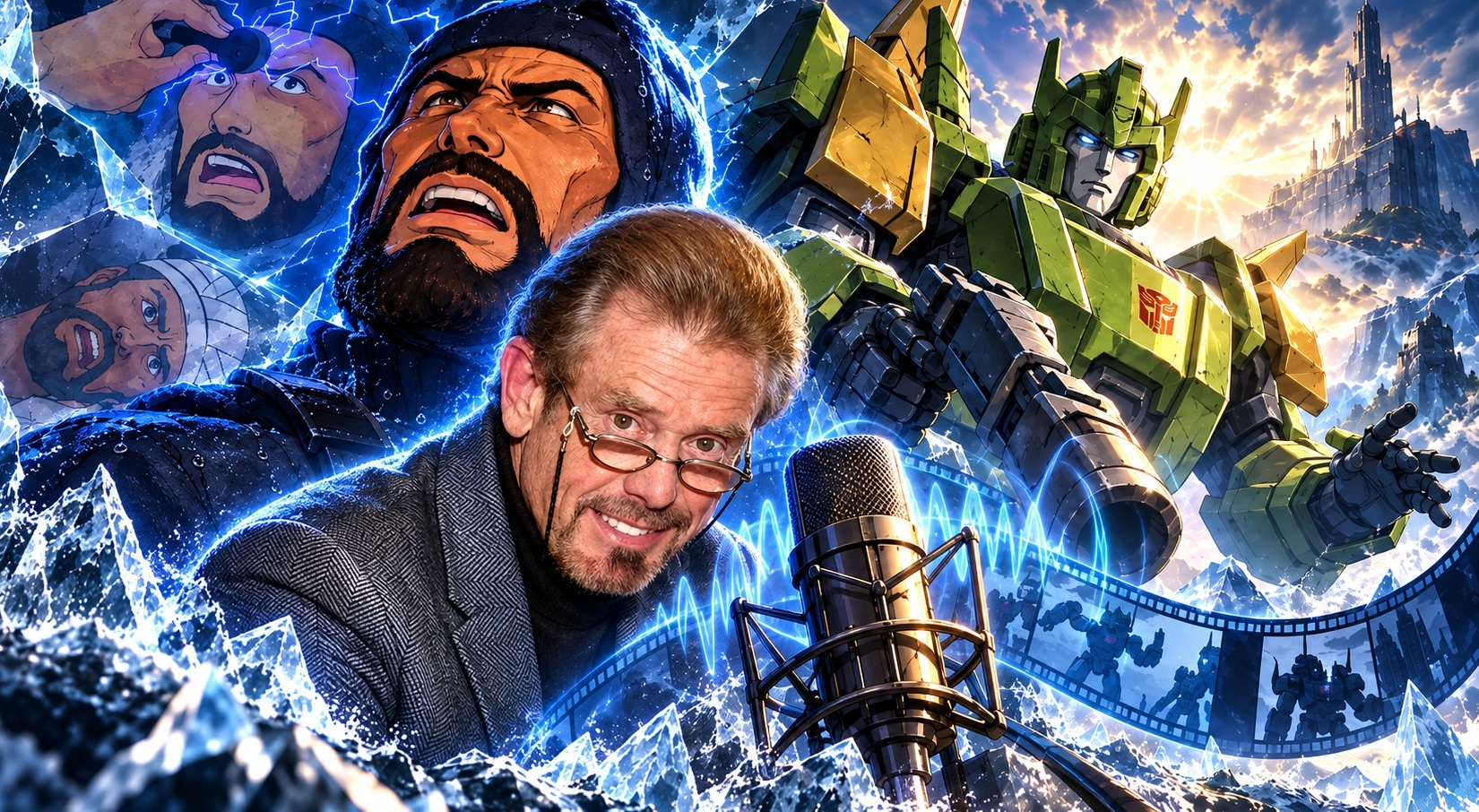
Serpentor’s Lair Exclusive Interview: Legendary Voice Actor Neil Ross on Shipwreck, Springer, G.I. Joe & Transformers
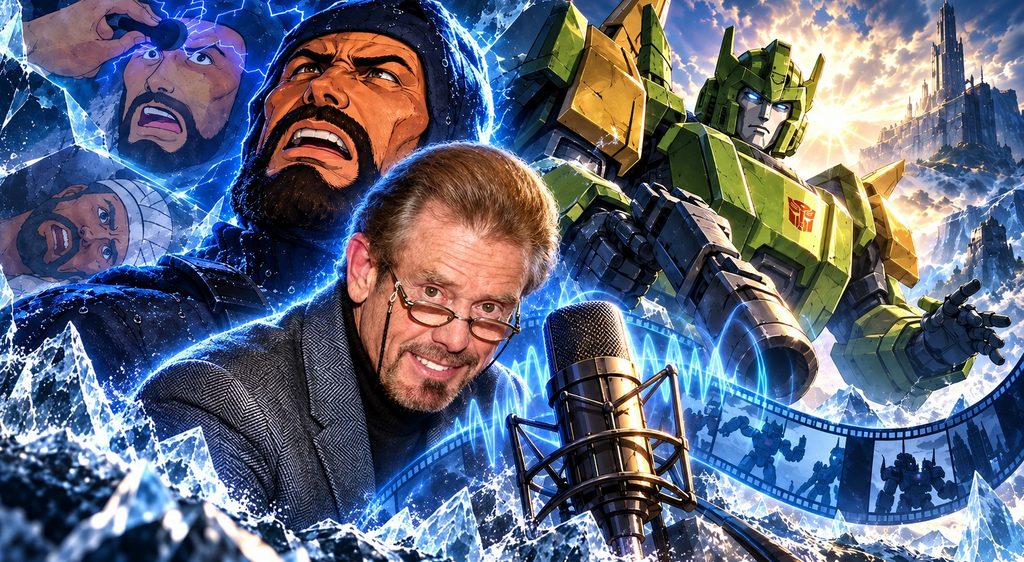
By Adam Jared | Serpentor’s Lair
In an exclusive Serpentor’s Lair interview, legendary voice actor Neil Ross looks back on the unlikely audition that created one of G.I. Joe’s most human characters, the disturbing brilliance of “There’s No Place Like Springfield,” the extraordinary cast that defined an era of animation, and a career that carried his unmistakable voice from the decks of the USS Flagg to Cybertron, Voltron and the world of Spider-Man.
There are voices from childhood that never really leave us.
You may forget exactly when you first heard them. You may forget the afternoon, the living room, or which action figure was sitting beside you on the carpet. But decades later, a single line can open the door and suddenly the years between then and now disappear.
For generations of G.I. Joe: A Real American Hero fans, Neil Ross is one of those voices.
As Shipwreck, Ross took what could easily have been a broad cartoon sailor and turned him into something considerably richer: a wisecracking rebel, reluctant romantic, fearless fighter and deeply imperfect man who somehow seemed more human than nearly everyone around him.
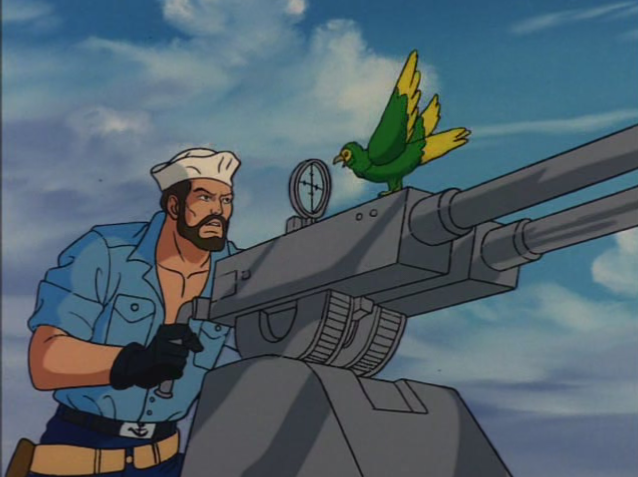
And Shipwreck represents only one corner of an extraordinary career.
Ross brought rugged confidence to Springer in The Transformers: The Movie, voiced both Keith and Pidge in the original Voltron: Defender of the Universe, and years later gave Norman Osborn and the Green Goblin a memorable duality in Spider-Man: The Animated Series.
Those performances crossed franchises, generations and entire eras of animation. But when Serpentor’s Lair asked Ross to look back at Shipwreck, the story began not with fame or nostalgia, but with an early-morning audition, an unimpressed room and one unexpected reference to a Jack Nicholson movie.
“People tell me that I’m the voice of their childhood. Astonishing, gratifying and humbling.”
— Neil Ross
Exclusive: Serpentor’s Lair’s 10 Questions With Neil Ross
1. When you first auditioned for G.I. Joe, what were you told about Shipwreck, and how much freedom did you have to create that unforgettable voice?
NEIL ROSS: I try to forget auditions as fast as possible because most of the time you don’t get the gig and you just drive yourself crazy wondering what you did wrong. But in the case of the Shipwreck audition, I remember it quite well.
It happened at Soundtraxx Studio on Ventura Boulevard in L.A. quite early in the morning. I looked at the artwork, and it was obvious the character was a Navy man. I don’t recall what the character description was. Voice director Wally Burr rolled the tape and I did a few takes, and I could tell nobody was particularly impressed with what I was doing.
I was out of ideas and ready to chalk it up to experience and be on my way when suddenly a guy sitting in the corner asked me, “Did you ever see The Last Detail?” I have no idea who this chap was — a writer, a producer? I don’t know. I never saw him again after that morning, but he had given me the clue.
The Last Detail, starring Jack Nicholson, is the story of two Navy men who are ordered to bring a young offender to a military prison but decide to show him one last good time along the way. The prime instigator is Nicholson’s character, Billy “Badass” Buddusky.
The Buddusky character reminded me of guys I’d known when I was in the Navy. Career enlisted men who skated along just this side of insubordination, yet somehow managed to stay out of trouble through a combination of cunning, bravado and luck.
The voice was a sort of all-purpose “stoner” voice I used to do. People would occasionally remark that it reminded them of Nicholson.
As I stood in front of the mic with the image of “Badass” Buddusky in my mind, I thought of the “hippie” voice. What if I took the bong away from him and gave him a couple of pots of coffee so he was a little hyper?
Now I had the bar scene and the modified hippie voice. The tape rolled and I launched. It felt really good, like I was right in the pocket. The guy who’d mentioned The Last Detail evidently felt the same way. He gave me a thumbs-up when I finished and said, “You got it!”
Normally when they tell you something like that it’s the kiss of death, but it wasn’t in this case. A couple of days later my agent called. “Well, it looks like you got that sailor part in G.I. Joe, sweetie,” she said.
The Accidental Formula That Became Shipwreck
It is difficult to imagine Shipwreck sounding any other way now. But Ross’s recollection reveals just how precariously some pieces of pop-culture history come together: a movie remembered from a decade earlier, men Ross had known during his own time in the Navy, a character voice already sitting somewhere in an actor’s toolbox, and one mysterious man in the corner of an audition room asking exactly the right question.
The result was not simply a Nicholson impression. It became something distinctly Shipwreck: cocky but not fearless, cynical without being cruel, and funny without ever becoming merely comic relief.
2. Shipwreck stands apart because of his humor, sarcasm, swagger and rebellious personality. What influenced your interpretation?
ROSS: I think this is answered above. A combination of Badass Buddusky and some of the Navy “lifers” I encountered.
3. Shipwreck could be heroic, frightened, funny, romantic and vulnerable. How did you preserve the character through that emotional range?
ROSS: What I loved about the Shipwreck character was that, unlike the rest of the characters in G.I. Joe who were either stereotypically heroic or evil, he was conflicted.
He wanted to do the right thing, but he wanted to do it his way. He is a lovable loose cannon and I think the writers loved putting him into all kinds of crazy situations just to see what he’d do, which was great fun for me as an actor.
As far as preparation, there really wasn’t any. One reads about all the elaborate preparation that on-camera actors do, but in voice acting you show up, they hand you a script and you go right to work.
I had to rely on instinct, which I’m pretty good at. If you give me a story and a character to play in that story, I just somehow seem to know what to do most of the time. It’s instinctive. Once in a while a director will have other ideas on a scene or a line — which is fine — but most of the time my instincts get me by.
4. What was your favorite G.I. Joe episode?
ROSS: The Springfield episodes.
“There’s No Place Like Springfield”: When G.I. Joe Became Psychological Horror
Ross’s answer is only three words long, but few longtime G.I. Joe fans need an explanation.
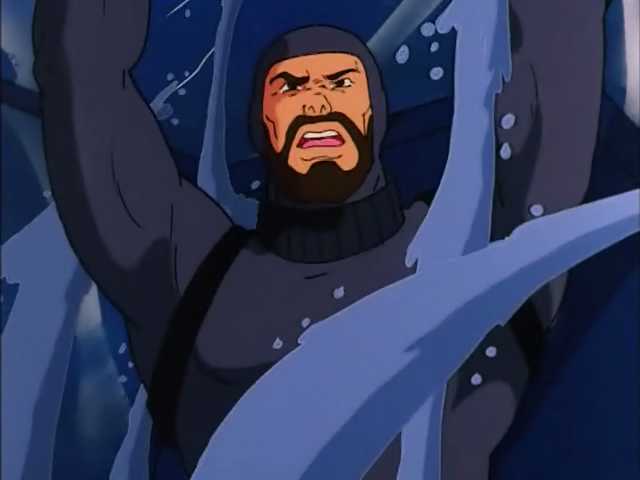
The two-part “There’s No Place Like Springfield” remains one of the strangest, darkest and most emotionally ambitious stories produced during the original Sunbow era. Instead of simply putting Shipwreck into another battle with Cobra, the story attacked something far more fundamental: his certainty about his own life.
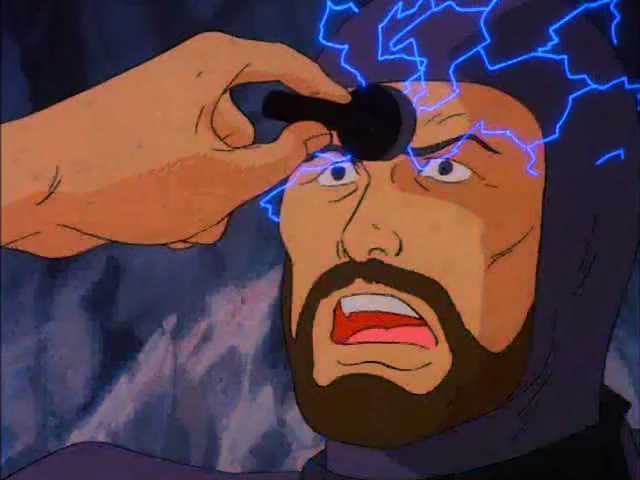
The nightmare works because Shipwreck is such an unlikely character to place at its center. He had always been the Joe most likely to puncture a tense moment with sarcasm. Here, the humor is stripped away. The man underneath the sailor cap is left frightened, disoriented and struggling to determine whether anything around him can be trusted.
For a generation of children accustomed to Cobra superweapons, laser battles and improbable escapes, “There’s No Place Like Springfield” felt different. The threat was no longer simply physical. Cobra was attacking Shipwreck’s perception of reality itself.
5. Did you realize while recording “There’s No Place Like Springfield” that you were making something very different from a normal episode?
ROSS: I think what I cared about at the time was the fact that Shipwreck was the focus of those episodes and the story had him experience all kinds of extreme situations and emotions.
I really had to step up and “bring it.” It was quite a challenge, but very rewarding.
The writers of the episodes, a husband/wife team, came to the recording sessions, which was rare. The writers never came to the sessions and we only met some of them years later at fan conventions.
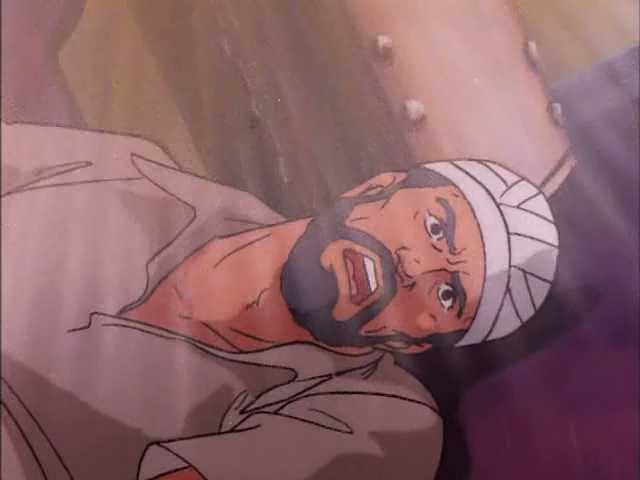
I didn’t realize at the time what an effect it would have on our twelve- and thirteen-year-old viewers. I’ve met many fans at conventions who talk about how freaked out they were by those episodes.
They remember them as vividly as my wife recalls the first Twilight Zone she saw at the age of nine or ten. Mind-blowing.
“I really had to step up and ‘bring it.’ It was quite a challenge, but very rewarding.”
— Neil Ross on “There’s No Place Like Springfield”
A Recording Room Full of Legends
6. What was the atmosphere like when that extraordinary G.I. Joe cast recorded together?
ROSS: In those days almost everybody had done something else before they got into voice-overs. So it was an amazing collection of ex-writers, comedians, on-camera actors, stage actors, DJs — you name it.
Fascinating people who were wonderful storytellers and sometimes very funny. Most of the humor was of the “you had to be there” nature.
Hard to recall specific stuff after over forty years, but I describe it as like going to a great party. Just no booze or hors d’oeuvres — unless you count the awful popcorn voice director Wally Burr used to serve.
I tell a story about Scatman Crothers which will give you a taste of what it was like. I told it at a TFCon in Reston, Virginia, in 2019. You can find it on YouTube. Just put in “Neil Ross Scatman Crothers.”
7. Did you add anything to Shipwreck that was not necessarily written on the page?
ROSS: Nothing I can specifically recall. It just got better and better as time went on as I became more familiar with the character and became more confident in what I was doing.
From the USS Flagg to Cybertron: Neil Ross as Springer
If Shipwreck revealed Ross’s ability to find humanity inside a larger-than-life cartoon hero, Springer demonstrated another side of the same talent.
In the 1986 animated landmark The Transformers: The Movie, Springer enters a story in which familiar heroes are falling, Autobot City is under siege and an entirely new generation is being asked to carry the fight forward.
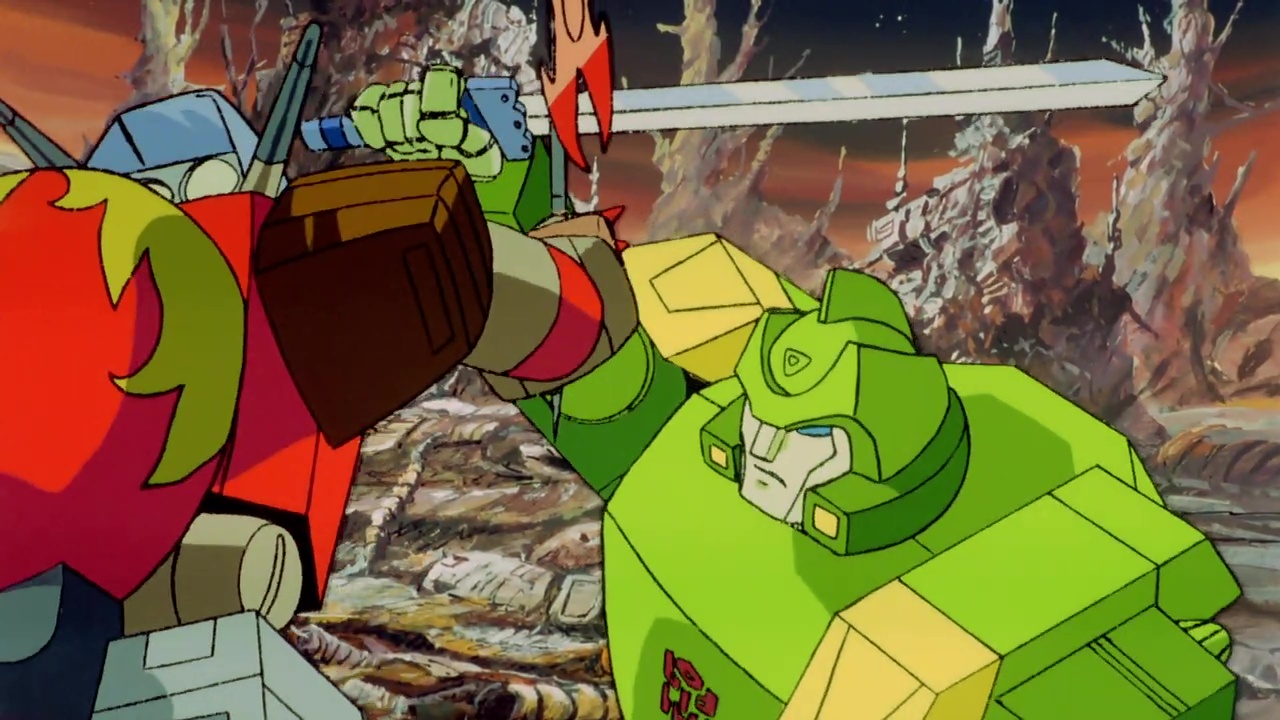
Springer’s personality is economical. He does not require a long speech to establish who he is. He is the warrior who moves toward the danger while everyone else is still calculating the odds. Ross gives him the unmistakable sound of someone who understands exactly how bad the situation is — and intends to fight anyway.
“I’ve got better things to do tonight than die.”
— Springer, The Transformers: The Movie
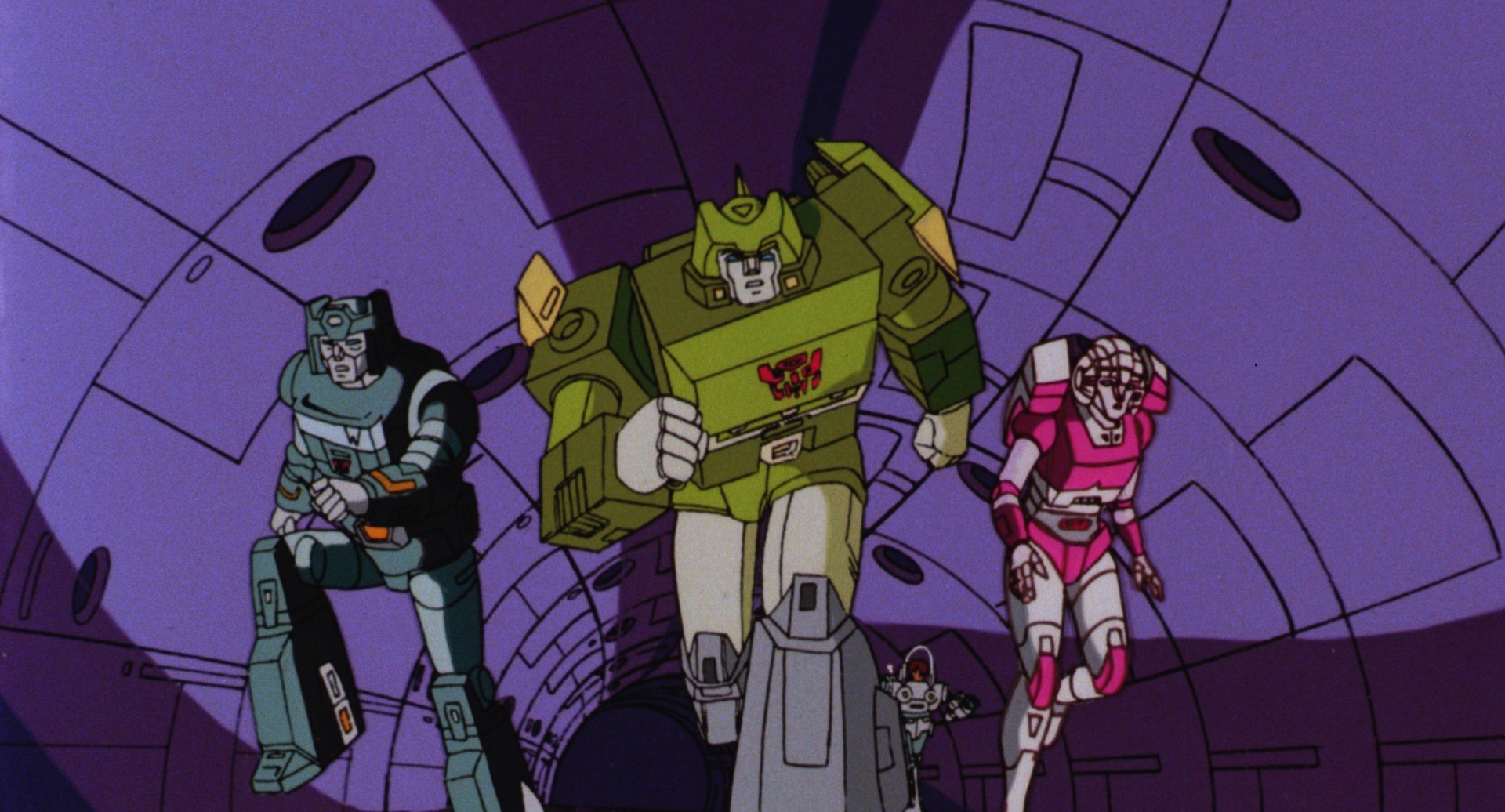
It is one of the remarkable facts of Ross’s career that two characters as different as Shipwreck and Springer could become so permanently connected to the same performer. One is messy, impulsive and unmistakably human. The other is literally a machine. Yet both possess the same essential Ross ingredient: personality that seems to exist beyond the dialogue on the page.
8. When you were recording G.I. Joe in the 1980s, did you have any idea fans would still care this deeply forty years later?
ROSS: At the time the conventional wisdom was that these shows would run for maybe three years. Then the fans would outgrow them and they’d be put on a shelf somewhere and be forgotten.
If anybody had suggested back then that forty years later we would be signing autographs at conventions for legions of fans, they’d have been laughed out of the room.
What’s happened is an amazement to me and all my fellow G.I. Joe and Transformers cast members.
I’ve had people tell me that they joined the Navy because of me. We’ve all had fans tell us that the lessons they learned watching G.I. Joe were pretty much the only moral instruction they got as kids.
That, inspired by the Joe ethics and dedication, they decided to make something of themselves despite their difficult childhoods and went on to have long careers in the military, law enforcement, etc. Some of their stories have brought us to tears.
At the time we were recording the shows, critics called them nothing more than half-hour toy commercials.
All these years later, I think we can safely say they were much more than that.
“People tell me that I’m the voice of their childhood. Astonishing, gratifying and humbling.”
— Neil Ross
9. What is essential to understanding Shipwreck, and why do you think audiences connected with him so strongly?
ROSS: I think he’s the most well-rounded and most human character in the show.
He has flaws, as do we all, but in the end he has a great heart and a strong desire to do the right thing as long as he can do it his way.
He really is a very lovable, relatable rascal.
A Voice Across Generations
The 1980s did not confine Ross to one battlefield. On Voltron: Defender of the Universe, he performed both Keith and Pidge, two dramatically different personalities inhabiting the same legendary animated universe.


Then another generation heard Ross in one of the defining superhero cartoons of the 1990s. As Norman Osborn and the Green Goblin in Spider-Man: The Animated Series, he brought another complicated personality into the homes of young viewers.
10. After all these years, what does being part of the G.I. Joe legacy mean to you — and what would you like to say to the fans?
ROSS: I call it the gift that keeps on giving.
I spent twenty years in radio, but nobody remembers or gives a damn about that except other old radio guys.
But thanks to Shipwreck, Springer in Transformers, Keith and Pidge in Voltron, The Green Goblin/Norman Osborn in Spider-Man: The Animated Series and a few others, I am remembered.
Which is very lovely as I enter my twilight years — cue the violins.
Also, thanks to the loyal fans I got to spend my life doing work that I loved. Looking forward to, rather than dreading, Monday mornings. That’s very rare and for that I am extremely grateful.
“To the fans I can only say thank you for your love and support. I love you back.”
— Neil Ross
Vocal Recall: The Story Behind the Voices
For fans who want to hear the stories behind an extraordinary career in far greater depth, Ross has chronicled his journey in his autobiography, Vocal Recall: A Life in Radio and Voiceovers.
Of particular interest to Serpentor’s Lair readers, Ross told us the book contains two chapters devoted to G.I. Joe and Transformers. The book is available through Amazon, while an audiobook edition narrated by Ross himself is available through Amazon and Audible.
The Man Behind the Memory
Voice acting presents an unusual kind of fame. A performer can become part of millions of childhoods without ever appearing on the screen. The face belongs to Shipwreck. The steel belongs to Springer. The mask belongs to the Green Goblin. The lions belong to Voltron.
But the humanity behind them belongs to the actor.
What becomes clear after speaking with Neil Ross is that the durability of these performances was never simply about finding a distinctive sound. Shipwreck endured because Ross understood the men underneath the sailor uniform — the lifers, the rule-breakers and the good-hearted troublemakers. Springer endured because conviction could be communicated in only a handful of words.
And perhaps that explains why audiences who were once twelve years old can meet Ross forty years later and immediately return to another time — when Shipwreck cracked a joke, Springer charged into battle, Keith prepared to form Voltron or Norman Osborn became the Green Goblin.
The cartoons survived.
The characters survived.
And somewhere in the memories of millions of fans, so did the voices.
Serpentor’s Lair sincerely thanks Neil Ross for taking the time to share these memories with our readers and for the decades of characters, performances and unforgettable moments he has given generations of fans.
Yo Joe!
Interview conducted by Adam Jared for Serpentor’s Lair. © SerpentorsLair.com. Character images are presented editorially in connection with discussion of the respective animated productions.