Douglas Booth Reveals the Untold Story of G.I. Joe Operation Dragonfire
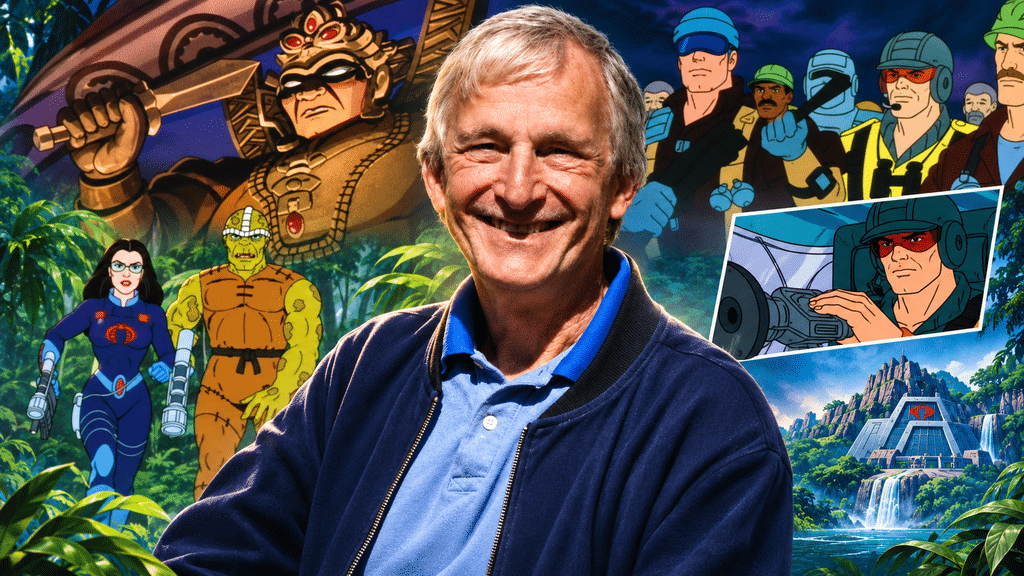
SERPENTORSLair.COM EXCLUSIVE INTERVIEW
“HE TURNED SERPENTOR
INTO AN IGUANA!”
G.I. Joe Writer Douglas Booth Reveals the Untold Story Behind Operation Dragonfire
Cobra Commander’s revenge, the secret behind DiC’s dramatic change in direction, and the extraordinary real-life adventures that inspired the 1989 animated miniseries.
EXCLUSIVE INTERVIEW BY ADAM JARED
FOUNDER OF SERPENTORSLair.COM
NOVEMBER 2026
For an entire generation of G.I. Joe fans, one of the greatest moments in Saturday morning animation arrived when Cobra Commander finally got his revenge against Serpentor.
It was 1989. The original Sunbow G.I. Joe cartoon had disappeared from television, and an entirely new animated era was about to begin. But before the familiar heroes and villains could charge into the 1990s, Cobra had some unfinished business.
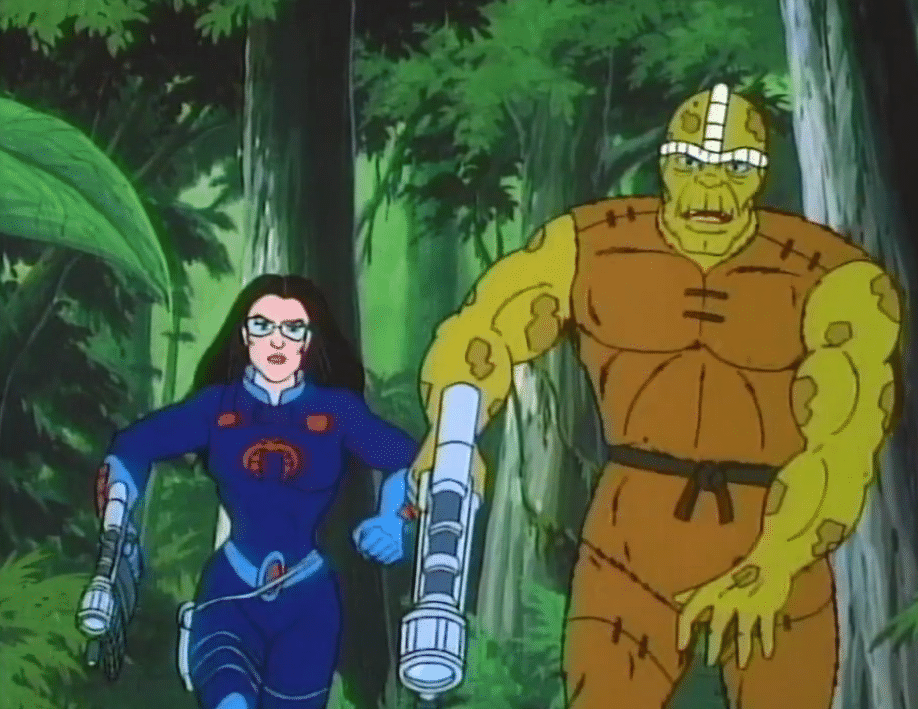
Cobra Commander had been transformed into a snake during the 1987 animated movie. Serpentor had seized control of his terrorist organization. And now, in a five-part television event called Operation Dragonfire, the stage was set for one of the most bizarre and unforgettable reversals of power in G.I. Joe history.
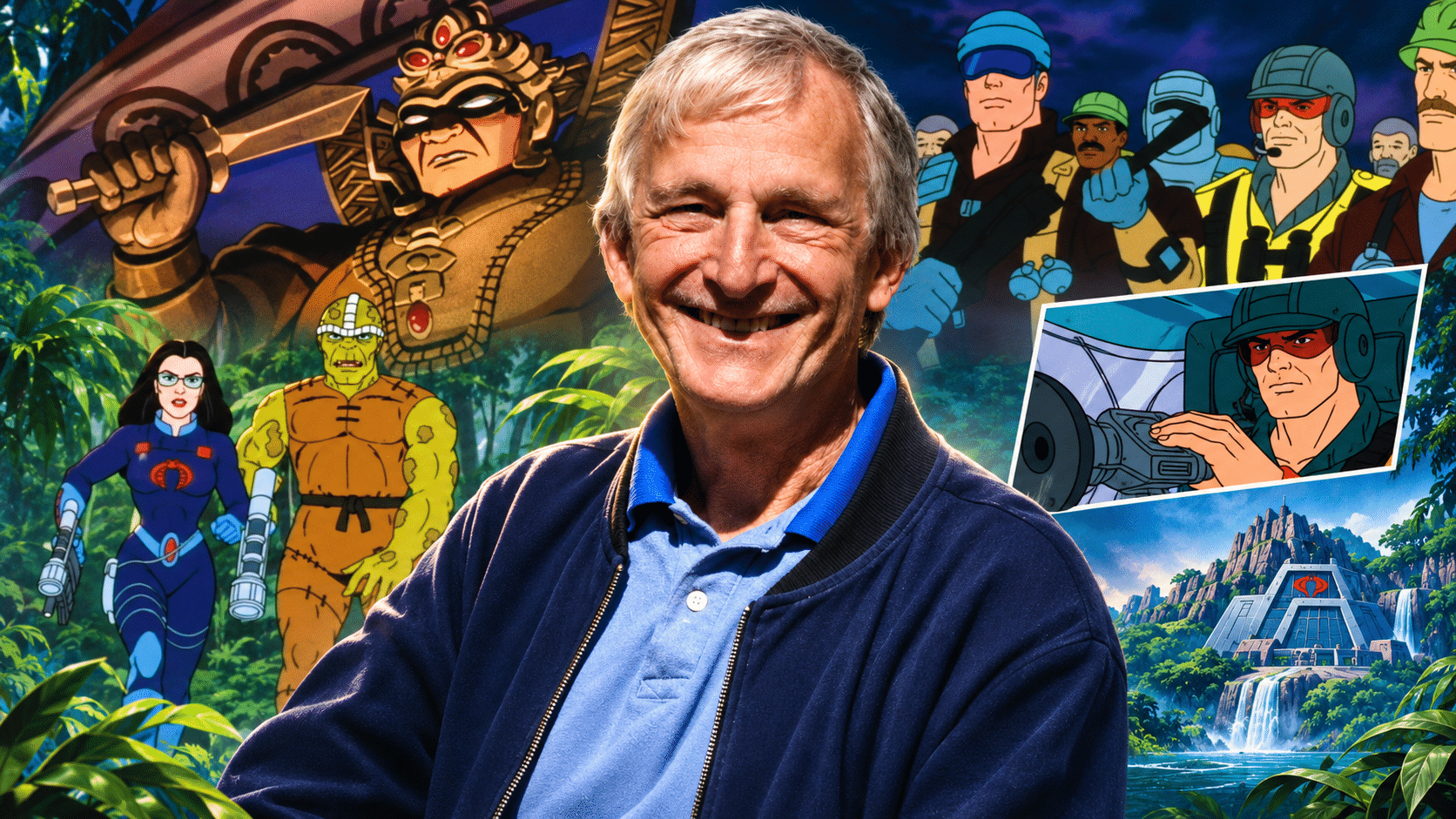
Behind that story was a writer whose contributions to the franchise had already begun years earlier: Douglas Booth.
Booth wasn’t an outsider brought in to reinvent G.I. Joe. He had been part of the original Sunbow production team, working as an associate producer and later writing the memorable second-season episode My Favorite Things, which explored Serpentor and the historical figures whose genetic material had been used to create him.
When DiC took over the animated franchise, Booth was chosen to write all five chapters of Operation Dragonfire before continuing as story editor on the regular series.
And now, more than 35 years later, he’s sharing the memories behind those productions in an exclusive interview with SerpentorsLair.com.
THE MAN WHO BRIDGED TWO ERAS OF G.I. JOE
To appreciate Booth’s role in G.I. Joe history, it’s important to remember just how different the two animated productions were.
The original Sunbow series, which ran from 1983 through 1986, featured sprawling adventures, large casts of characters, elaborate Cobra schemes and a distinctive combination of military action, science fiction and comic-book storytelling.
Booth had a front-row seat to that process. As an associate producer, he helped ensure that the animated storyboards faithfully translated the scripts into action and later participated in editing and sound-dubbing sessions.
His 1986 episode My Favorite Things aired on October 16, 1986, and remains particularly significant to fans of Serpentor. The original script is among the material preserved by the Sunbow Marvel Archive.
Then came the transition to DiC.
Unlike the original series, which had developed an enormous ensemble of established characters, the new production would operate under tighter creative and financial restrictions. Characters came and went, the tone changed, and the opening music eventually gave way to the energetic Got to Get Tough theme song.
Fans have debated those differences ever since.
But Booth’s recollections provide something far more valuable than speculation. He explains what it was actually like working on these cartoons and describes one extraordinary budget limitation that helped change the entire series.
“…my involvement with G.I. Joe was one of the most enjoyable and rewarding of my cartoon writing career…”
— DOUGLAS BOOTH
AN UNEXPECTED JOURNEY TO OPERATION DRAGONFIRE
Perhaps the biggest surprise in this interview is how Booth actually received the assignment to write Operation Dragonfire.
The story begins thousands of miles from Hollywood, in the Himalayas, where the writer had been enjoying an adventurous trek through Nepal.
Upon returning to his hotel, he discovered a message from producer Robbie London. That message would lead to an offer to write the entire five-part G.I. Joe miniseries.
More remarkably, Booth’s recent travels influenced the story itself. A real Tibetan acquaintance inspired a character appearing in the adventure, while Booth also drew upon experiences in Peru and the American Southwest.
It is the kind of behind-the-scenes revelation that makes this interview especially meaningful for fans who have revisited the same five episodes for decades.
COBRA COMMANDER, SERPENTOR AND A VERY PERSONAL REVENGE
Of course, no discussion of Operation Dragonfire would be complete without addressing its most notorious character transformation.
Serpentor had entered the franchise as Cobra’s genetically engineered emperor, a villain whose existence challenged Cobra Commander’s authority and completely transformed the organization’s leadership.
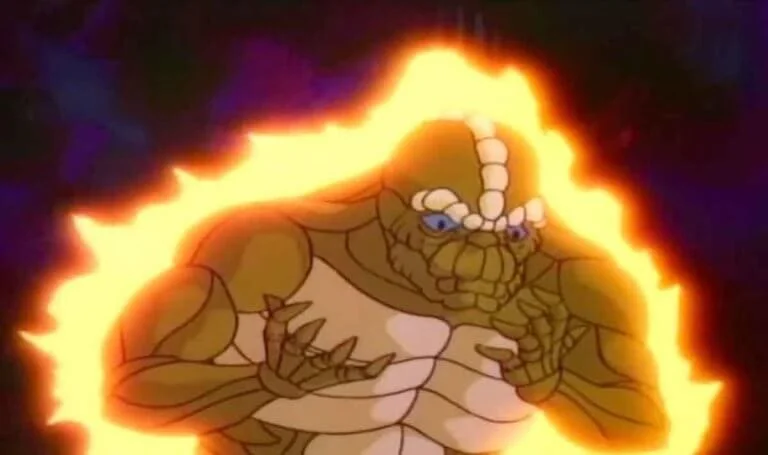
But when Cobra Commander returned to power in Operation Dragonfire, he turned the tables on his rival, transforming Serpentor into an iguana.
For longtime viewers, it was an astonishing turn of events.
For Booth, it was an opportunity to give one of animation’s most entertaining villains the kind of revenge that suited his personality perfectly.
His recollections also touch on the original Cobra Commander voice actor, Chris Latta, the creative influence of legendary comic-book writer Steve Gerber, and the different storytelling philosophies of Sunbow and DiC.
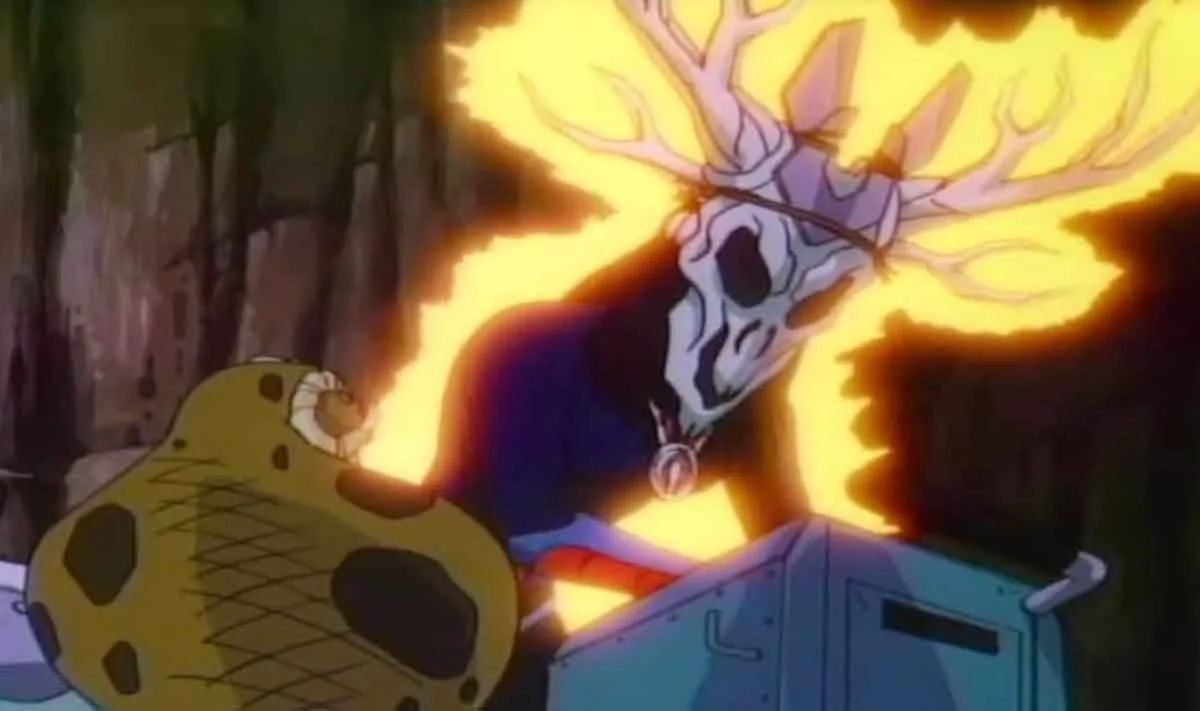
It is against this backdrop that we present Booth’s complete written interview.
THE EXCLUSIVE INTERVIEW
DOUGLAS BOOTH IN HIS OWN WORDS
Editor’s note: Adam Jared submitted ten questions about Booth’s work on the original Sunbow series, Operation Dragonfire, the transition to DiC, Cobra Commander, Serpentor, missing characters, Hasbro’s involvement and the creative process. Mr. Booth generously responded with an expansive personal letter rather than separate question-by-question answers. His complete written response appears below, in its original sequence and wording, with editorial section headings added for readability.
01 | CHILDHOOD, HEROISM AND THE ORIGINS OF AN ADVENTURE WRITER
Hi Adam,
I’m going to be very informal and meander all around in my “answers” to your questions!
It’s been a while, but my involvement with G.I. Joe was one of the most enjoyable and rewarding of my cartoon writing career – which is continuing to this day and with, hopefully, the best yet to come!
But first, to know where I was coming from as I approached G.I. Joe in the first place – I’ve gotta go back to when I was, maybe, six, seven, and eight – growing up in the San Fernando Valley in Los Angeles, when it was still kind of wild! We’d moved from one house, where we had two full sized totem poles in the backyard, rattlesnakes that would sun themselves on our back patio, and a neighbor who had an actual buffalo in a corral in his front yard! (all true)
We moved into a more civilized area, but there was a vacant lot next door to our house which we all called “the Battlefield” – and it’s where my friends and I used to put on our WW II surplus army gear – mostly old helmets, canteens hooked onto our belts – I think one of our friends must have had an old artillery shell or two – and we would wage mock battles with each other, mostly throwing dirt clods for hand grenades, and the like. And I’m pretty sure we were all reading Sgt. Rock comic books – and were just really getting into it! This was during the late 50’s – and so WW II was still a major event, though I don’t remember any awareness of the Korean War, which, come to think of it, now seems kind of strange!
At any rate – for us – play-fighting adventurous battles was really fun – and, of course, we had all sorts of cap guns and the like and used them as well.
All of us were going to go into the Marines and we couldn’t wait.
Dial ahead to my freshman year in college, when I learned, to my mind, at least, just how wrong our involvement in Vietnam was – and running counter to all the values we had associated with America’s participation in “making the world safe for democracy”. So – I made a sudden switch to – “Hell no, I won’t go!” – because it seemed like it was the wrong fight to participate in.
Lots of other adventures ensued – but, finally, I staggered out of college, with my adventurous spirit intact – and an admiration for “the real American heroes” (both my parents were veterans in WWII, one uncle was a paratrooper in the 101st Airborne, dropping behind enemy lines after D-Day and a British uncle had been captured at Dunkirk and spent the war in a pow camp) – fully intact. But they also now included people like Martin Luther King Jr, Nelson Mandela, and others.
So – by the time I got to G.I. Joe, I had a whole mixed bag of associations with military adventures! Luckily, with Joe – they were clearly the good guys and, while the Cobra crew were highly entertaining, there was no question that their hearts were clearly in the “wrong place” – so there was never any problem with leading our audiences astray with mistaken values in our “good guys versus bad guys adventures”!
I think everyone on the writing team had a similar feeling about the show – we had a few guys who had actually been in the military but many more who hadn’t been, but who were all gung-ho with creating great, creative adventures where it was clear that the good guys were truly good – and the bad guys were mean and rotten, but could also be really funny – and everyone took the endeavor with great “light-hearted seriousness” and everyone did their best to tell the very best story they could, each and every time!
02 | INSIDE THE ORIGINAL SUNBOW PRODUCTION
So – my job on the first Sunbow series was as “associate producer” – which meant that I jumped in at the storyboard level – going over each episode with the storyboard on one side and the script on the other – doing my best to make sure that the storyboard was enhancing the story already present in the script – and not losing anything important in the translation from words to pictures – and then attempting to persuade the actual animation/show producer that my thoughts were valid! Mostly it worked really well – because all the folks involved were highly skilled professionals as well as super-creative, as well.
Our voice director was Wally Burr, who had been a tank commander in WWII, and, well, the way he led his crew of Joes and Cobras through the recording sessions – it showed!
I would also sit in on editing sessions, once we got the footage back from the overseas animation studios – and then I got to sit in on the dubbing sessions, where the episodes were projected on movie theater size screens, as the sound effects and music were added to the dialogue – and my task was mostly to make sure that the lines of dialogue didn’t get buried in the explosions and yells from the characters!
So – that was my background coming into writing Operation Dragonfire for DIC – I was pretty well saturated with the adventures, the characters, and the spirit of that original series.
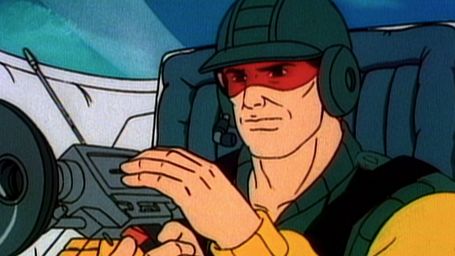
03 | THE HIMALAYAN ADVENTURE THAT CHANGED EVERYTHING
The way I found out that I was going to be involved with the DIC series was pretty cool as well. In truth, I had really, really wanted to get to write a 5-part mini-series. I had done my associalte producing work on – not the first 5-parter that had kicked off the original series – but the second one (at least that’s how I remember it). After that series was completed, I switched over to writing, story-editing, and supervising a couple of other shows (Glo-Friends and Potato Head Kids) when the second season of Joe rolled around – although I did have a ton of fun writing my one episode – “My Favorite Things” – all about Serpentor and his many lives.
Then – the West Coast Sunbow era came to a close – and, well, I’m not entirely sure of the sequencing of all of this – but I had previously worked with Robbie London (at Filmation, on He-Man and the Masters of the Universe) – as well as with Andy Heyward on Inspector Gadget – as well as having been a classmate of Andy’s in high school (!) – and then, a few years later, at the conclusion of an amazing trekking trip in Nepal, as we were riding back into Katmandu on the roof of a bus, along with all the tied down luggage and the like (hey, if you’re going to be riding a bus in the Himalayas, who wants to be cooped up inside, when you can be riding up top?) – I was wondering where in the heck I was going to find my next job, to get out of the financial hole I had dug for myself by taking this amazing trip to “the top of the world”!
And – well, sometimes the magic works – because when we got back to the hotel which would be our jumping off point to head back to the U.S., there was a phone message waiting for me to call Robbie London – which turned out to be the offer to write the five-part lead-off mini-series for the DIC version of G.I. Joe – and then to story-edit the remaining 21 (or so) episodes! Pretty cool, to say the least!
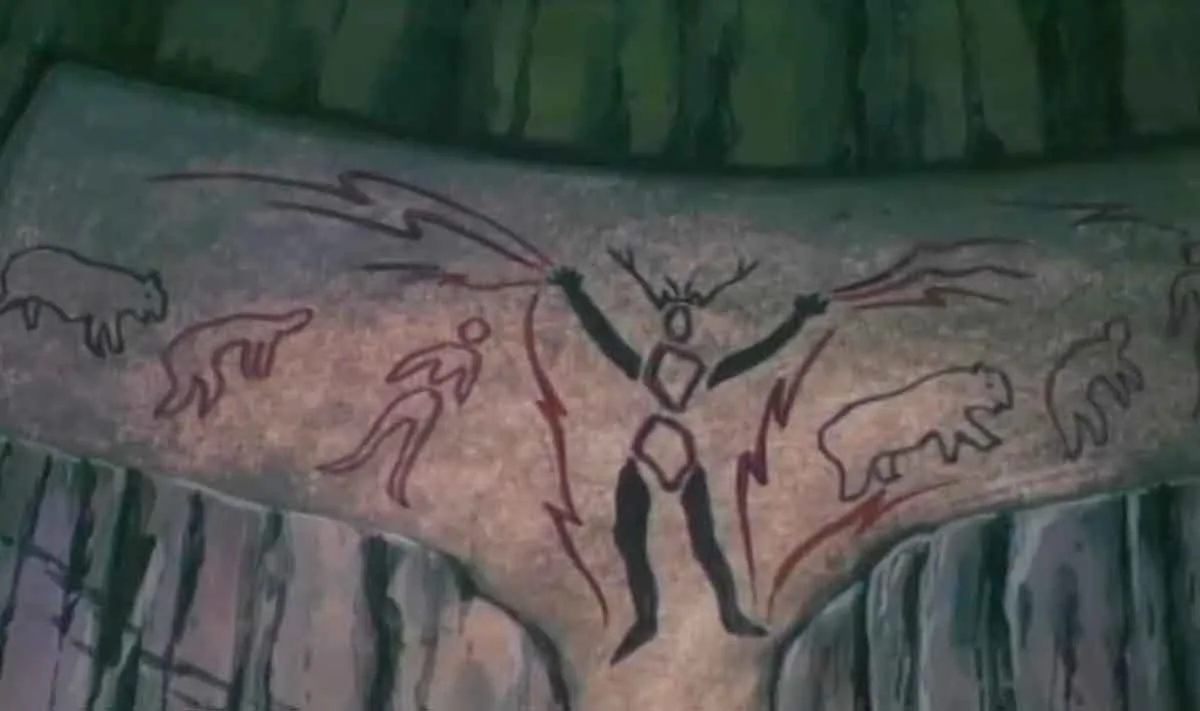
For those familiar with the mini-series, you’ll notice that my own adventures prior to getting the job served as a great inspiration for the series – including the Tibetan Lama who had a strong role in the adventure – who was inspired by an actual guy who had become a friend on my own trip – Tashi Lama – who was a special envoy for the Dalai Lama and who, for some reason or another, had been assigned to our group of American trekkers! And then, much later, when I sent Tashi a copy of the storyboard for that first episode, in which “he” figured strongly – he was looking through it at his monastery in Kathmandu when an American guy, who came to that monastery every year or so to “chill out”, came over to take a look… and said – hey! I know Doug Booth – he was my high school debating partner! (Which I was – but I had no idea my old partner Ken was now a sort-of Tibetan Buddhist monk! Pretty cool, right?)
A trip to Nepal. A phone message from Hollywood. And an offer to write five episodes of G.I. Joe. Sometimes the real story behind a cartoon is just as extraordinary as the adventure on screen.
04 | WHAT REALLY CHANGED BETWEEN DRAGONFIRE AND THE REGULAR DIC SERIES?
Anyway, as we rolled into the rest of the series – yes, there was a shift away from the old-style tone of the series embodied in the mini-series, during which I guess the folks at D.I.C. were kind of humoring me – to shift it into more of the D.I.C. mode of story-telling. First – we had a much more limited budget – with only 10 speaking voices allowed per episode – which was a big change from our “casts of hundreds” for the original series. The animated action was similarly limited – and the show, itself, became much more of a comedy/adventure with fun elements of satire than the grittier, more hard-bitten, and – dare I say – hard-action adventures of the earlier series. At first, there was a level of culture shock involved – but then, as we got adjusted, it got to be a lot of fun to tell these kinds of stories, as well! There were a good number of “veterans” from the earlier series who lent a hand with the scripts, while some of the other vets preferred to take a pass. From my point of view, it was truly good fun and our scripts honored the spirit of adventure and fun that the earlier series had embodied.
“…we had a much more limited budget – with only 10 speaking voices allowed per episode…”
— DOUGLAS BOOTH
I didn’t have much to do with the production of this series – though I am sure I went over the storyboards and made comments – but, in truth, I can’t remember exactly how that worked out. The recording was done in Vancouver, not Burbank – and I vaguely remember going up there for the first few sessions – but the rest, I’m afraid, is pretty vague!
In terms of the rest of the locations for the mini-series – well, yes, I did draw upon my hike up the Inca Trail to Machu Pichu (prior to my Himalayan adventures) for inspiration – as well as my love for the mesas of the American Southwest and its Native American culture.
05 | COBRA COMMANDER’S REVENGE AGAINST SERPENTOR
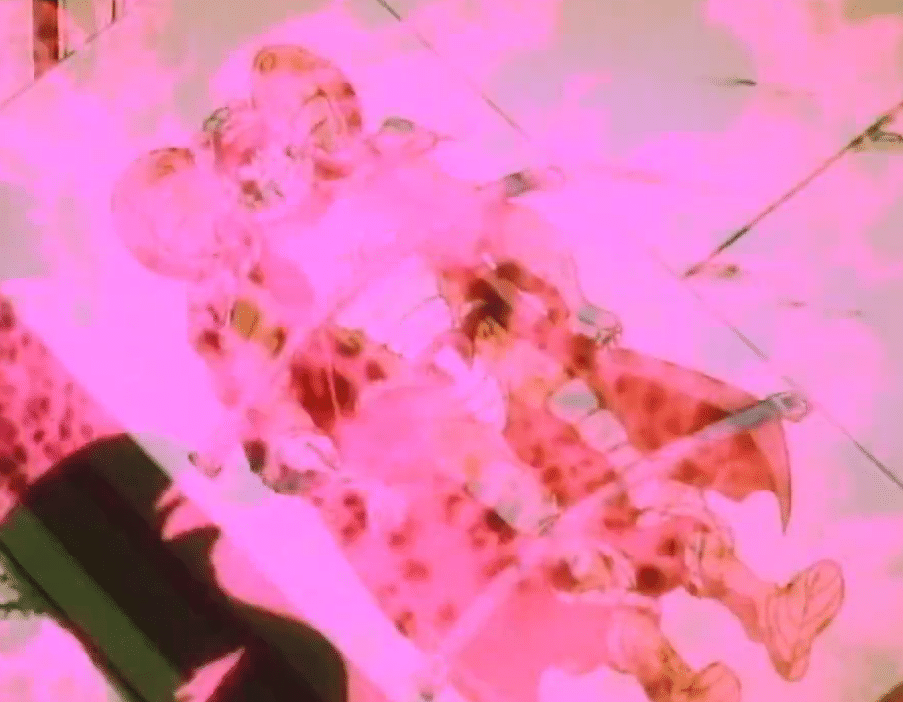
I’m sorry to say that my memory of a lot of things about the series and how it evolved is not sharp – but, again, in writing the mini-series, all of my previous experiences with G.I. Joe came into play and, yes, I was writing it out of that sort of an ethos. As far as Cobra Commander engineering the transformation of Serpentor into an iguana – well, that’s just the sort of thing that Cobra Commander would get a big kick out of doing, and I was delighted to help him do it! The original voice actor for the Commander, Chris Latta, was – as a stand-up comedian – perhaps even scarier (but in good way) than either Cobra Commander or his equally memorable role as Starscream in Transformers – and giving him a truly tasty revenge was an unalloyed pleasure!
“…that’s just the sort of thing that Cobra Commander would get a big kick out of doing…”
— DOUGLAS BOOTH
Again, in terms of the shaping of the D.I.C. version of the show – I think the Sunbow version (maybe) was hugely influenced by Steve Gerber, who was already a legendary comic book writer (Howard the Duck, etc) – who brought in a whole slew of his comic-book/animation screenwriting buddies – and they brought a very special sensibility to the show.
D.I.C. had a more cartoony and “kinder and gentler” ethos and, though their version of the show was also great fun to work on, it did reflect that shift in tone. I wasn’t a party to any of the discussions with Hasbro about any of this – so I don’t really know how all of this took place. I suppose you could get in touch with Andy Heyward and/or Robby London and ask them – and see if they might have something to add.
06 | HASBRO, THE MISSING JOES AND THE REALITIES OF THE TOY LINE
In terms of the missing characters and so forth – I suspect a lot of that had to do with Hasbro’s decisions about where they wanted the toy line to go. If they had wanted Serpentor to re-emerge, we would have found a fun and creative way to bring him back! Same with the other “missing characters”! With the Hasbro sponsored shows, we were frequently asked to feature certain characters or vehicles – but they never seemed to micro-manage. The main unspoken rule was “don’t diss the toys” – but, other than that, as long as the action was cool and fun and the characters were engaging and ran “true to form” – in my experience, at least, they were very hands off and great people to work with. The production parameters of the D.I.C. series were very different from those of the Sunbow series, especially in terms of budget, and, while “purists” might take issue with the lighter tone and more “flag football” rather than “full contact tackle” style of action – I felt like we honored the actual spirit of the show and took it into a new arena where we similarly provided our audiences with imaginative and exciting fun and adventure!
07 | DOUGLAS BOOTH’S CLOSING WORDS
Whew! That was fun! Thanks for the opportunity to revisit some great times – I hope this will more or less serve your purpose! I realize I’m not able to answer a number of your questions, but – well – even if you had asked me twenty-five years ago, I still might have drawn a blank!
All the best,
Doug
AFTERWORD: WHY THIS CHAPTER OF G.I. JOE HISTORY MATTERS TO ME
For some G.I. Joe fans, the original Sunbow series will always be the definitive version of the animated franchise.
But for me, the DiC era holds an especially important place in my childhood because those were the G.I. Joe cartoons I grew up watching.
I can still remember the excitement of Operation Dragonfire, Cobra Commander’s return to power, and the incredible assortment of familiar and new characters who helped carry the franchise into the 1990s.
And for decades, one particular question has stayed with me: Why did Operation Dragonfire feel so much like a continuation of the original Sunbow series, while the regular DiC episodes that followed seemed to take G.I. Joe in such a dramatically different direction?
Thanks to Douglas Booth, we now have a much better understanding of what was happening behind the scenes.
His explanation of the reduced production budget, the ten-speaking-voice limitation and DiC’s emphasis on lighter comedy-adventure helps illuminate the differences that so many viewers noticed.
But perhaps the most extraordinary part of this interview is discovering how much of Booth’s personal life found its way into the miniseries.
The idea that a trip through Nepal, a real acquaintance connected to the Dalai Lama, and adventures along the Inca Trail helped inspire elements of Operation Dragonfire makes those episodes even more fascinating to revisit.
And knowing that the writer himself took such pleasure in giving Cobra Commander his revenge against Serpentor adds another wonderful layer to one of the cartoon’s most memorable moments.
Mr. Booth’s willingness to revisit these experiences and share them with our readers is something I sincerely appreciate.
The people who created these cartoons helped shape an entire generation’s childhood memories, and hearing their firsthand stories allows us to appreciate the artistry, imagination and hard work behind the animation.
On behalf of SerpentorsLair.com and G.I. Joe fans everywhere, thank you, Mr. Booth, for taking us back inside the world of Operation Dragonfire and the DiC G.I. Joe series.
YO JOE!
RESEARCH & ORIGINAL PRODUCTION ARCHIVES
The following resources provide additional historical documentation for readers interested in the making of the animated series.
Sunbow Marvel Archive — Original Operation Dragonfire Scripts
ABOUT THE AUTHOR — ADAM JARED
Adam Jared is the founder of SerpentorsLair.com, an online destination covering G.I. Joe, vintage animation, action figures, comics and classic pop culture. He holds a Master of Science in Social Media Management and is currently pursuing a Ph.D. in Strategic Communication. Through exclusive interviews, original features and community reporting, Jared works to preserve and celebrate the stories behind the entertainment that defined generations of fans.
© 2026 SerpentorsLair.com. Interview conducted by Adam Jared. G.I. Joe and associated characters are the property of Hasbro. Archival animation screenshots are presented for editorial coverage, historical discussion and commentary. All underlying character and animation rights remain with their respective owners.