The Secret History of Palitoy: Bob Brechin Reveals the Origins of Action Man, Action Force and the Roboskull!
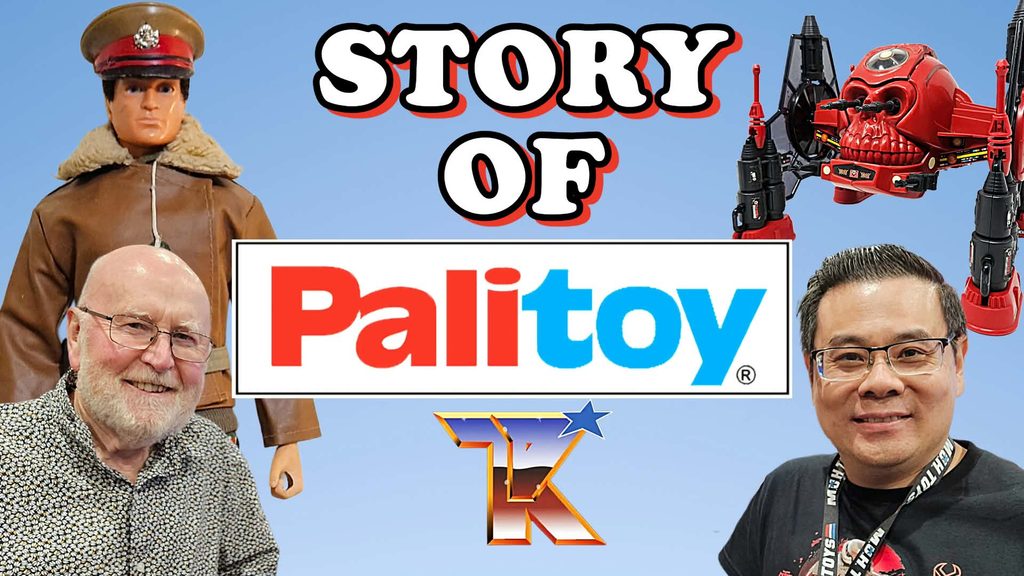
EXCLUSIVE TOY HISTORY • COLLECTOR SPOTLIGHT
The Secret History of Palitoy: Bob Brechin Reveals the Origins of Action Man, Action Force and the Roboskull!
From the invention of gripping hands to the creation of one of the most outrageous vehicles in action figure history, a legendary toy designer takes collectors behind the scenes of Britain’s golden age of toys.
By Adam Jared | November 28, 2026 | SerpentorsLair.com

Before Cobra Commander battled G.I. Joe across American toy shelves, another extraordinary chapter in action figure history was unfolding thousands of miles away in Britain. Inside the Palitoy factory in Coalville, England, a talented group of designers was developing innovations that would influence generations of action figures.
Among those designers was Bob Brechin, a man whose contributions to Action Man and Action Force helped shape the childhoods of countless collectors.
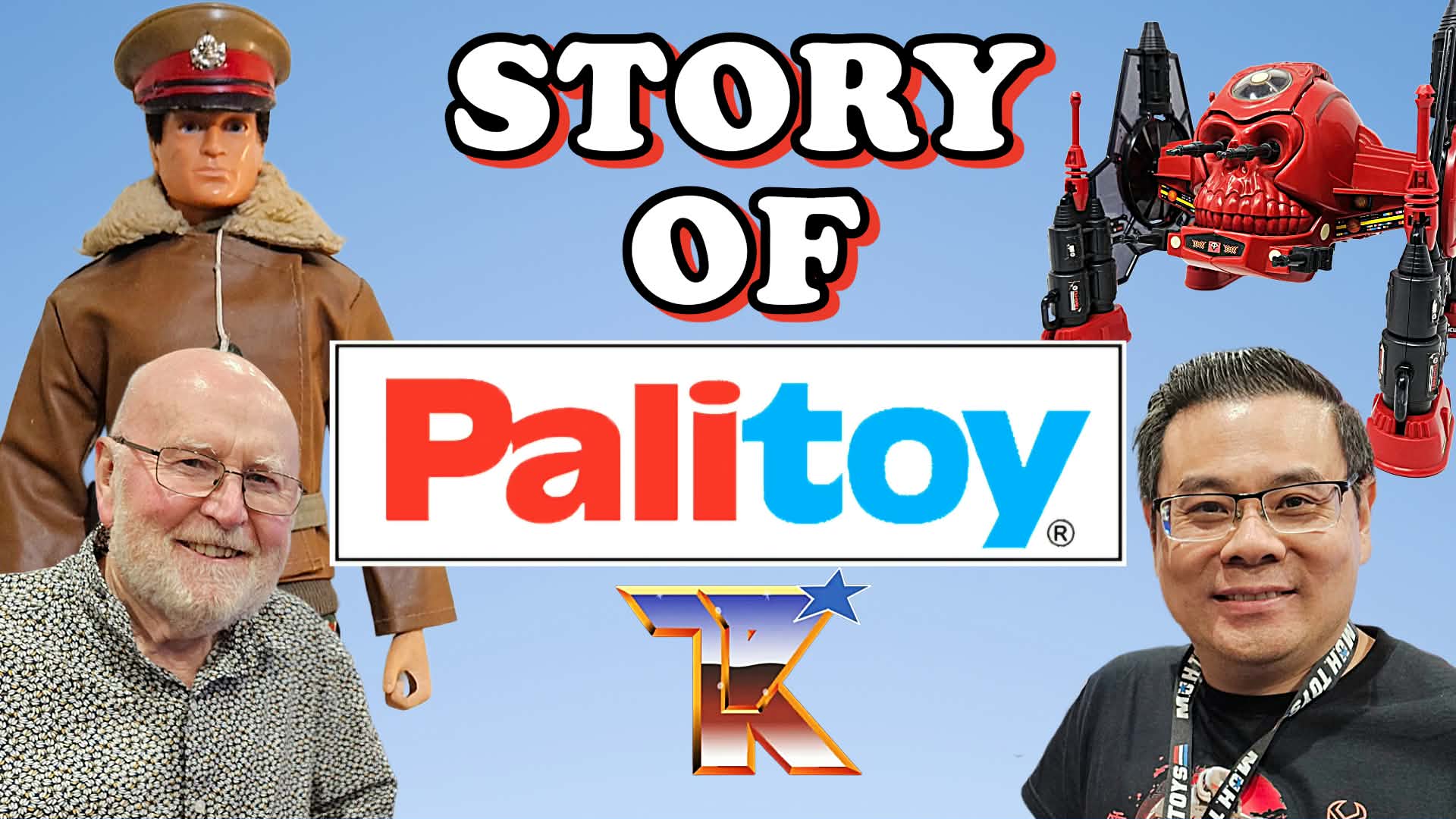
Our friend Ken at ToyKennections takes viewers on a remarkable journey through that history in an extensive interview with Brechin. Running approximately 79 minutes, the conversation combines personal memories, historical photographs, original design drawings, corporate history and fascinating stories behind some of the most beloved toys ever produced.
For anyone who grew up collecting G.I. Joe, Action Man, Action Force or vintage Star Wars figures, this is a conversation you won’t want to miss.
Before Action Man: The Surprising Origins of Palitoy
Long before military action figures became its signature products, Palitoy’s story began in 1919 with a young entrepreneur named Alfred Edward Pallett.
According to Brechin, Pallett was just 19 years old when he secured an order for plastic soap containers despite not yet having a factory to manufacture them. His determination led to the establishment of Cascelloid in Leicester, laying the foundation for what would eventually become one of Britain’s most recognizable toy brands.
The interview explores the company’s early dolls, its pioneering work with plastics, its contributions to wartime manufacturing and the technological developments that helped transform the business into a major toy producer.
Brechin also explains the complicated corporate relationship between Cascelloid, British Xylonite, Palitoy and General Mills, revealing that the company’s evolution was considerably more complex than many collectors realize.
DID YOU KNOW?
Three products helped transform Palitoy’s fortunes during the 1960s: Tressy, Tiny Tears and Action Man. Brechin recalls that the success of these toys helped increase annual revenue from approximately £300,000 to £3 million.
The British Cousin of G.I. Joe
When Hasbro introduced G.I. Joe in 1964, the American toy industry changed forever. Palitoy recognized the potential of the concept and secured the opportunity to bring it to British children under a different name: Action Man.
Action Man debuted in 1966, and Brechin joined the company the following year. Although the earliest releases closely resembled their American counterparts, Palitoy gradually developed a distinct British identity for the brand.
British military uniforms, ceremonial outfits, football players, mountaineers, police motorcycles, Arctic exploration equipment and military vehicles expanded the possibilities for young collectors.
Brechin personally contributed to the development of vehicles including the Scorpion tank, British Army Land Rover and an Action Man go-kart. Remarkably, he reveals that he still possesses the brass prototype of that early go-kart design.

The Real Hand Behind the Legendary Kung-Fu Grip
Perhaps one of the most fascinating revelations in the interview concerns a feature that vintage G.I. Joe collectors know and love: the gripping hand.
Brechin recalls how the idea emerged after Palitoy’s designers encountered difficulty getting an Action Man figure to hold its rifle securely during a toy fair display.
Rather than relying on glue to keep accessories in place, the design team set out to create a more functional hand.
Brechin was assigned the task of sculpting it, using his own left hand as the reference. He even incorporated details from the lines of his palm into the design.
That innovation became part of the shared legacy of Action Man and G.I. Joe, dramatically improving the way children could interact with their figures and accessories.
The interview also explores the development of flocked hair, the introduction of Eagle Eyes and the engineering behind the redesigned Dynamic Physique Action Man body.
COLLECTOR HISTORY
The realistic flocked hair associated with vintage G.I. Joe and Action Man originated from Palitoy’s exploration of a manufacturing technique featured on the BBC television program Tomorrow’s World.
How Star Wars Changed Everything
When George Lucas introduced audiences to a galaxy far, far away in 1977, the toy industry experienced a seismic shift.
But the success of Star Wars merchandise was far from guaranteed.
Brechin remembers British retailers initially being reluctant to embrace the new toy line. Palitoy even offered retailers favorable deals on Action Man merchandise to encourage them to stock Star Wars products.
By the end of 1978, the situation had dramatically reversed. Retailers wanted more Star Wars merchandise than Palitoy could supply.
The interview includes recollections of Brechin’s visit to Kenner in Cincinnati, where he witnessed early production examples of Star Wars vehicles. He also explains how Palitoy adapted products for the British market, including the company’s celebrated cardboard Death Star playset.
Ironically, Palitoy found itself marketing the very franchise that was contributing to Action Man’s declining popularity.
The Birth of Action Force and the Red Shadows
As smaller action figures became increasingly popular and manufacturing costs rose, Palitoy began exploring the possibility of shrinking Action Man into the 3¾-inch scale.
The result was Action Force.
Initially inspired by popular Action Man uniforms, the new line would eventually develop its own fictional universe filled with specialized military teams, imaginative vehicles and a memorable enemy organization.
One particularly interesting discussion concerns the timing of the original Action Force and G.I. Joe: A Real American Hero introductions in 1982.
Brechin recalls that Palitoy presented its smaller Action Force figures at the British toy fair in January, before Hasbro’s February presentation of its redesigned G.I. Joe figures in America. According to his recollection, the two companies were developing their respective concepts without knowing precisely what the other was preparing.
As Action Force evolved, Palitoy’s designers were challenged to create new characters using existing tooling. By combining different body parts, changing colors and reimagining existing designs, the team developed an entirely new identity for the range.
From Baron Ironblood and the Red Shadows to the robotic Muton, these creations would become some of the most sought-after characters among international G.I. Joe collectors.
The Flying Skull Nobody Expected to Become a Legend
Few vintage action figure vehicles are as instantly recognizable as the Roboskull.
With its enormous skull-shaped fuselage, futuristic wings and unmistakable villainous appearance, the vehicle remains one of the most imaginative designs to emerge from the 1980s toy industry.
Brechin explains that the inspiration came from the skull-and-crossbones imagery associated with the Red Shadows. He envisioned the villains as a collection of modern-day pirates, making a flying skull a natural extension of their identity.
He developed sketches, sculpted an early model and presented the concept alongside other proposed Action Force vehicles.
Despite his own doubts that such an unusual design would receive approval, the Roboskull was given the green light.
The interview also reveals that Skeletron was originally envisioned as the vehicle’s pilot before the development of Red Wolf. Skeletron subsequently became a mail-away figure.
Decades later, Brechin’s creation would inspire Skeletron’s modern Roboskull MKII, introducing the iconic vehicle to an entirely new generation of collectors.
Brechin’s recollections of meeting the modern development team and seeing the original and contemporary vehicles together are among the most enjoyable moments of the interview.
The End of an Era — But Not the End of a Legacy
By 1984, the toy industry was undergoing enormous changes. Despite efforts to revitalize Action Man, the original line was discontinued and Palitoy’s design department closed.
The Palitoy name disappeared in 1985 as the business transitioned into the Kenner Parker era.
Yet the influence of the company’s designers never truly disappeared.
Brechin continued working in the toy industry, while the characters, vehicles and innovations he helped develop remained treasured by collectors around the world.
His book, My Palitoy Story, preserves that remarkable history through photographs, research and personal recollections. The interview also highlights an expanded edition celebrating the 60th anniversary of Action Man in 2026.
Seven Fascinating Stories You’ll Discover in This Interview
- How a plastic soap container helped launch a British toy empire.
- Why Action Man’s gripping hand was modeled after Bob Brechin’s own hand.
- How a BBC television program inspired realistic action figure hair.
- Why British retailers initially resisted stocking Star Wars toys.
- How Strawberry Shortcake fragrance complicated the production of an Action Man SAS uniform.
- Why the original Action Force figures were developed independently of Hasbro’s 1982 G.I. Joe line.
- How a flying skull became one of the most beloved vehicles in Action Force history.
WATCH THE FULL INTERVIEW
Join ToyKennections and legendary Palitoy designer Bob Brechin for an unforgettable journey through action figure history.
Preserving the History of Our Childhoods
Interviews like this are incredibly important to the collecting community. Every original photograph, every prototype and every firsthand recollection helps preserve a chapter of toy history that might otherwise be lost.
We encourage everyone in the SerpentorsLair community to support ToyKennections by watching the full interview, leaving a comment, sharing the video and subscribing to the channel.
What is your favorite Palitoy creation? Action Man, the Red Shadows, the Roboskull or perhaps one of the company’s legendary Star Wars releases? Let us know in the comments!
About the Author
Adam Jared is the founder of SerpentorsLair.com, dedicated to celebrating G.I. Joe, vintage action figures, classic cartoons, 1980s pop culture and the talented individuals who helped create the toys that defined our childhoods.
Source: ToyKennections’ video interview with Bob Brechin. Historical recollections and design information are attributed to the interview.